Tianfeng Gou Trigram: A Cautionary Tale of Soft Meets Hard
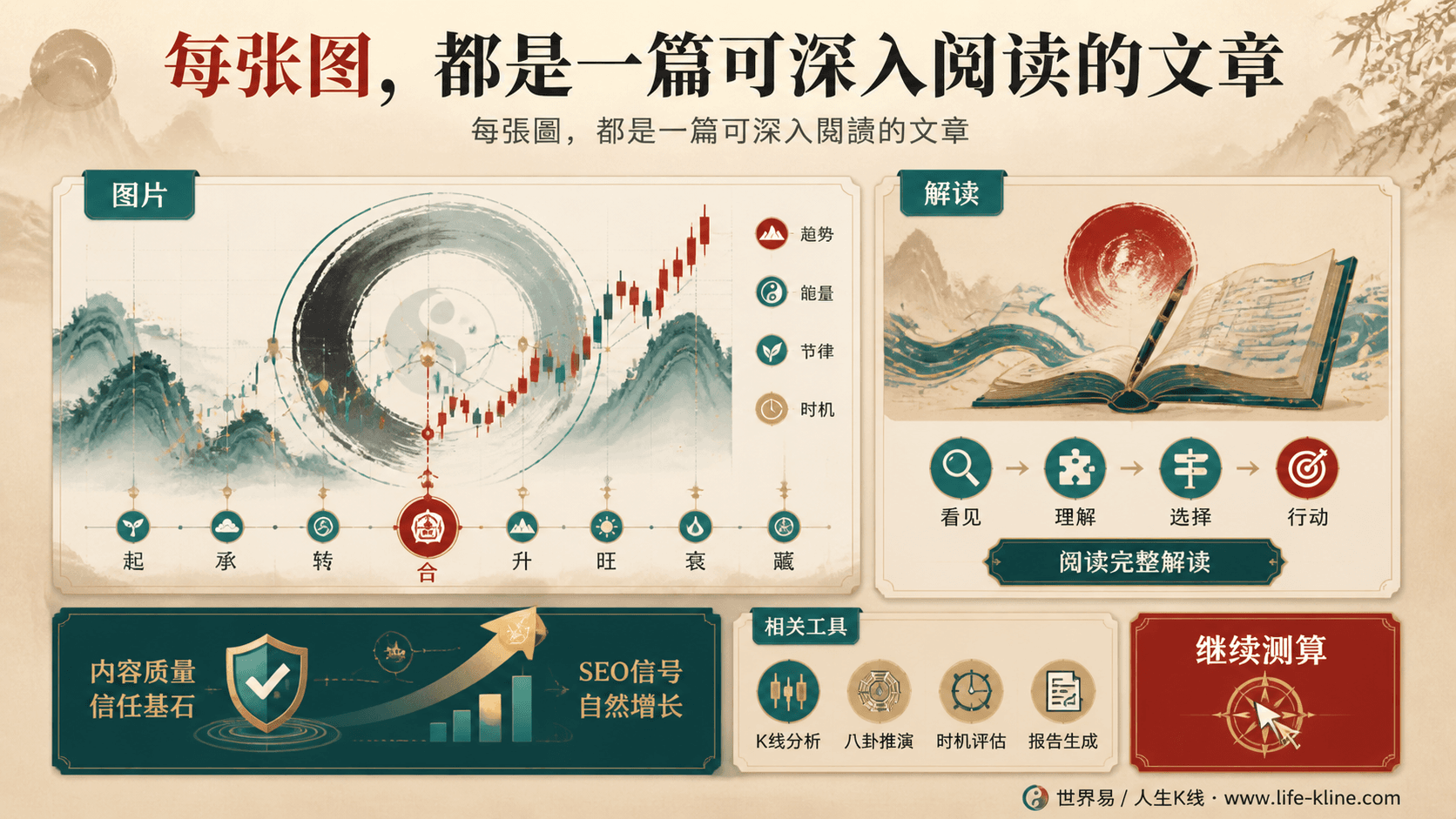
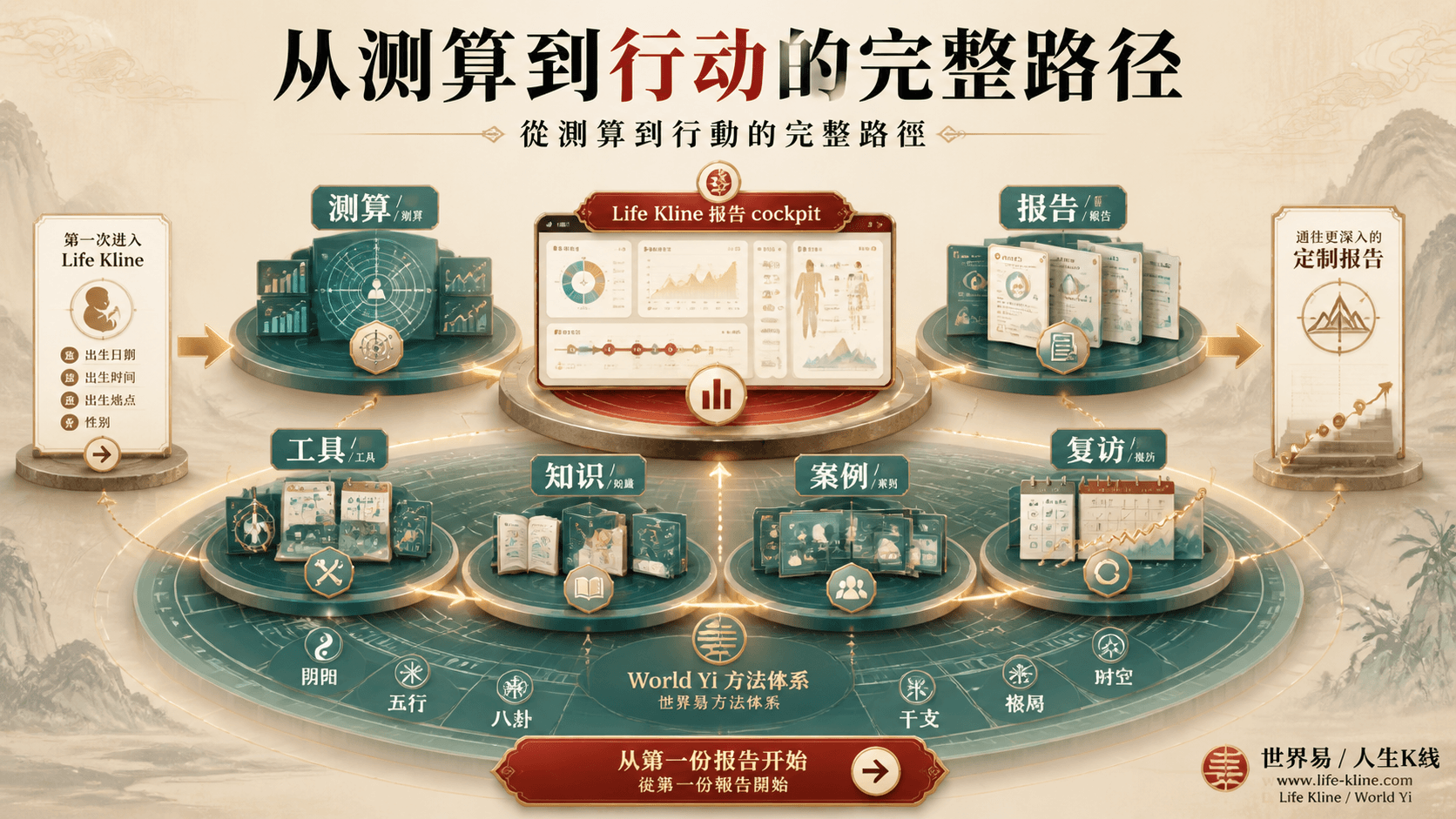
把这篇文章落到自己身上验证:先看结构,再进入个人分析,不做泛泛阅读。
Concept Definition
The Tianfeng Gou trigram is the fifth trigram in the 64 trigrams of the I Ching, with its name composed of the three characters Tianfeng Gou. Its structure is Xun below and Qian above, meaning the lower trigram is Xun representing wind and the upper trigram is Qian representing heaven. Structurally, the 64 trigrams are formed by stacking two basic trigrams, each containing six lines called yao lines, numbered from bottom to top as the first yao to the sixth yao. As the starting point of the entire 64-trigram system, Gou holds special symbolic significance.
From a semantic perspective, Gou means encounter or meeting. This meeting is not planned but rather accidental and sudden. In the trigram image, Xun represents wind, which is gentle and compliant; Qian represents heaven, which is strong and vigorous. Wind blowing under heaven is formless yet omnipresent, symbolizing a weak force encountering a strong one. This structural relationship determines the core characteristic of this trigram as soft meeting hard, containing complex interpersonal interactions and potential risks.
Traditional Metaphysical Significance
In traditional metaphysical systems, the Gou trigram primarily symbolizes encounters and unexpected meetings. It describes a sudden situation that often catches people off guard. Such an encounter may be an opportunity or a trap, depending on how one responds. The trigram's meaning explicitly states the need to prevent escalation, meaning one must remain vigilant when an issue is just sprouting or in a minor stage to prevent it from expanding.
Furthermore, the trigram emphasizes avoiding blind trust, warning people not to believe blindly when encountering sudden events or individuals, but to observe cautiously. The contrast between the vigorous nature of the Qian trigram and the compliant nature of the Xun trigram suggests that the strong party may suppress or change the soft party. Therefore, in traditional culture, Gou is viewed as a trigram requiring high alertness, reminding people to pay attention to subtle changes in interpersonal relationships.
Additionally, Gou involves the generating and controlling relationships between the six lines and the body/use. In Six Line Divination (Liu Yao), the world position, response position, use god, and generating/controlling relationships are core elements for judging fortune and misfortune; in Plum Blossom Divination (Mei Hua Yi Shu), fortune and misfortune are determined by the generating/controlling relationship between body and use. This numerical logic makes the Gou trigram widely applicable in divination, capable of reflecting various unexpected events in real life.
Practical Configuration and Interpretation
In practical applications of Six Line Divination, judging the fortune or misfortune of the Gou trigram relies on the world position, response position, use god, and generating/controlling relationships. If the use god is in its proper position and generates or harmonizes with the world yao, although an unexpected encounter occurs, one must still act cautiously to avoid becoming passive. If the world yao is weak while the use god is too strong, it may predict that the strong party suppresses the weak one, requiring special attention to prevention.
In Plum Blossom Divination's body/use analysis, the fortune or misfortune of Gou depends on the generating/controlling relationship between body and use. If the body trigram is Qian and the use trigram is Xun, since Qian metal controls Xun wood, the body controls the use, indicating one can control the situation. Although there is an encounter, danger can be turned to safety. Conversely, if the body trigram is Xun and the use trigram is Qian, the body is controlled by the use, indicating being controlled by others; one should prevent escalation and not trust others blindly.
In real-life analogies, the Gou trigram often appears in scenarios such as workplace cooperation, interpersonal relationships, or emotional encounters. For example, a partner that suddenly appears at work or a stranger met by chance all require calm and rationality. In terms of configuration, one should adopt a low-key strategy, avoiding excessive exposure of needs, to prevent being exploited or controlled by the strong party.
Common Misconceptions
A common misconception is to simply interpret the Gou trigram as a purely bad trigram or a trigram of disaster. In reality, the encounter represented by Gou is not necessarily bad; it depends on the attitude and response of the individual. If one can respond flexibly based on preventing escalation, even an unexpected encounter can be transformed into a favorable opportunity.
Another misconception is ignoring the vigilance emphasized in the trigram's meaning, believing that one should act immediately upon encountering something. The core of Gou is to remind people not to trust blindly but to observe the situation first. Many people, due to eagerness for success or lack of patience, plant hidden dangers in seemingly beautiful encounters, eventually falling into a passive situation. Therefore, the correct understanding is to remain still first before acting, advancing step by step.
FAQ
Question: Is the Gou trigram always bad? Answer: The Gou trigram signifies an unexpected encounter, which is not necessarily bad, but risks must be vigilant. If handled properly, danger can be turned to safety; if one trusts others blindly, one is likely to fall into a passive situation.
Question: How to apply the wisdom of preventing escalation in life? Answer: When encountering sudden changes or individuals, observe the situation first and do not act immediately. Remain calm and rational, avoid being misled by surface phenomena, and prevent the situation from expanding.
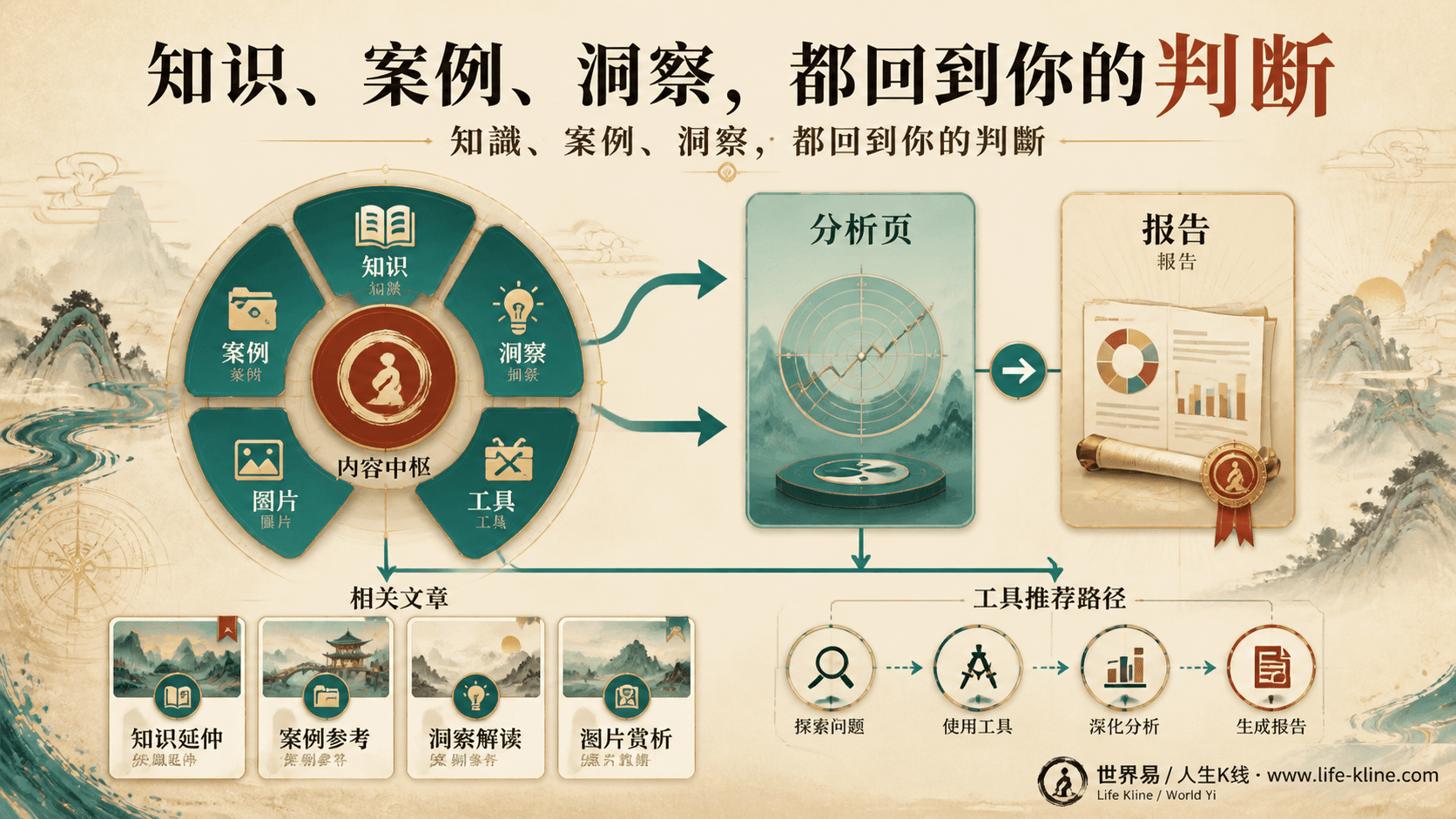
内容体系地图
这张图把《Tianfeng Gou Trigram: A Cautionary Tale of Soft Meets Hard》放回人生K线内容体系,让用户知道当前阅读如何继续连接测算、工具、案例和复访。
知识、案例、洞察、图片文章和工具都应回到用户自己的判断问题,而不是只做内容堆积。