The Meaning and Metaphysical Application of the Di Feng Sheng Hexagram
把这篇文章落到自己身上验证:先看结构,再进入个人分析,不做泛泛阅读。
Concept Definition
Di Feng Sheng is one of the 64 hexagrams in the I Ching, composed of the Xun hexagram (wind) below and the Kun hexagram (earth) above. According to the formation rules of the 64 hexagrams, two basic trigram hexagrams stack to form a new hexagram; Di Feng Sheng is Xun (wind) below and Kun (earth) above. The six lines (yao) are arranged from bottom to top, from the initial line to the top line, forming the complete hexagram. The character 'Sheng' means rising or ascending; the Di Feng Sheng hexagram symbolizes gentle and rhythmic upward development.
In the hexagram’s meaning, 'Sheng zhe shang ye, rou yi shi sheng' (升者上也,柔以时升) reflects the philosophy of ascending gradually with gentleness and timeliness. Di Feng Sheng governs steady development and promotion, emphasizing step-by-step progress and avoiding impatience or rashness. The hexagram shows wind beneath earth, implying wind rising naturally from the ground, symbolizing a stable and enduring growth process.
In practical application, Di Feng Sheng is suitable for moving southward, based on the hexagram’s directional indication. The south symbolizes sunlight and growth, aligning with the hexagram’s positive upward attribute. It warns against rash advancement, reminding people to respect timing in actions and decisions, follow the trend, and avoid impulsive mistakes that lead to failure.
Traditional Metaphysical Significance
In traditional metaphysics, the Di Feng Sheng hexagram signifies promotion and stable development, often used to predict career, academic progress, and life stage advancement opportunities. It emphasizes gentleness and timing, embodying the philosophy of 'gentle ascent with timeliness'—achieving goals through appropriate effort and correct timing.
From the perspective of Liu Yao (six-line) divination, the line statements (yao ci) and hexagram image in Di Feng Sheng imply the legitimacy and steadiness of promotion. Detailed analysis of Shi (世, the self line), Ying (应, the external environment line), Yong Shen (用神, favorable element), and Sheng Ke (生克, generating and overcoming) relationships can reveal whether the querent’s promotion path is smooth or obstructed. This hexagram reminds metaphysicians to focus on timing and method when making judgments, avoiding haste.
Historical classical texts regard Di Feng Sheng as an auspicious hexagram, symbolizing growth and progress of all things. However, its warning against rashness also reflects ancient respect for natural laws. This thought permeates I Ching philosophy, emphasizing harmony with heaven and earth’s timing, steady advancement, and long-lasting success.
Practical Configuration and Interpretation
In Liu Yao divination, interpretation of the Di Feng Sheng hexagram centers on the Sheng Ke relationships among the Shi line, Ying line, and Yong Shen. The Shi line represents the querent, the Ying line represents the external environment; analyzing their interaction combined with the hexagram’s meaning can judge the possibility and timing of promotion.
Using the Ti-Yong (体用) relationship in Plum Blossom Numerology (Meihua Yishu), the auspiciousness of Di Feng Sheng depends on the Sheng Ke relationship between Ti (body) and Yong (function). The generating, overcoming, and harmonizing between Ti and Yong reflect the mutual influence of internal and external factors, determining the smoothness of promotion. The gentle ascending characteristic of Di Feng Sheng suits scenarios requiring steady advancement, such as career growth and job promotion.
Practically, the hexagram’s indication of 'suitable to go south' is advice on action direction, symbolizing harmony with nature and seasonal timing. The warning against 'rash advancement' reminds the querent to act cautiously, avoiding impatience and impulsiveness. Through reasonable configuration and detailed analysis, Di Feng Sheng can provide important reference for decision-making.
Common Misunderstandings
Some metaphysics enthusiasts mistakenly interpret Di Feng Sheng simply as blind ascent or guaranteed success, neglecting the key concept of 'gentle ascent with timeliness,' leading to overlooking the importance of timing and method in application. In fact, Di Feng Sheng emphasizes following the trend and steady development, not reckless advancement.
Another common misunderstanding is ignoring the directional guidance of 'suitable to go south.' The hexagram’s directional hint is not merely geographical but also implies conformity in actions and decisions. Neglecting this can cause actions to deviate from the favorable timing and environment indicated by the hexagram, reducing the accuracy and practical value of predictions.
FAQ
Question: How to judge fortune in Liu Yao divination with the Di Feng Sheng hexagram? Answer: Mainly through the Sheng Ke relationships among the Shi line, Ying line, and Yong Shen, combined with the hexagram’s meaning of 'gentle ascent with timeliness,' analyzing whether the timing is followed and rashness avoided.
Question: Why does Di Feng Sheng warn against 'rash advancement'? Answer: Because the hexagram emphasizes steady development and timing; rash advancement can disrupt the gentle rising trend, causing unfavorable results. Therefore, caution is necessary.
Question: What is the meaning of 'suitable to go south' in Di Feng Sheng? Answer: 'Suitable to go south' refers to the direction of action or decision-making aligning with the south, symbolizing sunlight and growth, matching the hexagram’s positive ascending nature, beneficial for career and life development.
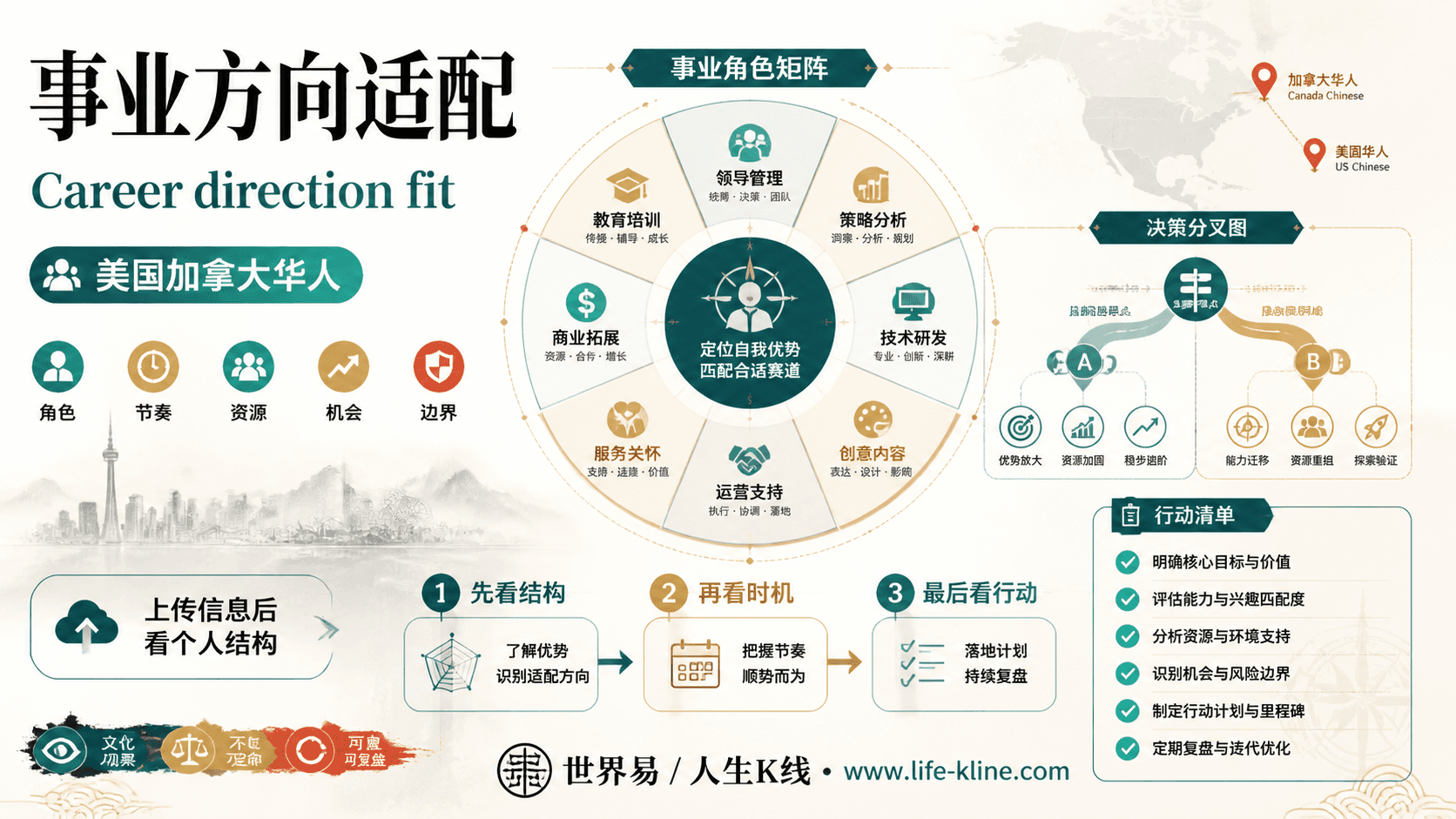
事业方向适配|美国加拿大华人
这张图把《The Meaning and Metaphysical Application of the Di Feng Sheng Hexagram》里的命理概念转成关系、边界和应用场景,适合先看图建立结构,再回到知识文章正文理解细节。
事业方向适配不应被写成固定结论。更适合美国加拿大华人的读法,是把传统术语翻译成结构、时机、环境、行动和复盘。
查看图片解读