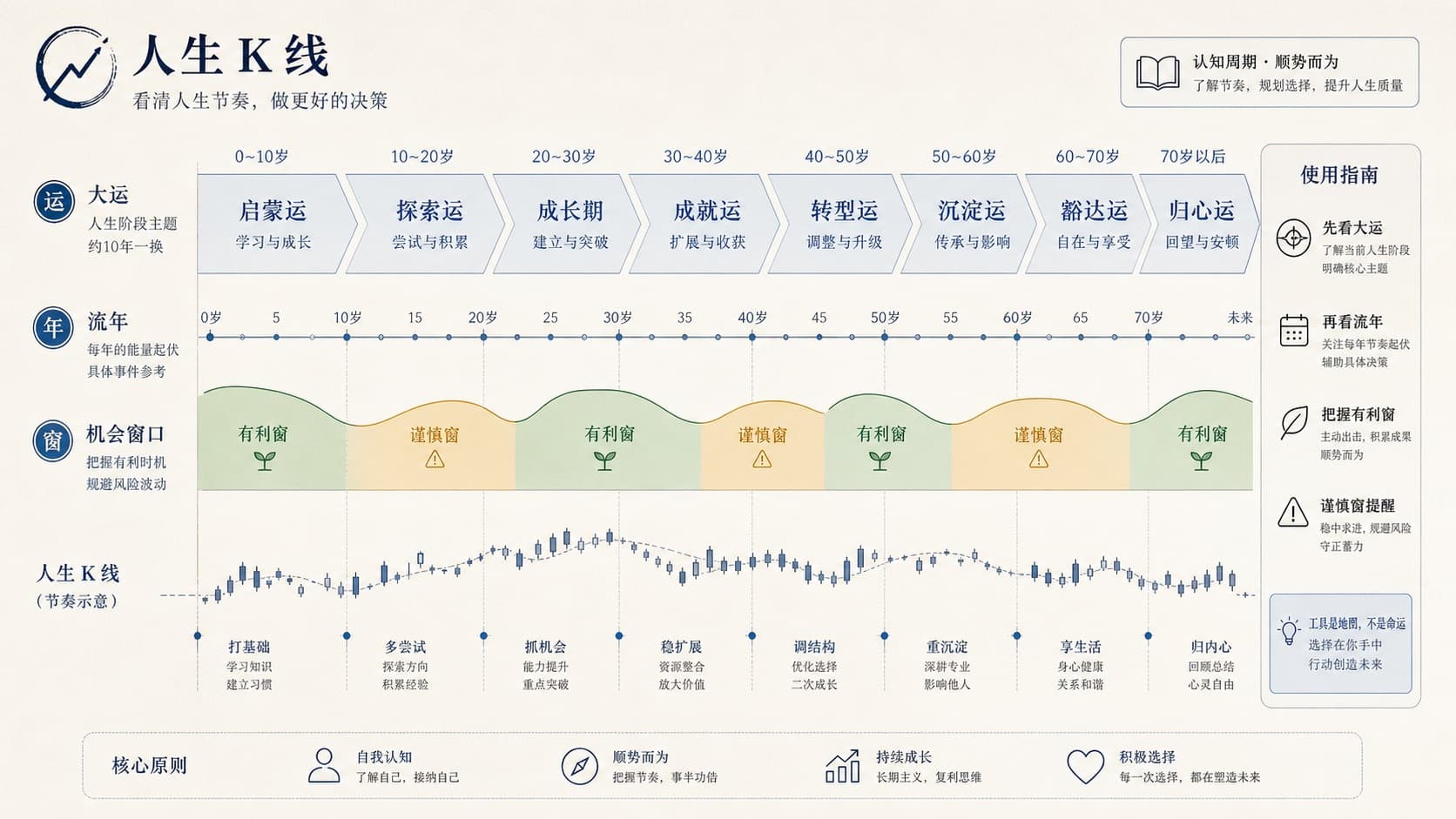
大运与流年窗口:把抽象判断拆成可看见的结构关系。
Concept Definition
The Qian of Heaven hexagram is the first hexagram among the sixty-four, structured by stacking two Qian trigrams (upper and lower). In the traditional Yi learning system, each hexagram consists of six lines, numbered from the bottom up as the initial line to the upper line. Because both the upper and lower trigrams are Qian, it is known as a pure Yang hexagram, symbolizing the most pure and vigorous Yang energy in the universe. This structure is extremely rare among the sixty-four hexagrams, representing an extreme state that contains both the initial driving force of all things and the inevitable conclusion of development at its peak. From the perspective of imagery, the Qian trigram takes the image of the sky, hence the saying of 'celestial vigor.' Covering the earth, the sky runs ceaselessly without stopping due to fatigue, endowing the Qian hexagram with attributes of vigor, impartiality, and authority. In the context of metaphysics and divination, Qian of Heaven is not only an upper position in space but also represents spiritual dominance and leadership. It symbolizes males, fathers, leaders, and all things possessing creative and constructive power. When asking about affairs, receiving this hexagram often predicts that matters will progress smoothly toward set goals, possessing the potential for unobstructed success. However, the hexagram's meaning also explicitly points out the limitations of Qian, namely that excessive rigidity leads to breakage. While pure Yang is abundant, lacking the harmonization of Yin can easily lead to extremes. Though the sky is lofty, it must adapt to seasonal changes; if one remains rigidly strong without considering the situation, it may lead to breaking down or decline. Therefore, Qian of Heaven is not merely a symbol of success but a philosophical metaphor about balance and restraint, reminding seekers that while pursuing vigor and advancement, they must know to act in accordance with the flow and avoid attracting backlash due to excessive strength.
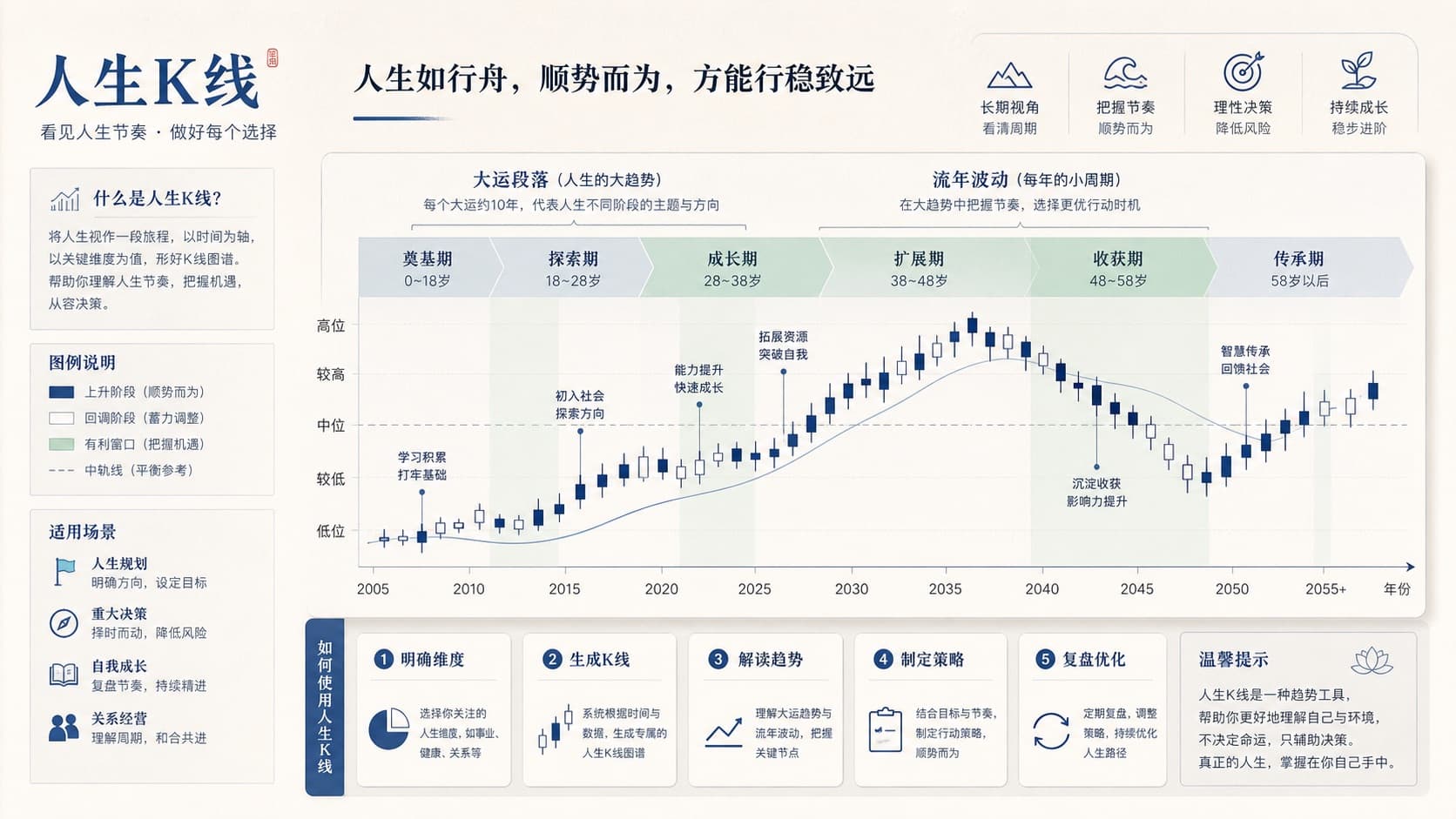
人生K线:节奏而不是宿命:把抽象判断拆成可看见的结构关系。
Traditional Metaphysical Meaning
Within the grand system of the sixty-four hexagrams, Qian of Heaven holds a position of overarching importance. As one of the eight trigrams, Qian represents the sky, governs celestial virtue, and its nature is vigorous. When two Qian trigrams overlap to form Qian of Heaven, this vigorous energy is amplified to its extreme. Traditional metaphysics holds that this hexagram governs vigor, leadership, and self-improvement, serving as an auspicious omen for initiating careers and rising in power. For leaders, this hexagram symbolizes possessing broad vision and strong execution capabilities, able to lead teams through difficulties to achieve grand goals. It represents an unyielding spirit, much like the cycle of celestial movement, which repeats endlessly without stopping. Another core meaning of the Qian of Heaven hexagram lies in the smoothness of affairs. In ancient divination practices, when asking about future prospects, fame, or decision-making, receiving this hexagram often means wide paths and bright prospects. It implies that the seeker possesses sufficient strength and resources to face challenges, and the external environment is relatively favorable, allowing matters to succeed naturally. This smoothness is not blind optimism but based on the alignment between the seeker's vigorous qualities and the objective environment. Simultaneously, Qian symbolizes the source of creativity; any matter requiring the creation of a new situation is likely to break through under this hexagram's imagery, displaying vibrant life force. Nevertheless, traditional metaphysical interpretations of Qian consistently thread a warning: excessive rigidity leads to breakage. Though the sky is vigorous, there are also times for seasonal transitions. If a person, while in prosperous fortune, still adheres to rigidity, refuses to adapt, or becomes arrogant due to favor, the so-called smoothness will instantly transform into distress. The Qian of Heaven hexagram reminds people that vigor is a means, not an end; ultimately, one must return to a state of the mean and harmony. Only by combining strength and flexibility can one truly maintain vigorous vitality for a long time, avoiding loss of support due to aggression and ultimately leading to damage.
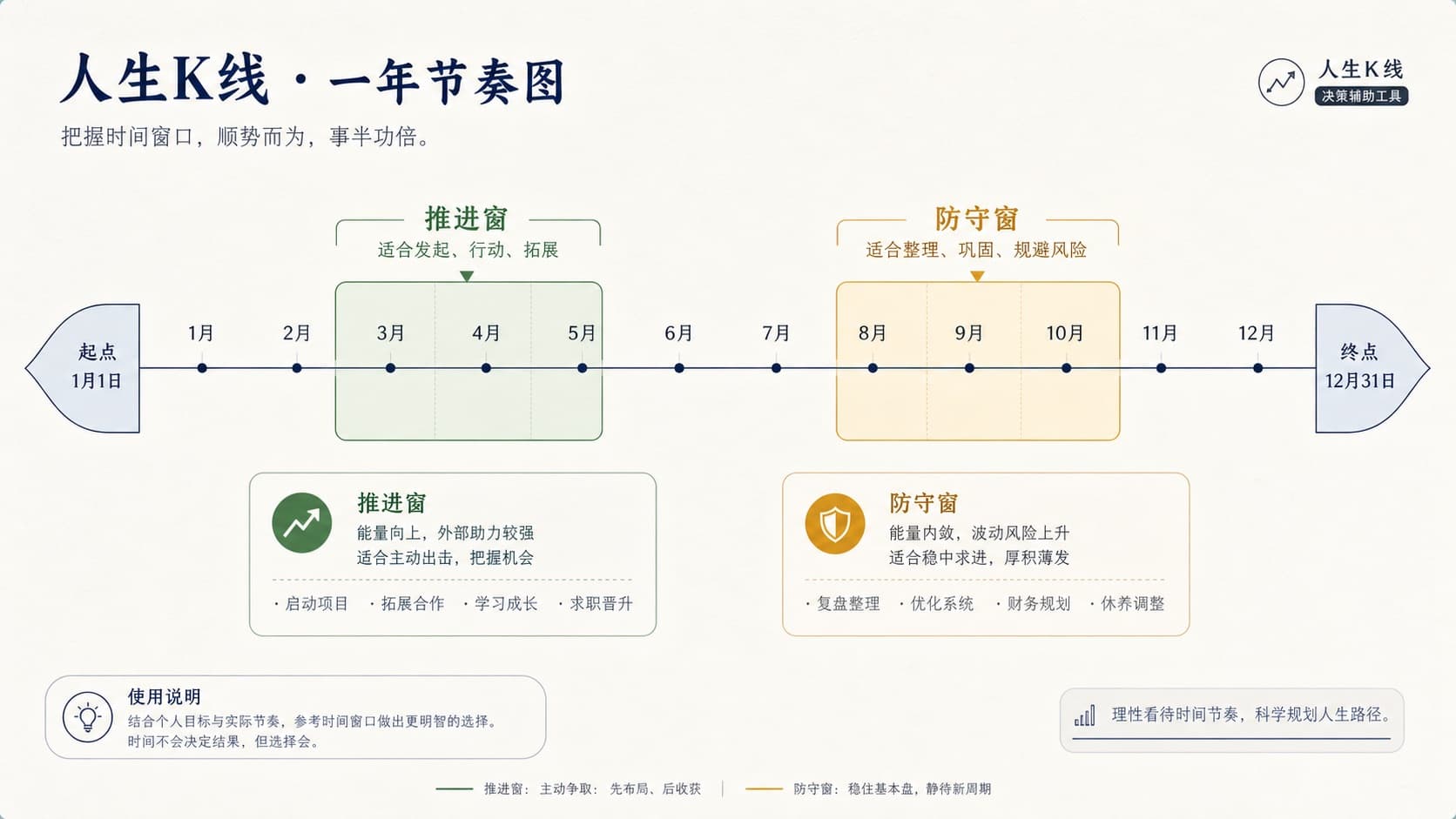
流年主窗口怎么用:把抽象判断拆成可看见的结构关系。
Practical Configuration and Interpretation
In Liu Yao divination, the practical interpretation of the Qian of Heaven hexagram relies primarily on the world-line (Shi), response-line (Ying), and the generating/restraining relationships. Since the Qian hexagram is pure Yang, if the world-line or response-line receives assistance from Qian Metal or Qian Fire, and no moving line breaks it, it indicates great good fortune, favorable for seeking official positions and wealth. At this time, if the favorable deity (Yong Shen) is grounded and empowered, with generating relationships, it predicts smooth development, allowing the seeker to hold the initiative. Especially in leadership roles or management projects, the configuration of Qian of Heaven displays extremely strong control and cohesion, with teams easily acting around core goals with high execution capability. In the Plum Blossom Divination system, determining the fortune or misfortune of the Qian of Heaven hexagram mainly depends on the generating/restraining relationship between the body trigram and the use trigram. Qian of Heaven represents the image of Qian Metal; if the body trigram is Qian and the use trigram is also Qian, the two trigrams are in harmony (Bi He), with no generating/restraining emotions, indicating stable development, favorable for cooperation and waiting. If the body trigram is restrained by the use trigram, one must note the pressure brought by strength; if the use trigram restrains the body trigram, it warns against the risk of excessive rigidity leading to breakage. Practically, if the Qian hexagram moves and transforms into retreat, or encounters the亥子 water lines to restrain it, one must be cautious of the process of extreme Yang transforming to Yin; at this time, one should not advance blindly but remain still and wait for the timing. Additionally, the Qian of Heaven hexagram is commonly used in prediction scenarios for large-scale projects, strategic planning, or high-level decision-making. In such matters, its vigorous nature helps break stalemates and push projects into implementation. However, if Qian of Heaven appears in interpersonal disputes or emotional issues, it is often due to overly rigid personality and lack of tolerance causing conflicts. In such cases, one must combine the moving lines and changing lines in the hexagram to see if Yin lines intervene to harmonize Yin and Yang. If the entire hexagram is pure Yang with no Yin lines, one needs to reflect more, avoiding offending others due to excessive strength; otherwise, even if the matter is accomplished, hidden dangers may be buried behind.
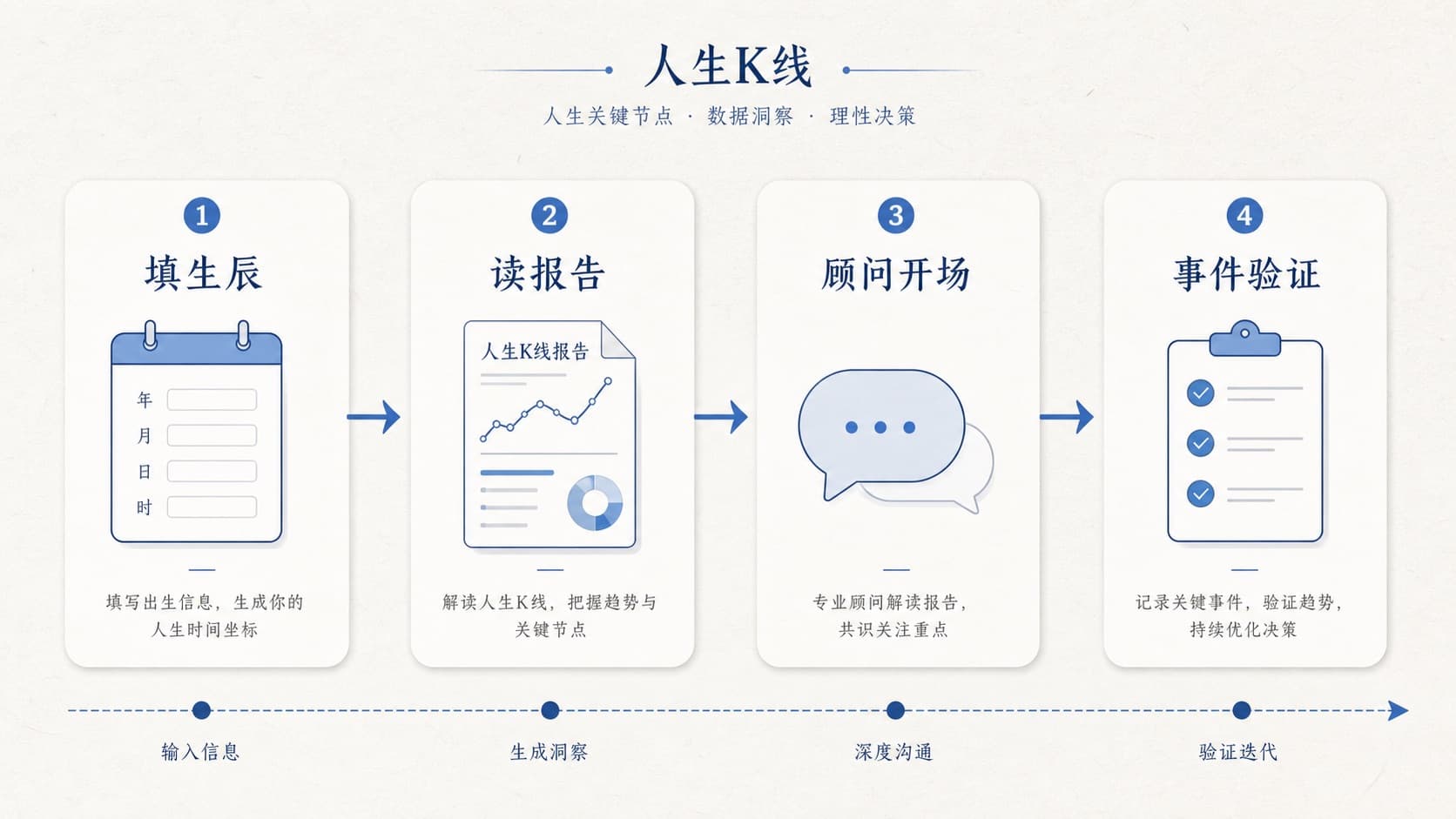
从生辰到可执行判断:把抽象判断拆成可看见的结构关系。
Common Misconceptions
Many people, when understanding the Qian of Heaven hexagram, tend to equate it simply with absolute victory or success. This is a common misconception, ignoring the warning in the hexagram's meaning about excessive rigidity leading to breakage. While Qian of Heaven governs vigor, it does not mean all matters are suitable for solving with rigid means. In emotional or family relationships, if one forcibly manages others in the posture of a patriarch or leader, it often backfires. One must recognize that vigor requires moderate restraint; excessive strength can lead to the breakdown of relationships. Therefore, one should not blindly trust oneself because of receiving this hexagram, thinking everything can be done. Another misconception lies in the one-dimensional understanding of the Qian trigram's nature, believing Qian is pure Yang and therefore rejecting all Yin factors. In reality, metaphysics emphasizes Yin-Yang balance. Although Qian of Heaven is pure Yang, its operating rules inherently contain the principles of Yin-Yang growth and decline. The sky has day and night, four seasons; within vigor lies a gentle aspect. If, in actual application, one acts entirely according to the rigidity of the Qian hexagram without knowing when to show weakness or yield, one will fall into a dead end. True Qian virtue is knowing advance, retreat, survival, and death without losing one's correctness, rather than blindly charging forward.
FAQ
Q: What does the Qian of Heaven hexagram usually represent in terms of seeking wealth? A: Qian of Heaven governs vigor, leadership, and self-improvement. When asking about wealth, it generally indicates smoothness, favorable for pioneering projects or management-type work. If the world-line is prosperous, wealth sources are broad; however, if there is excessive rigidity without limits, one must beware of losing profit due to fighting over wealth. Q: Is the Qian of Heaven hexagram suitable for handling interpersonal relationships? A: The Qian of Heaven hexagram requires caution in interpersonal relationships, as it governs vigor and is prone to breakage; excessive strength can easily hurt harmony. One should influence others with the virtue of vigor rather than with power. When necessary, one should use Yin to overcome Yang to achieve longevity.
本文含 4 张图解(封面/结构/时位/行动或风险)。图解用于建立判断框架,不构成宿命结论; 个人决策请结合测算报告与工具验证。