BaZi Analysis of Long-Term Growth Trajectories in Gaokao Volunteer and University Decision-Making
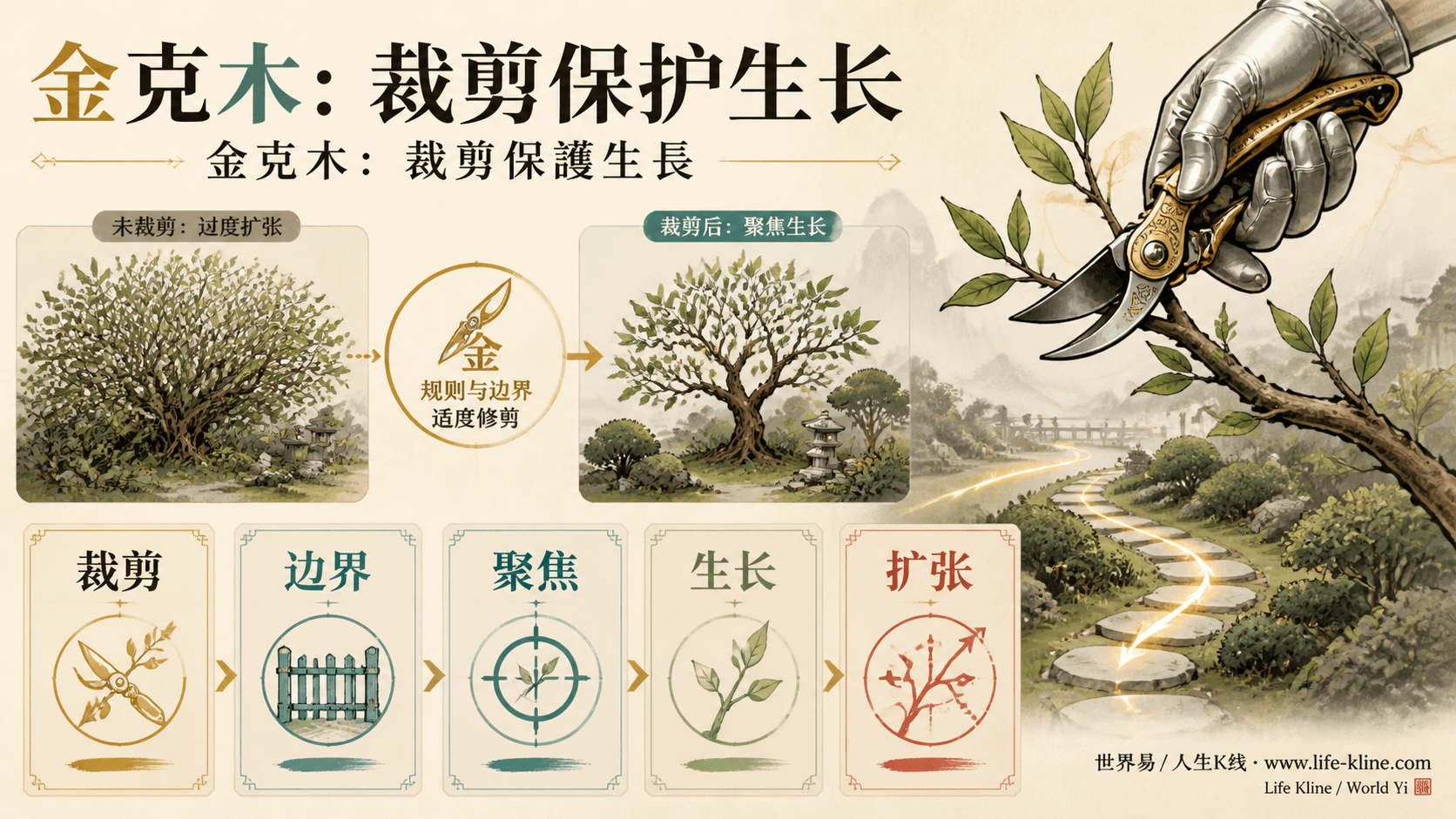
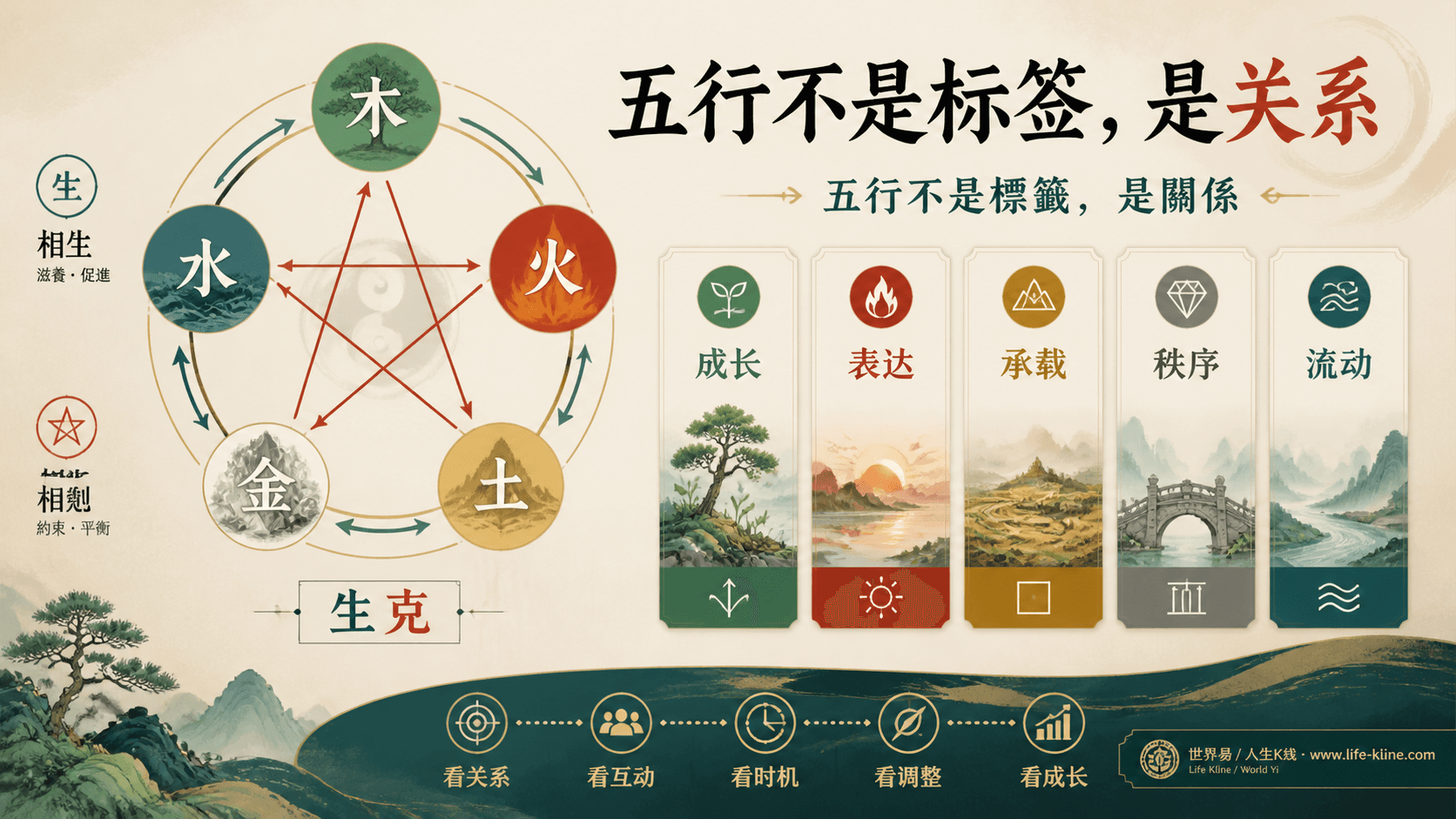
把这篇文章落到自己身上验证:先看结构,再进入个人分析,不做泛泛阅读。
Why This Decision Is Especially Difficult at This Educational Stage
The choice of Gaokao volunteers and university majors is an extremely critical node in the Chinese education system, involving multiple factors such as urban resources, school reputation, and professional prospects. Facing issues like school district housing, stratification policies, and academic pressures under the Double Reduction policy, parents and students often find themselves caught between short-term scores and long-term development. Short-term fluctuations in grades do not necessarily reflect the child's potential or future direction, making it challenging to look beyond scores to the essence.
Additionally, policy adjustments for early admission batches, fallback strategies for missed admissions, and considerations for repeating a year greatly increase decision complexity. Parental anxiety combined with insufficient understanding of the child's personality, interests, and abilities often leads to blind following or excessive intervention, which implicitly echoes and conflicts with the concepts of Yong Shen (favorable element) and Ji Shen (unfavorable element) in BaZi.
BaZi structures provide a reference perspective on rhythm and potential for decision-making at this stage. By analyzing the strength of the Day Master, pattern types, and the interactions among Shi Shen (Eating God), Shang Guan (Hurting Officer), Yin stars (印星), and Guan Sha (官杀), one can more scientifically assess a child's learning expression ability and resilience in adapting to the environment, thereby assisting in judging how to choose a path that better fits the child's long-term growth trajectory within educational realities.
Therefore, integrating BaZi with real policies, psychological states, and family resources can effectively reduce decision blind spots, improve the cost-effectiveness of educational investment, and avoid shortsighted behaviors that harm the child's sustainable development potential.
Three Core Dimensions of BaZi Judgment
First, the strength of the Day Master determines the individual's basic vitality and ability to cope with external challenges. For example, a relatively weak Day Master requires more Yong Shen support to balance its deficiencies, while an overly strong Day Master needs to pay attention to Ji Shen restrictions to avoid excessive depletion. Combining the Ten Gods such as Shang Guan (Hurting Officer) and Shi Shen (Eating God) can reflect the child's learning expression ability and creativity.
Second, pattern types like Shang Guan pattern or exclusive strong patterns reflect the dominant energy and personality tendencies in the BaZi chart. Shang Guan patterns often show strong expressive desire and active thinking, but Ji Shen impacts may cause emotional fluctuations; exclusive strong patterns indicate focus and persistence, but excessive energy requires Yong Shen to harmonize, avoiding stubbornness or resistance to change.
Lastly, Da Yun (decade luck cycles) and Liu Nian (annual fortunes) reflect how external environments and time nodes influence the BaZi chart. Stable Da Yun favor maintaining achievements and steady progress, while changes in Liu Nian require children and families to adapt flexibly. Especially the interaction between Shi Shen (Eating God) and Yin stars (印星) manifests as opportunities for creativity or pressure changes in learning and expression, providing valuable reference for long-term growth trajectory decisions.
By synthesizing these three dimensions, BaZi not only reveals the child's current potential structure but also predicts which educational strategies should be emphasized at different growth stages, thereby addressing the diverse challenges under contemporary educational environments.
Three Real BaZi Case Studies
Case 1: This female's BaZi chart has a relatively weak Ren Water (壬, Ren) Day Master, with a Shang Guan pattern. Her Yong Shen is Metal, and Ji Shen are Wood and Fire. She is currently in the Wu Xu (戊戌, Wu Xu) Da Yun, representing a stable maintenance phase, with the Liu Nian Bing Wu (丙午, Bing Wu) bringing some opportunities for environmental adaptation. The presence of the Shang Guan pattern means she has strong expression and creativity, but due to the weak Day Master, emotional fluctuations and stress management are particularly important during learning. When choosing Gaokao volunteers, overly aggressive majors should be avoided. It is recommended to select majors related to the Metal element or those that support Metal, such as finance, auditing, or engineering, which benefit the Yong Shen and alleviate Ji Shen pressures. The stable Da Yun suggests parents should focus on maintaining achievements and steady development, avoiding frequent volunteer adjustments or blind repetition. The judgment order should first confirm the child's interest and alignment with the Yong Shen, then consider city and school resources, and finally evaluate the long-term stability of growth.
Case 2: This female has a relatively strong Gui Water (癸, Gui) Day Master with an exclusive strong pattern. Wood is the Yong Shen, and Metal is the Ji Shen. She is currently in the Bing Shen (丙申, Bing Shen) Da Yun, generally stable, with the Liu Nian Bing Wu (丙午, Bing Wu) bringing potential changes. The exclusive strong pattern indicates strong concentration and persistence, suitable for deep cultivation in a particular subject or field. The Wood Yong Shen suggests strong knowledge absorption and innovation ability, making majors related to Wood, such as education, literature, design, or environmental science, appropriate. The presence of Ji Shen Metal reminds parents to pay attention to the child's capacity to handle competition and pressure, avoiding overly intense majors. In Gaokao volunteer decisions, the focus should be on interest matching and future development potential, leaving enough flexibility to cope with random changes brought by Liu Nian. The judgment sequence should start from Yong Shen needs, confirm major suitability, then combine family resources and city advantages, and finally assess growth resilience under Da Yun conditions.
Case 3: This male has a relatively strong Geng Metal (庚, Geng) Day Master with an exclusive strong pattern. Earth is the Yong Shen, and Wood is the Ji Shen. He is currently in the Geng Shen (庚申, Geng Shen) Da Yun, overall stable, with the Liu Nian Bing Wu (丙午, Bing Wu) bringing some environmental changes. The strong Geng Metal indicates a determined personality and strong execution ability, suitable for management, technical fields, or Earth-related majors such as architecture, real estate, or civil engineering. The Yong Shen Earth helps stabilize the chart and enhances learning and practical abilities. Ji Shen Wood may cause disturbances from external changes, so parents and the child should avoid majors in industries with rapid changes. Gaokao volunteer decisions should focus on the stability and growth potential of the major, avoiding frequent job changes or major switches. The judgment order should first confirm the major based on the Yong Shen Earth's stability needs, then examine environmental support and city resources, and finally incorporate Da Yun and Liu Nian influences to formulate a long-term plan.
Common Misjudgments and Blind Spots at This Stage
First, over-reliance on short-term scores while ignoring the child's latent growth motivation in BaZi. Many parents focus only on Gaokao results, neglecting the long-term impact of the Day Master's strength and the roles of Yong Shen and Ji Shen, resulting in selecting majors that do not align with the child's innate talents and hindering subsequent development.
Second, ignoring the influence of Da Yun and Liu Nian changes on the child's adaptability. Stability or fluctuations in Da Yun directly affect the child's learning state and psychological endurance. Blindly choosing majors incompatible with the current Liu Nian may increase stress and anxiety, even triggering psychological crises.
Third, misuse of Yong Shen or neglect of Ji Shen restrictions in BaZi. For example, children with a Shang Guan pattern have strong expressive abilities, but if Ji Shen Wood and Fire are excessive, emotional fluctuations are prone. If parents fail to adjust educational strategies timely, this may lead to school aversion or rebellion.
Fourth, lack of multidimensional evaluation combining contemporary education policies and family resources. BaZi is important, but without integrating school district advantages, professional employment prospects, and the child's interests and traits, decisions tend to be unbalanced, missing the best growth window.
Practical Judgment Sequence
Step one: Assess the child's Day Master strength and pattern type, clarify Yong Shen and Ji Shen, with special attention to the influences of Shi Shen (Eating God), Yin stars (印星), and Guan Sha (官杀) on learning expression, to judge the child's learning style and psychological endurance. This foundational step determines the direction and focus of judgment.
Step two: Combine the current Da Yun and Liu Nian to analyze the growth phase trend, whether it is suitable to maintain or transform, avoiding major professional adjustments during unfavorable Liu Nian. This stage helps grasp timing windows and decision rhythm.
Step three: Integrate the real educational environment, including urban education resources, school characteristics, professional prospects, and policy orientation, matching the elements favored by the Yong Shen to ensure the major choice aligns with both the child's potential and external support.
Step four: Dynamically adjust decisions, monitor changes in the child's interests and psychological state, and avoid emotional fluctuations or psychological crises caused by neglecting Ji Shen restrictions. Seek professional psychological counseling promptly if necessary. BaZi judgment serves as a rhythm reference, assisting parents in scientific coping.
FAQ
Question 1: How to determine if the child's Yong Shen is suitable for current popular majors? Answer: First confirm the child's Yong Shen attribute through BaZi, then combine with the professional attribute (e.g., finance corresponds to Metal, education corresponds to Wood) to evaluate compatibility. Majors with high compatibility are more conducive to the child's potential, otherwise proceed with caution.
Question 2: Should the major or repetition be immediately adjusted if Da Yun and Liu Nian are unfavorable? Answer: Blind adjustment is not recommended. Da Yun and Liu Nian only indicate the rhythm of growth fluctuations and should be judged in combination with the child's actual performance and psychological state. Steady progress is more effective than frequent changes. If psychological crises arise, professional psychological assistance should be prioritized.
Question 3: Can BaZi help judge whether studying abroad is worthwhile? Answer: BaZi can assist in evaluating the child's adaptability and growth rhythm. If the Yong Shen matches the elements of the study abroad environment, adaptability is better and the cost-effectiveness of studying abroad is relatively higher. However, this still requires comprehensive consideration of real economic and educational resources.
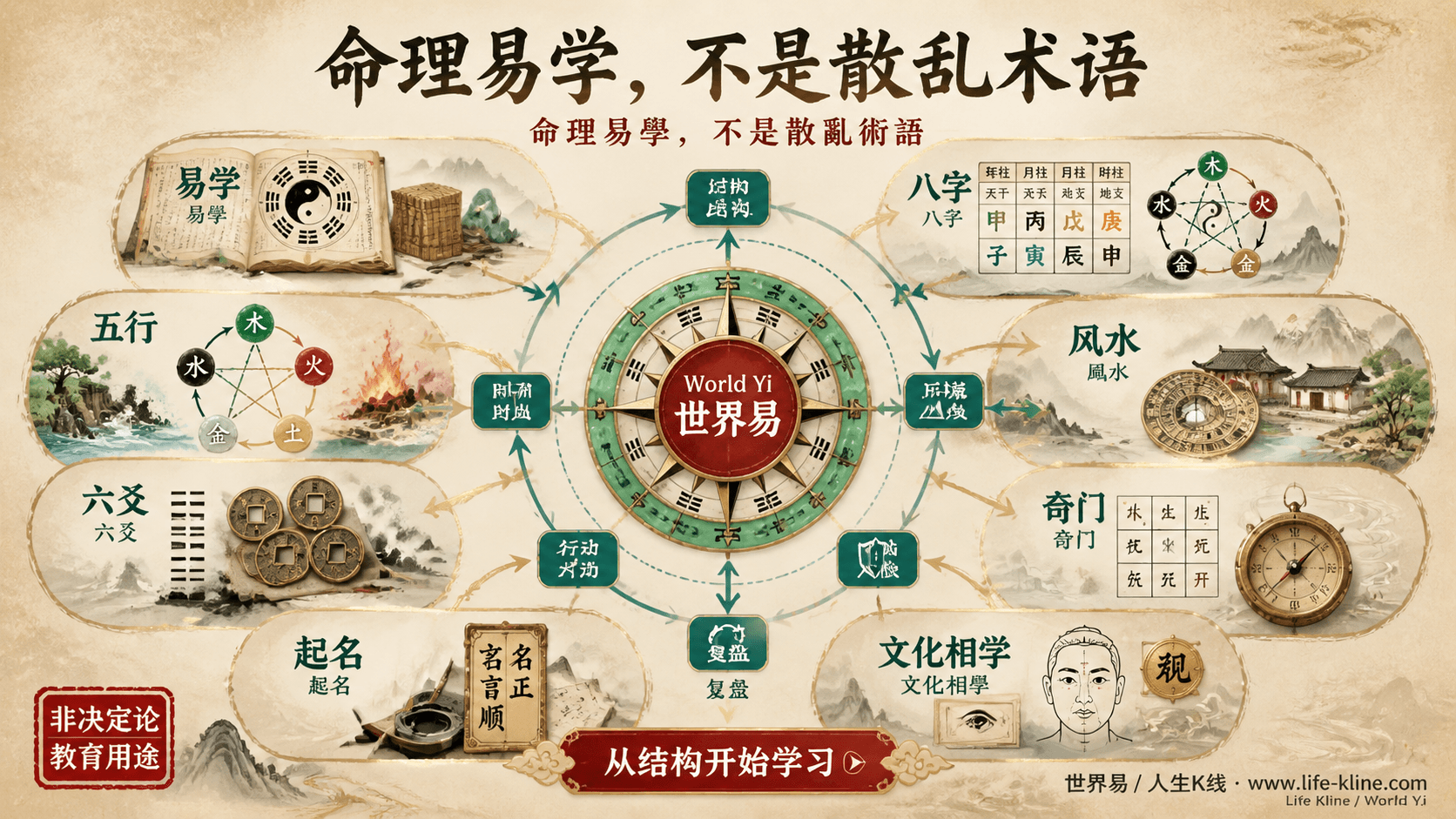
命理易学知识全景地图
这张图把《BaZi Analysis of Long-Term Growth Trajectories in Gaokao Volunteer and University Decision-Making》里的命理概念转成关系、边界和应用场景,适合先看图建立结构,再回到知识文章正文理解细节。
用一张图说明易学、八字、风水、奇门、六爻、相学、起名与世界易的关系。
查看图片解读