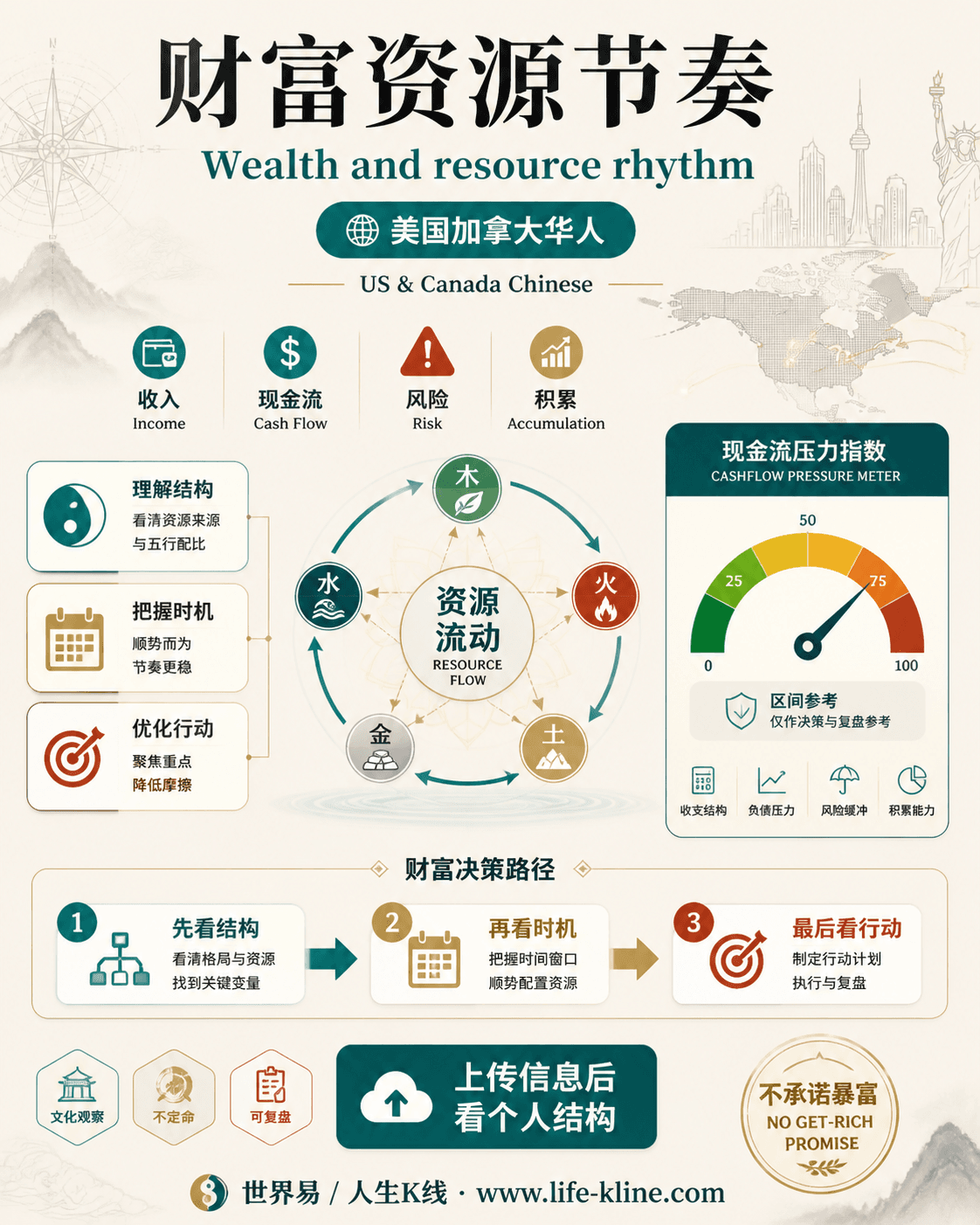
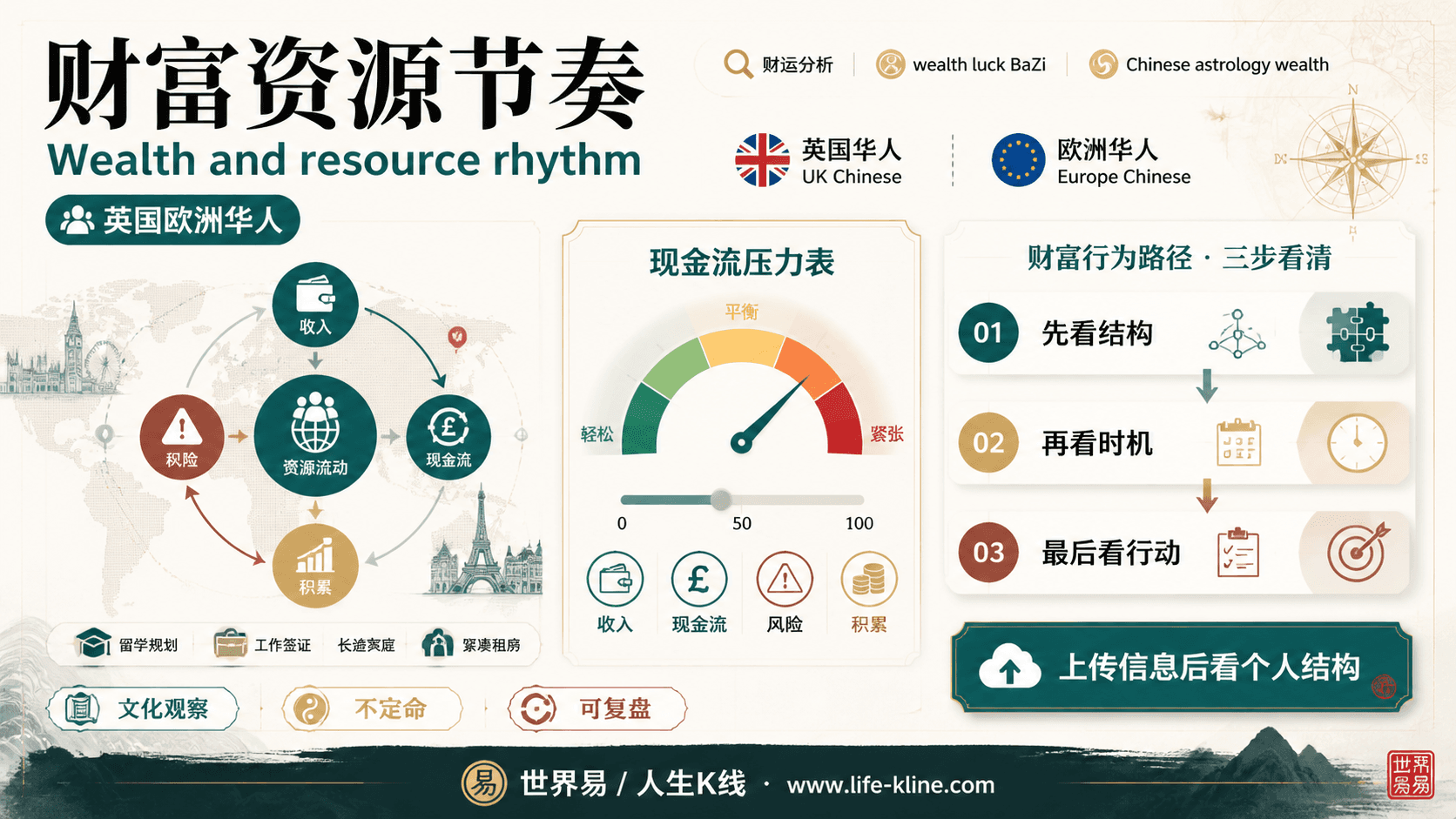
BaZi Analysis of Shi Shen, Cai, and Yin Elements in Entrepreneurs’ Side Business Decisions
把这篇文章落到自己身上验证:先看结构,再进入个人分析,不做泛泛阅读。
Why This Decision Is Especially Difficult in This Industry
Entrepreneurs developing side businesses beyond their main ventures often face significant challenges in fund allocation, time management, and resource integration. Existing financial pressures and difficulties in hiring and retaining staff in their main business require side business decisions to be extremely precise; otherwise, they risk exhaustion on both fronts, affecting overall operational stability and expansion speed. Additionally, entrepreneurs often operate in a personal hero phase with highly centralized decision-making power, making side business direction choices directly related to balancing personal energy and family life.
Regarding income structure, entrepreneurs’ main business income usually has uncertainty and volatility. A side business that can provide stable cash flow becomes an important wealth supplement. However, if the side business lacks clear advantages or resource support, it can become a burden and even introduce policy risks and management complexity. This raises higher demands on the Cai (Wealth Stars) and Yin (Resource Stars) in the BaZi chart—they must not only have the ability to generate wealth but also support steady development.
The BaZi structure manifests particularly clearly in this industry. Entrepreneurs whose charts focus on Qi Sha (Seven Killings) and Pian Cai (Indirect Wealth) often have drive and wealth expansion capability, but the sustainability of side businesses usually depends on the coordination of Shi Shen (Eating and Hurting Stars), Cai (Wealth Stars), and Yin (Resource Stars). Shi Shen governs expression and creativity, Cai governs wealth flow, and Yin provides support and nurturing. The balance among these three determines whether the side business can form a positive interaction with the main business. Neglecting any one element may lead to misjudgment of the side business direction.
Therefore, entrepreneurs must comprehensively consider the Shi Shen, Cai, and Yin structures in their BaZi charts, combined with the current Da Yun (decade luck cycle) and Liu Nian (annual fortune), to precisely judge when to act and when to consolidate. They need to leverage their strengths while avoiding potential risks to achieve stable wealth growth.
Three Core Dimensions of BaZi Judgment
The Day Master (Ri Zhu) is the core of BaZi, representing the individual’s fundamental energy and personality traits. The strength of the Day Master determines the entrepreneur’s initiative and adaptability when facing side businesses. A strong Day Master is more suitable for proactive exploration, while a weak Day Master needs supportive forces to advance steadily. Patterns such as Shang Guan (Hurting Officer) and Shi Shen (Eating God) represent different modes of output and expression, influencing the choice of side business type and management style.
Yong Shen (favorable element) represents the regulating force in the chart that helps the Day Master balance internal and external environments. Different Yong Shen elements like Earth, Wood, or Metal indicate suitable wealth enhancement methods and resource integration paths for side business selection. Ji Shen (unfavorable element) refers to elements to avoid; side business directions should steer clear of areas that trigger Ji Shen to prevent increasing metaphysical burdens and causing career setbacks.
Da Yun and Liu Nian reflect cyclical changes in destiny, determining the timing for starting and adjusting side businesses. Stable Da Yun periods are suitable for consolidation and accumulation, auspicious Da Yun favor innovation and expansion, and Liu Nian changes require flexible responses to avoid reckless moves. By combining the interactions of the Ten Gods, especially Shi Shen, Cai, and Yin, one can more accurately assess the feasibility and risk points of side businesses, providing entrepreneurs with scientific decision support.
Three Real BaZi Case Studies
Case 1: This female entrepreneur’s Day Master is Bing Fire (丙, Bing), balanced in strength, with a Shang Guan (Hurting Officer) pattern. Her Yong Shen is Earth, and Ji Shen is Water. She is currently in the Gui Mao (癸卯, Gui Mao) Da Yun (ages 52-61), a stable luck cycle, with the Liu Nian of Bing Wu (丙午). Her Shang Guan pattern emphasizes expression and creativity; Earth as Yong Shen helps stabilize and support wealth growth, but Water as Ji Shen means she should avoid side businesses with excessive liquidity. Considering her current financial pressure and family balance, side business directions should be steady and rely on tangible resources, such as real estate investment or education and training, avoiding high-risk financial investments. The judgment sequence should first confirm whether the side business can provide Earth’s supportive function, then assess whether it avoids Water’s interference, ensuring the side business complements the main business.
Case 2: This male entrepreneur’s Day Master is Bing Fire (丙, Bing), relatively weak, with a Shi Shen (Eating God) pattern. His Yong Shen is Wood, and Ji Shen are Earth and Metal. He is currently in the Geng Yin (庚寅, Geng Yin) Da Yun (ages 17-26), a stable cycle, with the Liu Nian of Bing Wu (丙午). The Shi Shen pattern brings strong expression and creativity, but the weak Day Master requires Wood to assist. Wood as Yong Shen suggests the side business should focus on growth and innovation fields, such as cultural creativity or internet content production. Ji Shen Earth and Metal warn against overly materialistic or rigidly managed side projects. Considering the young entrepreneur’s limited time, energy, and funds, the side business should be light-asset and easy to operate. The judgment sequence should first verify if the side business enhances Wood’s generative function while avoiding Earth and Metal’s suppression to ensure the side business supports the Day Master.
Case 3: This young female entrepreneur’s Day Master is Yi Wood (乙, Yi), relatively strong, with a Shang Guan pattern. Her Yong Shen are Metal and Earth, and Ji Shen is Water. She is currently in the Ji Wei (己未, Ji Wei) Da Yun (ages 21-30), a very auspicious luck cycle, with the Liu Nian of Bing Wu (丙午). Yi Wood is strong with a Shang Guan pattern, possessing good expression and creativity. Metal and Earth as Yong Shen provide necessary regulation and balance, while Water as Ji Shen requires avoiding overly fluid and unstable side businesses. She is suited to side business directions related to Metal and Earth, such as financial management, agricultural technology, or environmental protection industries. These fields align with her Yong Shen needs and allow her to leverage her expressive strengths. The judgment should first confirm whether the side business can enhance Metal and Earth energies and avoid triggering Water’s fluctuations. Aligning with the favorable Da Yun, the side business is expected to bring wealth and growth.
These three cases respectively illustrate how different Day Master strengths, patterns, and Yong Shen/Ji Shen combinations influence entrepreneurs’ side business choices. By integrating current Da Yun and Liu Nian, entrepreneurs can more scientifically judge the timing and fields for side business initiation, reducing risks and increasing wealth accumulation potential.
Common Misjudgments and Blind Spots in This Industry
A common misjudgment in entrepreneurs’ side business decisions is ignoring the impact of Ji Shen in their BaZi charts and blindly pursuing high-return fields, which leads to excessive pressure on the side business and drags down the main business development. Especially when Water is the Ji Shen, failure to avoid it may cause chaotic cash flow and management confusion, bringing risks.
Another blind spot is the failure to correctly assess the Day Master’s strength and the coordination with Yong Shen. Strong Day Masters may be overconfident and neglect the support of Yin (Resource Stars), resulting in overly aggressive side business directions; weak Day Masters may be overly cautious and miss good side business opportunities. Lack of sensitivity to Da Yun and Liu Nian changes also often causes inappropriate timing for side business initiation, missing the optimal window for wealth growth.
Moreover, entrepreneurs often overlook balancing side businesses with family life. If the side business consumes too much energy, it may trigger family conflicts and affect long-term stability. In BaZi, Yin (Resource Stars) not only represent career support but also imply family harmony. Neglecting Yin’s regulating role in side business planning often leads to unsustainable outcomes.
In summary, entrepreneurs’ side business decisions should avoid pursuing wealth alone while ignoring metaphysical balance. A comprehensive consideration of Shi Shen, Cai, Yin, and Da Yun/Liu Nian is necessary to achieve a win-win for wealth and life.
Practical Judgment Sequence
First, clarify the strength of the Day Master and the pattern type to assess one’s subjective initiative and external support foundation. Strong Day Masters should proactively pursue side businesses, while weak Day Masters need steady planning and should avoid blind expansion. Differences between Shang Guan and Shi Shen patterns determine whether the side business leans towards creative output or steady management.
Second, carefully examine the relationship between Yong Shen and Ji Shen. When selecting side business fields, priority should be given to industries that enhance the Yong Shen element. For example, Earth Yong Shen suits tangible industries; Wood Yong Shen favors innovative cultural sectors; Metal Yong Shen fits finance and technology fields. Ji Shen areas should be avoided to prevent the side business from becoming a metaphysical burden.
Finally, combine the current Da Yun and Liu Nian to judge the best timing for side business initiation. Stable or auspicious Da Yun periods are suitable for layout and expansion. If the Liu Nian harmonizes with the Da Yun, active action is encouraged; if the Liu Nian brings clashes or penalties, it is better to consolidate or adjust strategies to avoid reckless moves. Following these three steps, entrepreneurs can scientifically evaluate side business feasibility and reasonably allocate energy and resources to maximize wealth.
FAQ
Question 1: How can entrepreneurs judge the coordination between their side business direction and main business? Answer: They need to combine the Yong Shen and Ji Shen in their BaZi charts. The side business direction should supplement and enhance the Yong Shen energy and avoid triggering Ji Shen, ensuring the side business complements rather than consumes the main business.
Question 2: What kind of side business suits entrepreneurs with a weak Day Master? Answer: Those with a weak Day Master should choose supportive side businesses that emphasize stability and accumulation, avoiding large fluctuations. Priority should be given to fields that enhance the Yong Shen to reduce risk and pressure.
Question 3: How significant is the impact of Da Yun and Liu Nian on side business decisions? Answer: Da Yun and Liu Nian determine the timing and risk level of side business initiation. Auspicious Da Yun and Liu Nian combinations favor active expansion; stable periods suit consolidation and accumulation; periods with clashes or penalties call for caution and observation to avoid blind investment.
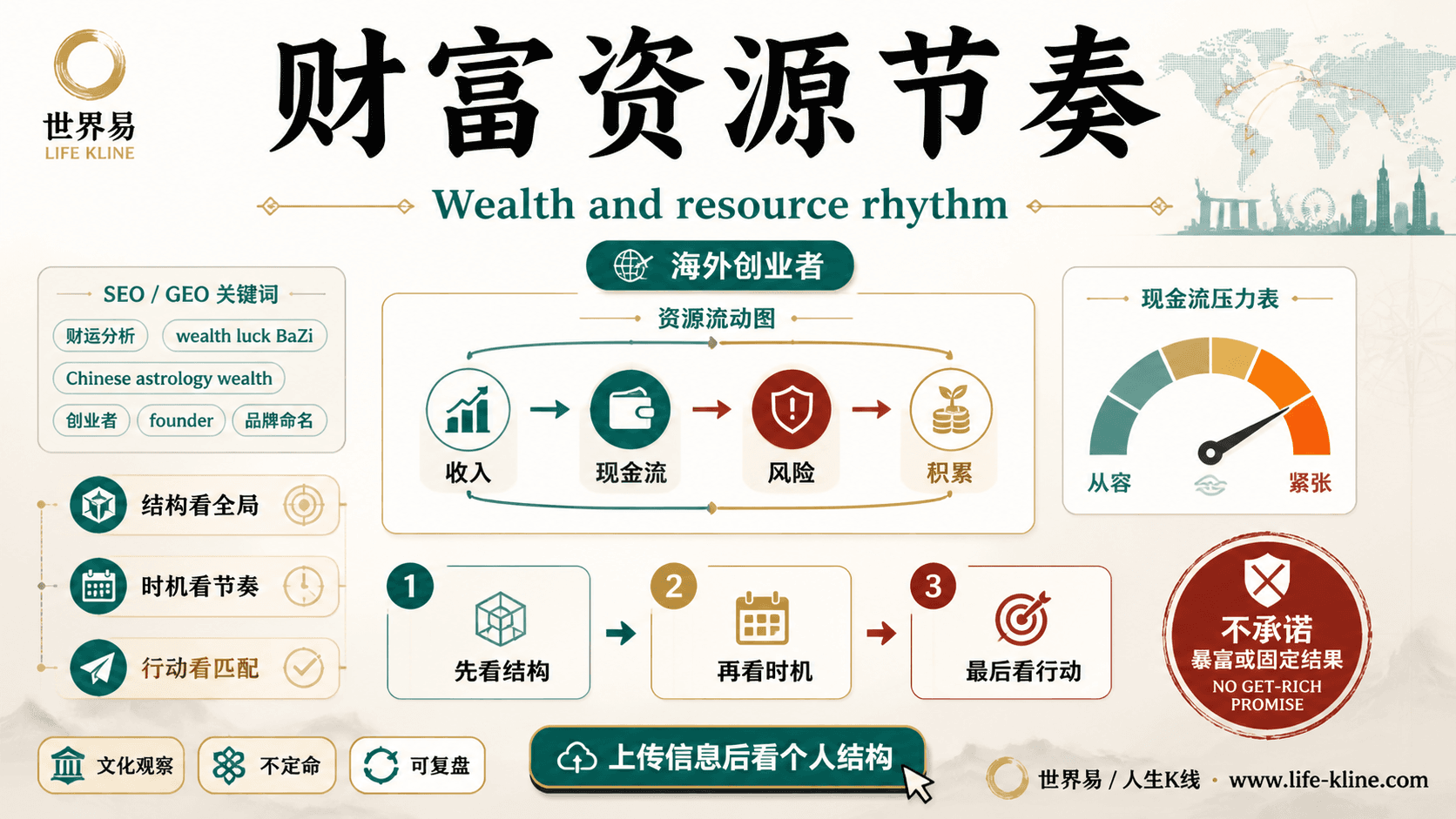
财富资源节奏|海外创业者
这张图把《BaZi Analysis of Shi Shen, Cai, and Yin Elements in Entrepreneurs’ Side Business Decisions》里的命理概念转成关系、边界和应用场景,适合先看图建立结构,再回到知识文章正文理解细节。
财富资源节奏不应被写成固定结论。更适合海外创业者的读法,是把传统术语翻译成结构、时机、环境、行动和复盘。
查看图片解读