Metaphysical Analysis of Relationship Repair and Withdrawal During the Engagement and Betrothal Gift Stage
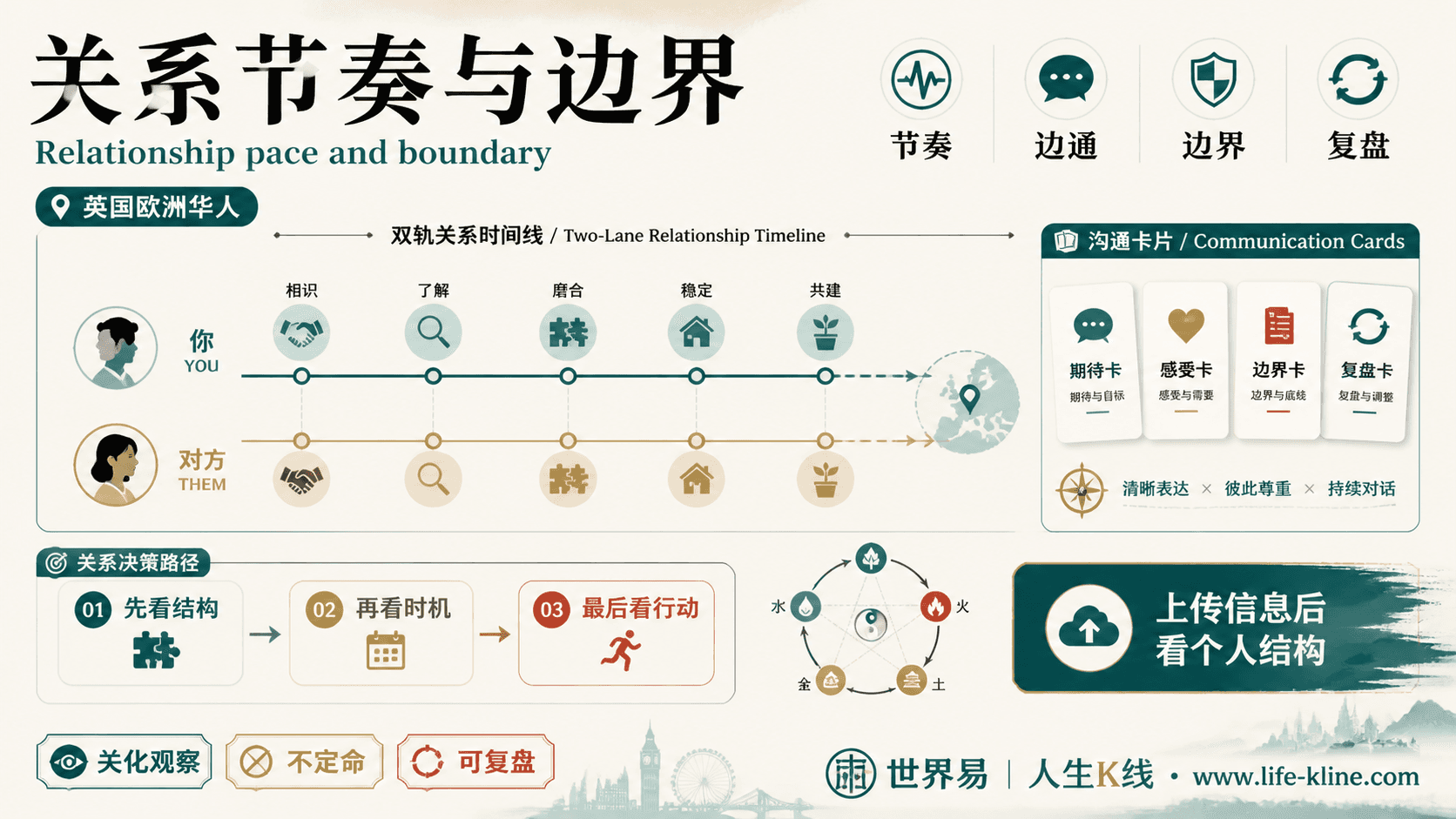
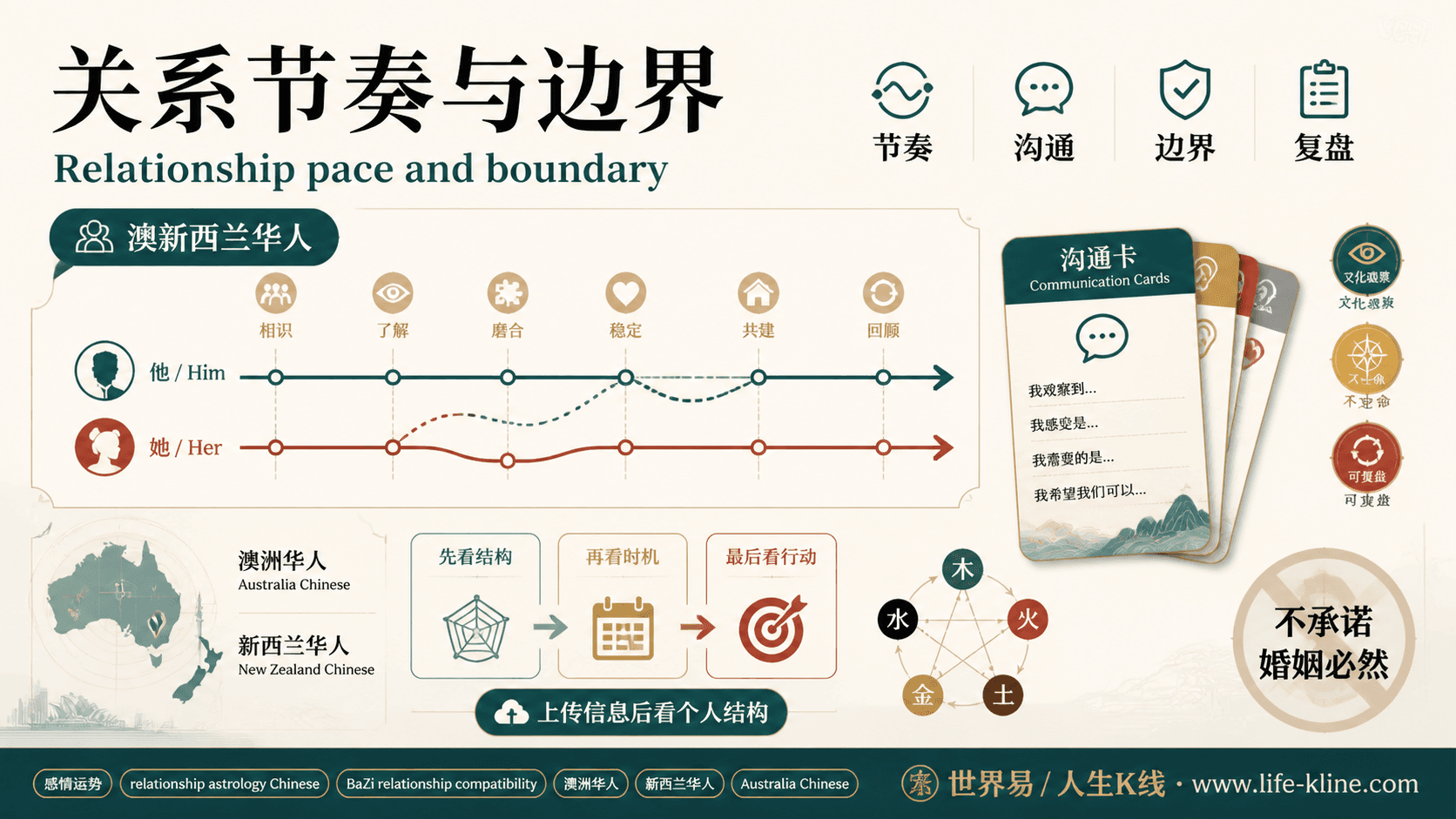
把这篇文章落到自己身上验证:先看结构,再进入个人分析,不做泛泛阅读。
Why This Decision Is Especially Difficult at This Marriage Stage
The engagement and betrothal gift stage is a critical node in contemporary Chinese relationships, laden with intense real-world pressures. Both families often engage in fierce bargaining over the betrothal gift amount and wedding timing. The younger generation faces societal expectations on betrothal gift sums while contending with parental traditional views. Differences in family stances easily escalate conflicts, causing relationship tension. At this stage, the emotional foundation is not yet fully solidified, so any conflict may cause fractures.
On the other hand, both parties must consider their families' financial situations and traditional values, compounded by social factors such as property ownership, child custody, and gender expectations, which multiply the pressure. The betrothal gift is not merely an economic transaction but also a symbol of respect and commitment. Therefore, once conflicts arise, resolution becomes extremely difficult.
From a metaphysical perspective, the Day Master strength, BaZi pattern, and the condition of the spouse palace and spouse star directly influence the parties’ communication and compromise abilities during the engagement and betrothal gift stage. If the Yong Shen (favorable element) is strong and the Da Yun (decade luck cycle) and Liu Nian (annual fortune) are stable, this provides a foundation for relationship repair. Conversely, if the Ji Shen (unfavorable element) is strong or the Da Yun is disruptive, conflicts may intensify, increasing the risk of withdrawal.
Therefore, making a decision to repair or withdraw at this stage must integrate the interaction of real social pressures and metaphysical structure. One must recognize external environmental constraints while deeply understanding internal metaphysical signals to make a rational and feasible choice.
Three Core Dimensions of Metaphysical Judgment
First, the strength of the Day Master is a key indicator for assessing an individual's stress resistance and adjustment ability. A relatively strong Day Master usually signifies a person with greater initiative and harmonizing capability, favorable for seeking repair under pressure; a relatively weak Day Master is more vulnerable to external shocks and emotional fluctuations, requiring caution in decision-making.
Second, the position and Sheng-Ke-Zhi-Hua (generating, overcoming, controlling, transforming) relationships of the spouse palace and spouse star directly reflect the relationship’s stability and potential friction points. For example, if the spouse palace is attacked or the spouse star is restrained, conflicts tend to erupt easily, making repair difficult. The supportive or suppressive effect of the Yong Shen is an important factor in balancing the spouse palace’s condition.
Third, the interaction between Da Yun and Liu Nian provides a temporal reference window. A stable Da Yun phase, especially one conducive to maintaining status quo, is suitable for adopting repair strategies; however, if Liu Nian shows clashes or the Ji Shen is prominent, it may indicate increased external pressure, making cautious observation and postponement of decisions wise.
By synthesizing these three dimensions, metaphysics not only reveals the current quality of the relationship but also helps identify the root causes of conflict and pathways for easing tensions, offering a scientific basis for decisions on repair or withdrawal during the engagement and betrothal gift stage.
Three Real BaZi Chart Cases
Case 1: The male’s Day Master is 乙木 (Yi Wood), relatively strong, with a Jie Cai (Rob Wealth) pattern. The Yong Shen are Metal and Earth; the Ji Shen is Water. Currently in the 7th year of the 壬戌 (Ren Xu) Da Yun, with the Liu Nian being 丙午 (Bing Wu). The relatively strong Yi Wood Day Master and Jie Cai pattern indicate a tendency to compete for resources. The spouse palace and spouse star are free from clashes. The Da Yun is stable and favors maintaining status quo; the Liu Nian requires adaptability. Overall, the chart supports seeking balance under pressure. In reality, the male may face tough demands on betrothal gift amounts and family pressure, but the metaphysical structure shows he has the capacity to achieve repair through rational communication and compromise. It is recommended to first identify core family conflict points and adjust practical conditions related to the Yong Shen (Metal, Earth), avoiding interference from Water factors (such as excessive emotional volatility). It is suitable to stabilize the relationship first, delay major decisions, and observe changes in the Liu Nian before acting.
Case 2: The female’s Day Master is 己土 (Ji Earth), relatively strong, with a Yang Ren (Sheep Blade) pattern. Both Yong Shen and Ji Shen are Fire. Currently in the 2nd year of the 乙丑 (Yi Chou) Da Yun, with the Liu Nian being 丙午 (Bing Wu). The Yang Ren pattern represents a relatively strong and assertive personality. Fire as both Yong Shen and Ji Shen indicates internal contradictions. If the spouse palace is heavily influenced by Fire, it easily triggers disputes and emotional conflicts. Both Da Yun and Liu Nian are stable, but fluctuations in Fire’s strength will directly amplify conflicts. In reality, the female may show a tough stance facing betrothal gift and family pressure, making compromise difficult. Metaphysics suggests special attention to emotional management and harmonizing Fire. If both parties can involve a third party to ease emotions at this stage, repair is possible; if Fire’s intensity is uncontrollable, withdrawal should be considered to avoid escalation. It is recommended to start with emotional regulation, using the positive energy of the Yong Shen Fire to facilitate communication, avoiding the Ji Shen Fire’s negative effects that could worsen the relationship.
Case 3: The male’s Day Master is 丁火 (Ding Fire), relatively weak, with a Shi Shen (Eating God) pattern. The Yong Shen is Metal; the Ji Shen is Earth. Currently in the 10th year of the 壬辰 (Ren Chen) Da Yun, with the Liu Nian being 丙午 (Bing Wu). The relatively weak Ding Fire Day Master and quiet Shi Shen pattern require Metal support. If the spouse palace and spouse star are restrained by Earth, suppression and conflicts easily arise. The Da Yun is stable and favors maintaining status quo; the Liu Nian requires adaptability. Overall, the environment suits steady progress. In reality, the male may appear passive regarding betrothal gift and engagement timing, bearing significant family pressure. Metaphysics shows repair potential but warns of the Ji Shen Earth’s restraining effect, which may exacerbate family conflicts. The judgment sequence should first confirm whether Metal support (such as financial aid or external resources) can alleviate Earth pressure; if not, cautious evaluation of withdrawal is necessary to avoid unnecessary depletion.
Common Misjudgments and Blind Spots at This Stage
First, in real society, the betrothal gift amount is often overly magnified, causing both families to fall into a money game quagmire, neglecting emotional and metaphysical signals. The roles of Yong Shen and Ji Shen in the BaZi structure are ignored, leading to blind persistence or rash abandonment, both detrimental to long-term relationship development.
Second, many involved parties overlook the time window effect brought by Da Yun and Liu Nian. Making impulsive withdrawal decisions during a stable Da Yun may miss good opportunities for repair; conversely, attempting repair blindly during a disruptive Da Yun often leads to instability and increases burdens on both sides.
Third, the Sheng-Ke-Zhi-Hua relationships of the spouse palace and spouse star are easily oversimplified. In reality, these details reflect subtle changes in interaction. Ignoring these metaphysical signals often results in inaccurate judgments of conflict roots and missed optimal handling timing.
Finally, emotional management is a widespread blind spot. The appearance of Ji Shen often accompanies emotional volatility, and in reality, loss of emotional control amplifies conflicts, making repair efforts less effective. Correctly identifying and regulating Ji Shen’s influence is key to avoiding misjudgments.
Practical Judgment Sequence
Step one: Assess the Day Master’s strength and BaZi pattern type to judge the individual’s stress tolerance and adjustment ability. A relatively strong Day Master combined with a stable Da Yun favors repair; a weak Day Master or strong Ji Shen requires vigilance regarding withdrawal risks.
Step two: Focus on investigating the Sheng-Ke relationship of the spouse palace and spouse star to identify key conflict points in the relationship. Whether the Yong Shen is strong and whether the spouse palace is attacked directly affect the possibility and difficulty of repair.
Step three: Combine the current Da Yun and Liu Nian phases to evaluate the time window’s advantages and disadvantages. A Da Yun conducive to maintaining status quo paired with a Liu Nian free from clashes is suitable for stabilizing the relationship and managing emotions; if the Liu Nian’s Ji Shen is strong, it is advisable to wait and avoid rash actions.
Overall, decisions should start with easing emotions and adjusting family expectations, ensuring the Yong Shen is supported and the Ji Shen suppressed. Repair strategies should use metaphysics as an aid combined with realistic conditions for scientific evaluation, while withdrawal is a rational choice only when necessary.
FAQ
Question 1: How to determine if the Yong Shen in the BaZi chart is effective during the engagement and betrothal gift stage? Answer: An effective Yong Shen usually manifests as the Yong Shen element having roots or support within the Four Pillars (Heavenly Stems and Earthly Branches), and the Da Yun and Liu Nian do not clash with it. If the Yong Shen is strong and the Ji Shen is restrained, it indicates strong harmonizing ability, favorable for repairing the relationship; otherwise, caution is needed.
Question 2: Does a clash in the spouse palace necessarily mean withdrawal is required? Answer: A clash in the spouse palace reflects tension but does not necessarily mandate withdrawal. It should be judged in combination with Day Master strength, Yong Shen support or suppression, and the Da Yun and Liu Nian environment. If the overall chart shows proper support and suppression, attempting to ease tensions first is advisable.
Question 3: How significant is the impact of Da Yun and Liu Nian clashes on engagement decisions? Answer: Da Yun and Liu Nian determine the broader environment for relationship development. Stable phases favor maintaining status quo and repair, while disruptive phases carry uncertainties and tend to escalate conflicts. Decision-making should comprehensively evaluate these time windows to avoid blind actions.
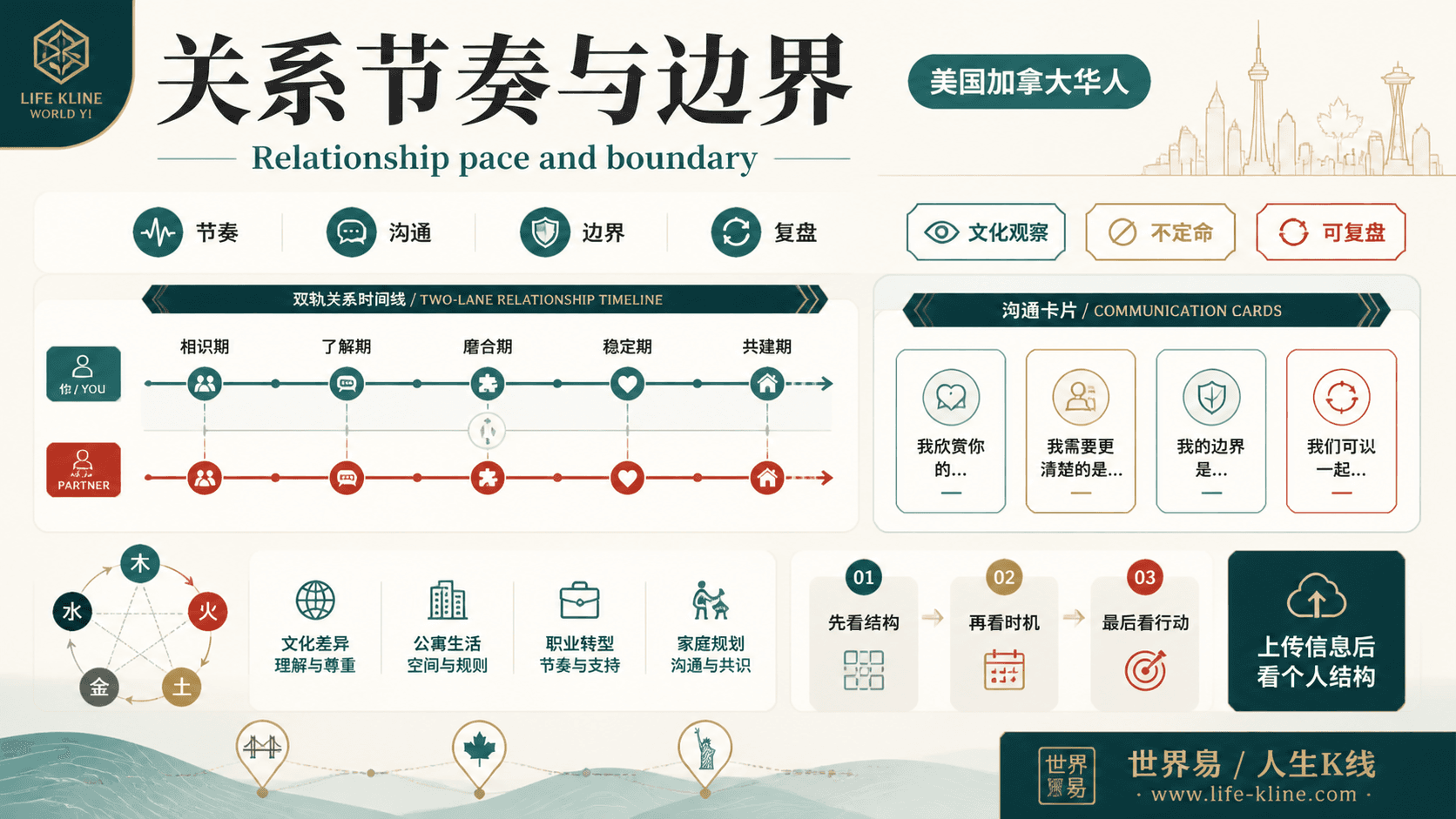
关系节奏与边界|美国加拿大华人
这张图把《Metaphysical Analysis of Relationship Repair and Withdrawal During the Engagement and Betrothal Gift Stage》里的命理概念转成关系、边界和应用场景,适合先看图建立结构,再回到知识文章正文理解细节。
关系节奏与边界不应被写成固定结论。更适合美国加拿大华人的读法,是把传统术语翻译成结构、时机、环境、行动和复盘。
查看图片解读