Physical Limits of Family Care Under Emotional Distress and Metaphysical-Assisted Judgments
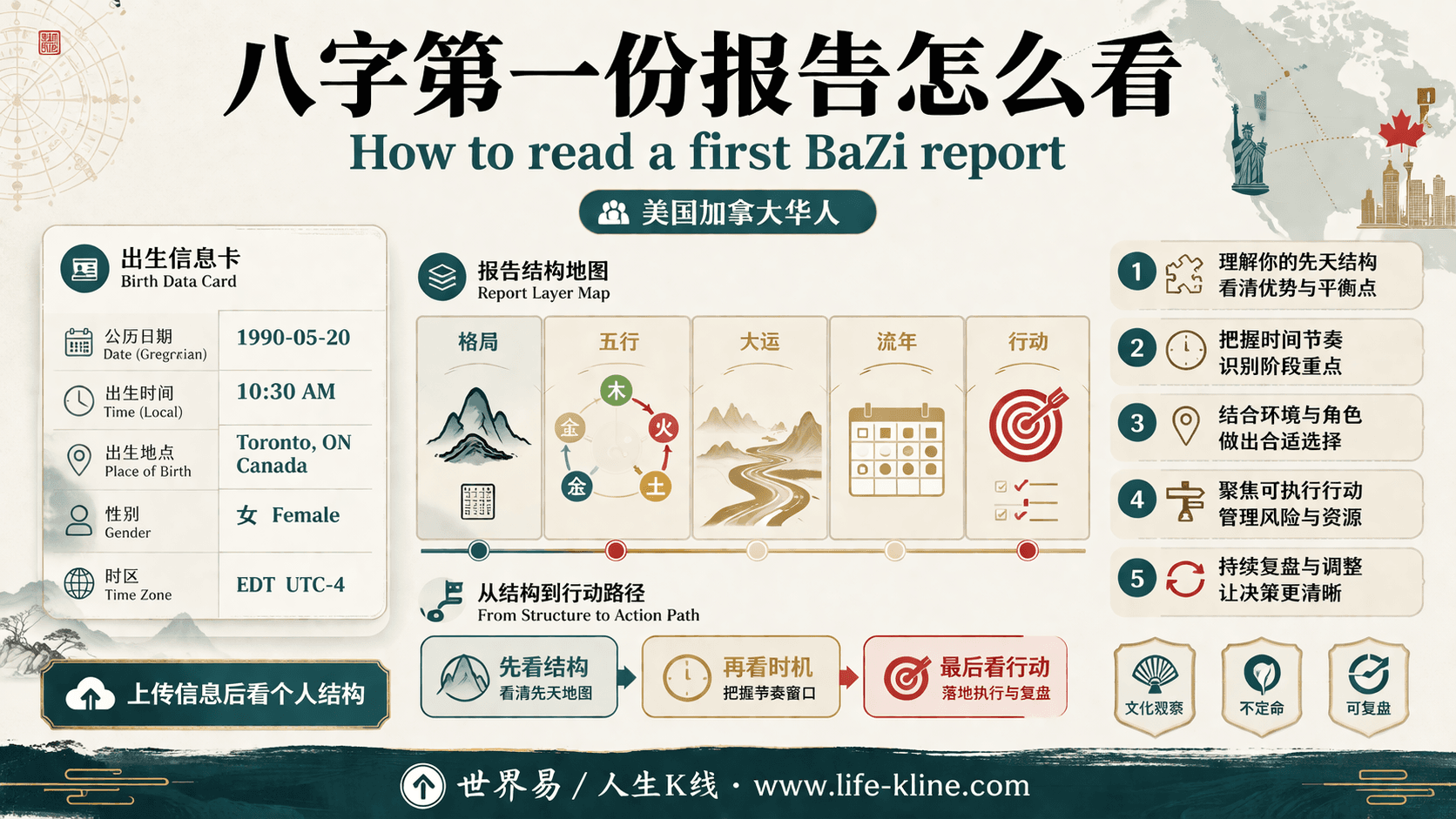
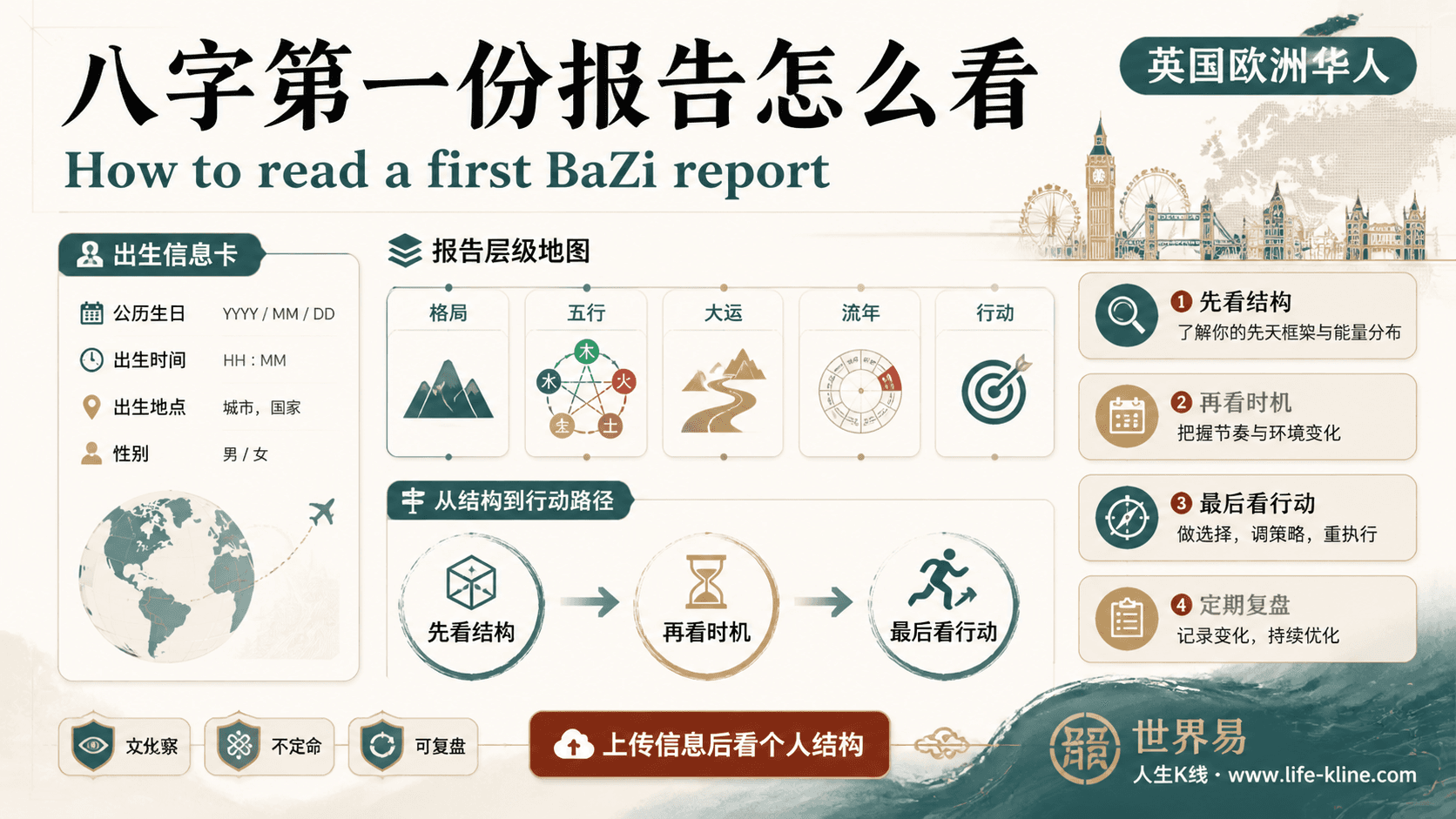
把这篇文章落到自己身上验证:先看结构,再进入个人分析,不做泛泛阅读。
Why This Decision Is Especially Difficult in This Health Scenario
Emotional and psychological stresses such as depression, anxiety, panic, and internal conflicts often accompany obvious somatic symptoms like insomnia, fatigue, and pain, severely impacting the primary caregiver’s physical and mental state. Family caregivers must not only manage the care recipient’s emotional fluctuations but also cope with their own psychological burdens. The dual consumption of physical and mental energy makes it difficult to define clear care boundaries.
In real life, primary caregivers frequently face rhythm conflicts where daily routines and care demands constrain each other. Especially when emotional distress intensifies, the overlay of physical exhaustion and psychological pressure easily leads to health risks. At such times, reasonably assessing the caregiver’s physical limits to avoid overexertion becomes a critical challenge in family decision-making.
From a metaphysical perspective, by analyzing the Day Master’s strength, pattern, Yong Shen, and the current Da Yun and Liu Nian, combined with the Five Elements and organ correspondences, one can assist in judging the primary caregiver’s health rhythms and potential organ burdens, providing scientific basis for adjusting care pace and responsibility allocation.
However, metaphysics serves only as a rhythm reference and cannot replace medical diagnosis. Family care decisions must balance psychological support, lifestyle adjustments, and professional medical intervention when necessary to ensure the physical and mental health of both caregiver and care recipient.
Metaphysics and Five Elements Organ Correspondences
The Day Master’s Five Elements attribute and strength reflect an individual’s constitution and psychological endurance. A relatively weak Day Master often indicates greater physical and mental burdens, prone to fatigue and diminished bodily functions; conversely, a relatively strong Day Master may show stronger stress resistance but can also cause internal consumption or organ imbalances if overly strong.
The Yong Shen’s Five Elements correspond to the Five Zang and Six Fu organs, helping to harmonize the Day Master’s deficiencies and regulate bodily rhythms. For example, a Metal Yong Shen often corresponds to the lungs, Earth to the spleen and stomach, and Water to the kidneys. The relative excess or deficiency of the Five Elements and their interaction with the Yong Shen influence an individual’s physical recovery and emotional stability.
Da Yun and Liu Nian, as manifestations of temporal rhythms, bring varying Five Elements forces that may either promote or challenge the primary caregiver’s health status. Stable luck cycles favor maintaining the status quo and caution against overly intense care burdens; annual fortunes require flexible adjustment of care strategies.
Integrating Five Elements and organ theory, metaphysical judgment helps identify organ dysfunction caused by emotional stress, such as lung Metal weakness leading to respiratory tension, or spleen Earth deficiency causing digestive issues and fatigue. Clarifying these backgrounds aids families in reasonably scheduling care rhythms to avoid physical exhaustion.
Three Real BaZi Case Studies
Case 1 (Based on Data Set 1): This male has a Ren (壬, Water) Day Master, relatively weak, with a Qi Sha (Seven Killings) pattern. The Yong Shen is Metal, and the Ji Shen (unfavorable elements) are Wood and Fire. Currently in the Gui Wei (癸未) Da Yun, with Liu Nian of Bing Wu (丙午). The weak Ren Water Day Master indicates limited physical and psychological endurance, prone to fatigue and insomnia especially under emotional distress. The Qi Sha pattern shows strong internal pressure and conflict. The Metal Yong Shen corresponds to the lungs, suggesting attention to pulmonary and respiratory functions. The Gui Wei Da Yun and Bing Wu Liu Nian combination is stable but requires some adaptability. It is recommended to avoid overexertion in family care, reasonably arrange rest periods, and prevent physical exhaustion. Assessment should start with physical fatigue, respiratory condition, and emotional fluctuations, seeking medical advice when necessary.
Case 2 (Based on Data Set 2): This female has a Geng (庚, Metal) Day Master, relatively strong, with a Zhuan Wang (Specially Strong) pattern. The Yong Shen is Earth, and Ji Shen is Wood. Currently in the Yi Si (乙巳) Da Yun, with Liu Nian of Bing Wu (丙午). The strong Geng Metal Day Master shows abundant energy and good stress resistance, but the Zhuan Wang pattern may cause internal consumption, especially when the Earth Yong Shen is insufficiently harmonizing, potentially burdening spleen and stomach functions, manifesting as indigestion and fatigue. The Yi Si Da Yun is stable and suitable for maintaining status quo, while the Bing Wu Liu Nian brings some variability. In family care, attention should be paid to spleen and stomach health and mental regulation, with reasonable distribution of care time to avoid physical discomfort from overcommitment. Judgments should focus on digestive system status and mental state changes, adjusting care plans as needed.
Case 3 (Based on Data Set 3): This female has a Xin (辛, Metal) Day Master, relatively strong, with a Zhuan Wang (Specially Strong) pattern. The Yong Shen is Earth, and Ji Shen is Wood. Currently in the Jia Chen (甲辰) Da Yun, with Liu Nian of Bing Wu (丙午). The strong Xin Metal Day Master reflects strong mental power and coping ability, but under the Zhuan Wang pattern, harmonizing with the Earth Yong Shen is crucial, relating to spleen and stomach health. Both Da Yun and Liu Nian are stable, suitable for maintaining status quo. Under heavy emotional stress, spleen and stomach burdens increase, possibly causing fatigue and somatic symptoms. Family care should closely monitor the caregiver’s diet and sleep, arranging rest reasonably to prevent mental exhaustion. Assessment should start with diet, sleep quality, and emotional state, adjusting care rhythm promptly.
Common Misjudgments and Blind Spots in This Scenario
A common misjudgment in family care decisions under emotional and psychological stress is over-reliance on metaphysical judgment while neglecting medical diagnosis. Metaphysics can only assist in understanding individual rhythms and potential organ burdens; it cannot replace professional medical diagnosis and treatment plans. In cases of severe insomnia, persistent anxiety, depressive symptoms, or significant somatization, immediate medical consultation is essential without delay.
Another blind spot is ignoring the psychological impact of interactions between the primary caregiver and care recipient. While analyzing the caregiver’s Five Elements and organ states is important, the contagious nature of emotional stress and family atmosphere adjustments must also be addressed to avoid vicious cycles causing health issues for both parties.
Moreover, care rhythm adjustments are often swayed by emotional fluctuations, neglecting the rhythm indications from Da Yun and Liu Nian in metaphysics. Lack of long-term planning leads to accumulating care burdens. Reasonably combining metaphysical rhythms with real-life routines is key to avoiding misjudgments and blind spots.
Practical Judgment Sequence
First, observe the primary caregiver’s basic physical condition, assessing for obvious fatigue, insomnia, loss of appetite, and other somatic symptoms. Combine this with metaphysical analysis of Day Master strength and Yong Shen Five Elements to judge potential organ burdens, especially focusing on respiratory (lung Metal) and digestive (spleen Earth) symptoms.
Second, integrate the current Da Yun and Liu Nian to analyze temporal rhythms’ impact on physical strength and emotions, identifying potential high-risk periods within the care cycle. Based on this, reasonably arrange care and rest to avoid prolonged high-pressure states for the caregiver.
Finally, if severe psychological symptoms such as persistent depression, panic attacks, or obvious somatization appear, immediate medical intervention is necessary. Metaphysical judgment serves only as auxiliary reference. Family members should cooperate with professional healthcare and adjust care strategies to ensure the physical and mental health of both parties.
FAQ
Question 1: How does metaphysics specifically help judge the physical limits of family caregivers? Answer: Metaphysics analyzes the Day Master’s strength, Yong Shen, and the relative excess or deficiency of Five Elements, combined with corresponding organ function states, to assist in identifying physical and psychological endurance, indicating potential health risks and adjustment needs, thereby helping families reasonably arrange care rhythms and responsibility allocation.
Question 2: Can metaphysics replace doctors in providing psychological health diagnosis and treatment advice? Answer: No. Metaphysics is only a reference tool for rhythms and constitution; it cannot diagnose specific diseases or offer treatment plans. In cases of severe psychological or somatic symptoms, timely medical consultation and adherence to professional advice are essential.
Question 3: How to adjust family care strategies by integrating Da Yun and Liu Nian? Answer: Da Yun and Liu Nian reflect changes in Five Elements forces during specific time periods. By analyzing their stability or variability, families can flexibly adjust care intensity and rhythm, avoiding excessive depletion of the primary caregiver’s physical and psychological resources during high-risk periods.
木过旺与再平衡
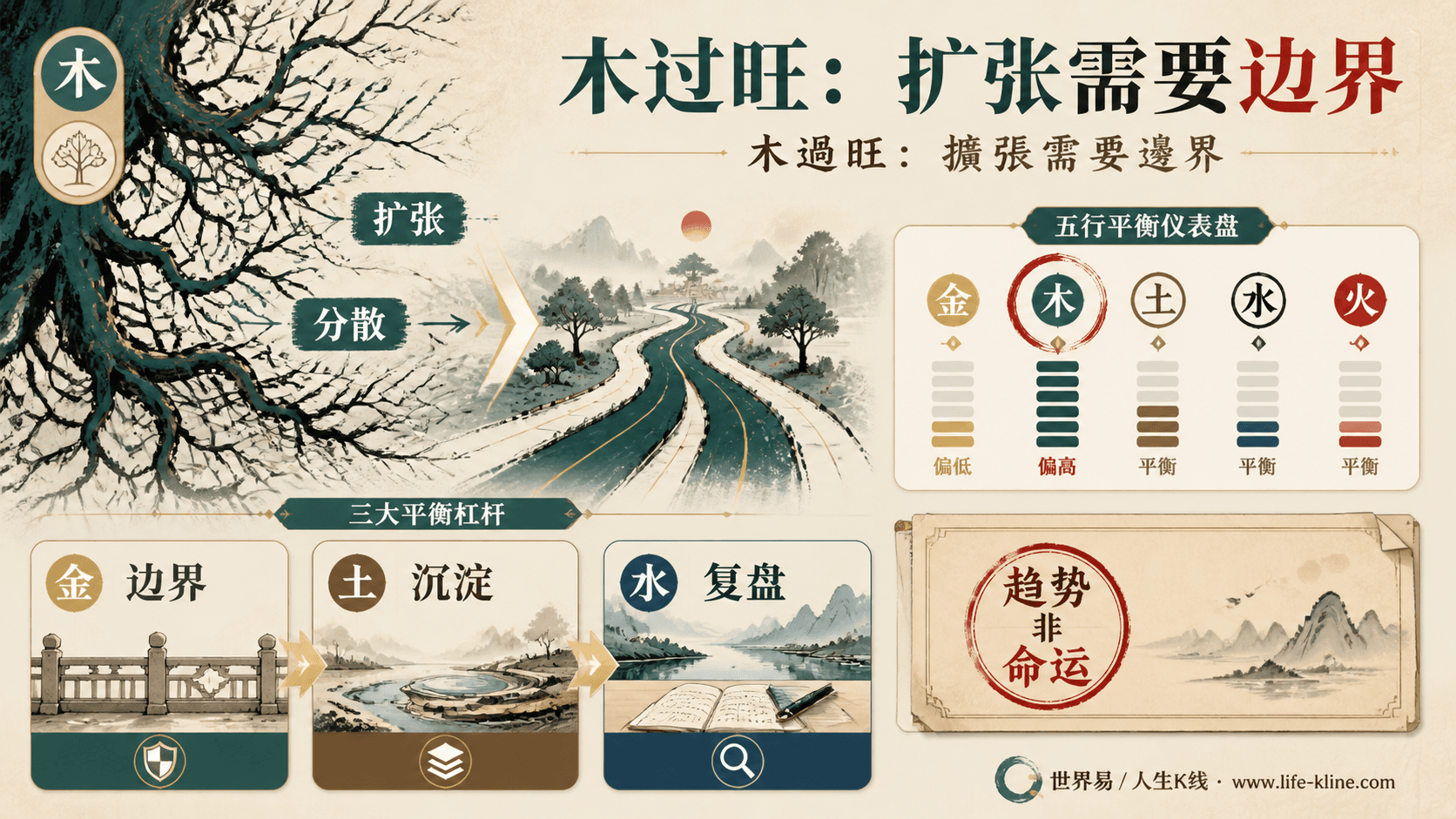
这张图把《Physical Limits of Family Care Under Emotional Distress and Metaphysical-Assisted Judgments》里的命理概念转成关系、边界和应用场景,适合先看图建立结构,再回到知识文章正文理解细节。
木过旺常表现为扩张过快、计划繁多、方向分散。在人生K线系统中,这是一种时位特征,而非固定标签。通过引入边界、沉淀与复盘,可实现自然再平衡,导向更可持续的结构。
查看图片解读