Metaphysical Assistance in Exit Strategies and Selling Timing for the Education and Training Industry
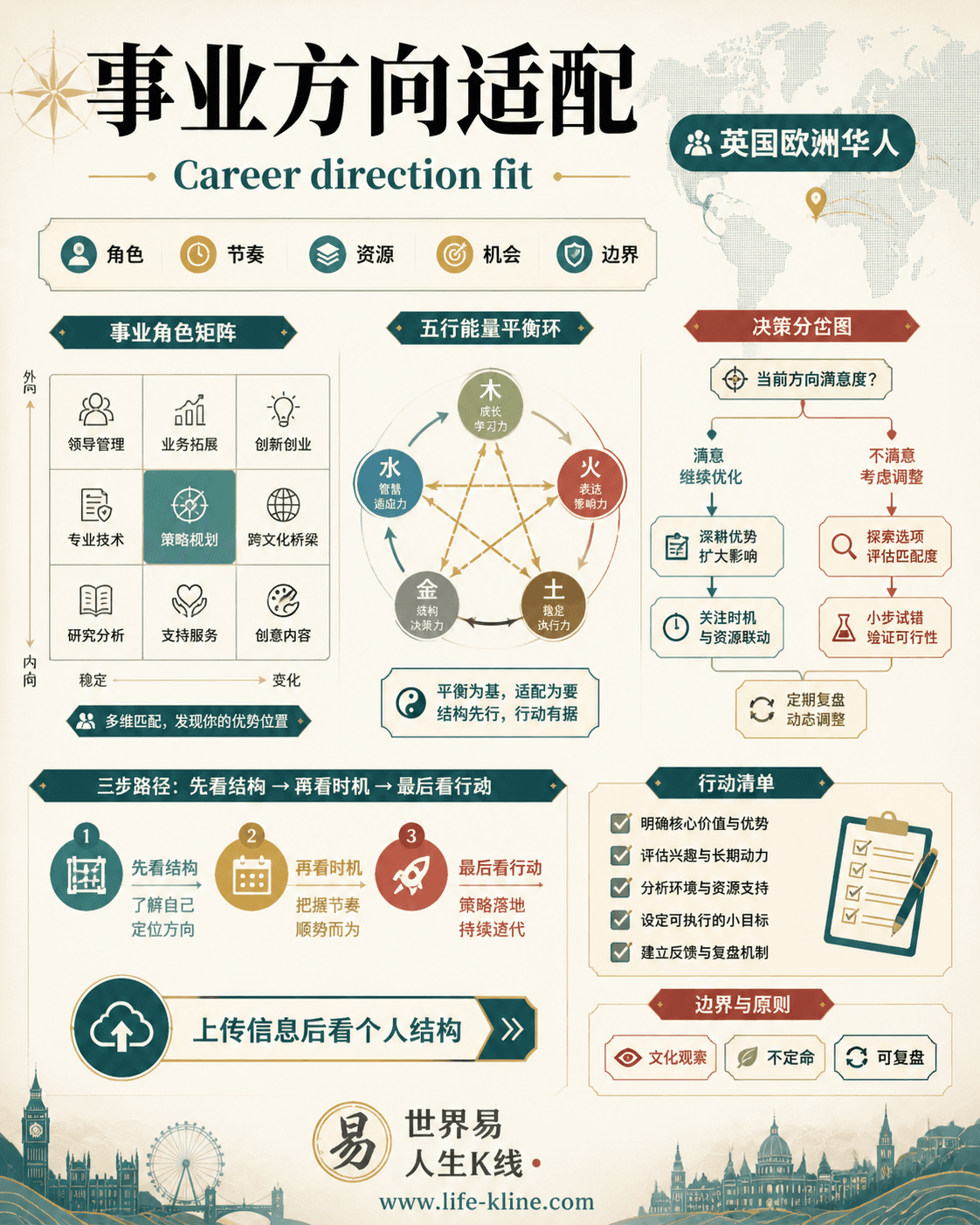
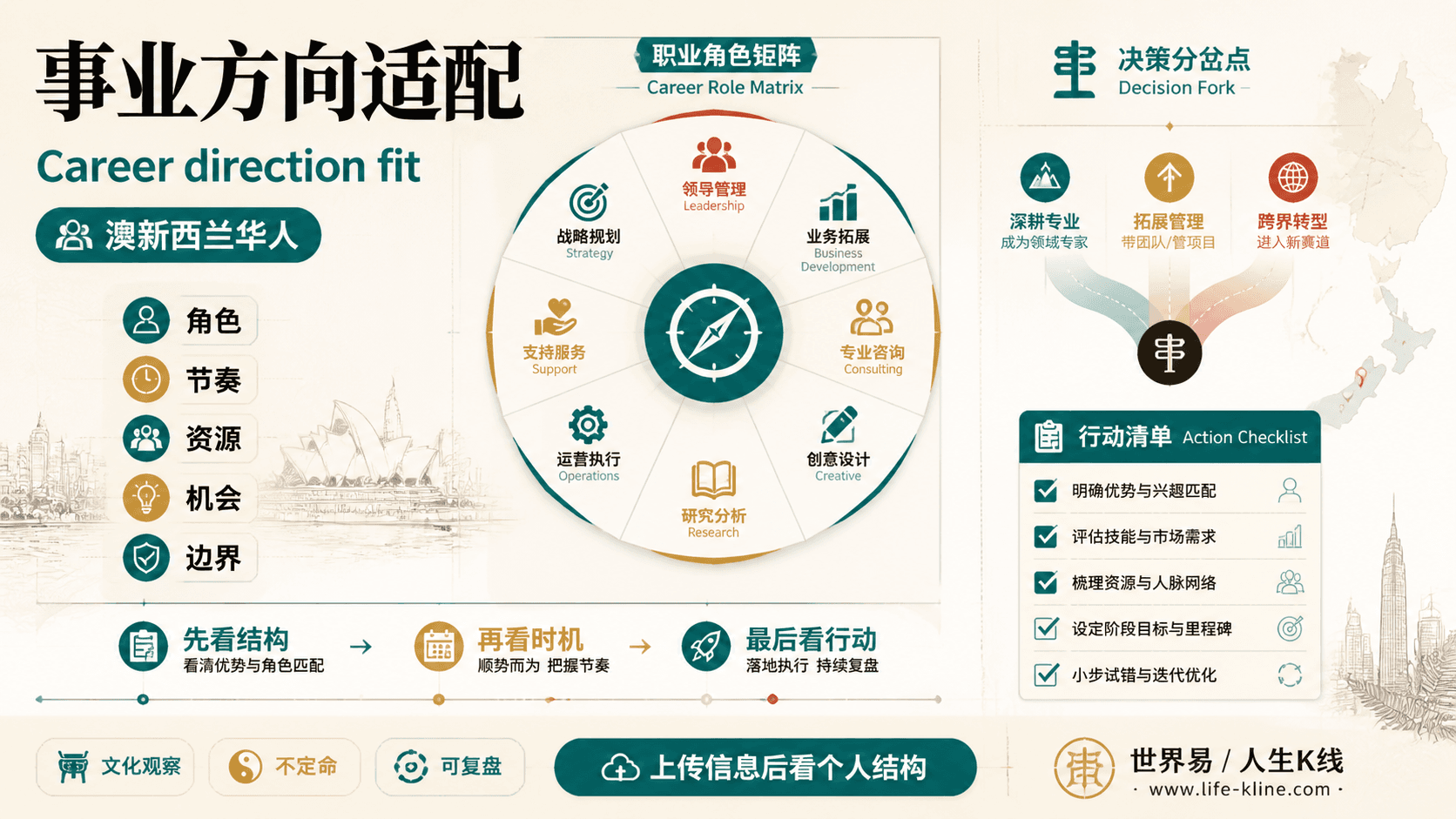
把这篇文章落到自己身上验证:先看结构,再进入个人分析,不做泛泛阅读。
Why This Decision Is Especially Difficult in This Industry
The difficulty of exit strategies and selling timing decisions in the education and knowledge payment industries lies primarily in the multiple overlapping operational risks inherent to the sector. Strict policy regulations can impact business scope and profit models at any time; customer renewal rates directly determine cash flow stability and are significantly influenced by reputation and faculty strength fluctuations. Continuous fatigue in content production and faculty attrition further compress profit margins, requiring exit timing to consider both internal operations and external environmental changes.
From a psychological decision-making perspective, entrepreneurs often find it hard to let go of the time and resources already invested, leading to emotional attachment and optimism bias that can cause them to overlook the structural risks hidden within the industry. This psychological burden increases decision complexity, making the judgment of selling windows not merely a financial calculation but also involving forecasts of future uncertainties and assessments of risk tolerance.
From a metaphysical perspective, the BaZi chart structures of entrepreneurs in the education and training industry often involve combinations of Cai Xing (Wealth Stars), Bi Jian (Peer Stars), Guan Sha (Officer and Killing Stars), and Yin Xing (Resource Stars), reflecting their risk-bearing capacity and the influence of partnership relations. For example, the strength of Cai Xing corresponds to capital flow and profit margins; the quantity of Bi Jian indicates competition and resource contention within the industry; Guan Sha implies external pressure and policy risks. The interaction between Liu Nian (annual fortune) and Da Yun (decade luck cycle) further reveals risk changes and opportunity windows at the current timing.
Therefore, exit decisions in the education and training industry require not only consideration of operational structure and psychological biases but also the assistance of metaphysical rhythms to identify selling windows and evaluate holding costs, avoiding blind actions and missed optimal timing. Metaphysics serves only as an auxiliary tool; final decisions must rely on professional due diligence and financial analysis.
Three Core Dimensions of Metaphysical Judgment
First, the relationship between the Day Master and Cai Xing (Wealth Stars) is a key dimension for judging an entrepreneur’s control over funds and profitability. The Day Master represents the entrepreneur themselves, while Cai Xing reflects the inflow and management capacity of financial resources. In the education and training industry, a strong Cai Xing indicates relatively abundant capital flow and greater capacity to cope with policy changes and content update pressures; a weak Cai Xing requires cautious assessment of holding costs to avoid blind expansion or delayed exit.
Second, the influence of Bi Jian (Peer Stars) relates to partners and competitive environment. A high number of Bi Jian indicates intensified competition or internal team conflicts, which may consume the entrepreneur’s energy and resources. In exit strategies, if Bi Jian is strong and cannot be controlled, earlier consideration of selling timing is advisable to avoid losses from escalating internal conflicts. At the same time, Bi Jian can also serve as support for the entrepreneur depending on the specific combination.
Third, Guan Sha (Officer and Killing Stars) and Yin Xing (Resource Stars) reflect external pressure and support. A strong presence of Guan Sha often represents policy regulation, market pressure, or tense cooperative relationships, which is especially evident in the education industry where policy risk can become a catalyst for selling or exit. Yin Xing guides information and resources, helping entrepreneurs clarify their thinking and alleviate pressure. The clash and combination relationships between Da Yun and Liu Nian determine whether current risks intensify or ease, directly affecting the timing choice of exit strategies.
Integrating these three core dimensions, education entrepreneurs should focus on the dynamic changes of Cai Xing and Guan Sha in their BaZi charts, combined with the team and competitive conditions indicated by Bi Jian, and coordinate with the rhythms of Da Yun and Liu Nian to make more precise identification of selling windows and evaluation of holding costs.
Three Real BaZi Chart Cases
Case 1: This chart belongs to a female with a relatively weak Day Master Bing Fire (丙, Bing), structured as a Qi Sha (Seven Killing) pattern. The Yong Shen (favorable element) is Wood, and Ji Shen (unfavorable elements) are Earth and Metal. Currently, she is in the 10th year of the Geng Shen (庚申, Geng Shen) Da Yun, which is an unfavorable luck cycle requiring caution against major incidents. The Liu Nian is Bing Wu (丙午, Bing Wu), both Da Yun and Liu Nian are relatively weak, necessitating prudence. In the education industry context, the Qi Sha pattern indicates the entrepreneur bears significant external pressure (policy, competition), while Wood as Yong Shen represents reliance on content innovation and faculty development. Although Wood is the favorable element, the weak Da Yun and Liu Nian imply high holding costs and considerable risks. The selling window should focus on times when Cai Xing or Bi Jian provide support during Da Yun and Liu Nian, to timely evaluate whether to continue investment and avoid severe losses caused by prolonged holding during the end of an unfavorable luck cycle. It is recommended to conduct thorough financial due diligence and consider policy environment changes; if no obvious short-term improvement occurs, selling and exit should be prioritized.
Case 2: This chart belongs to a male with a moderately balanced Day Master Bing Fire (丙, Bing), following a Cong Sha (Following Killing) pattern. The Yong Shen are Water and Metal, while Wood and Fire are Ji Shen. The current Da Yun is Ji Wei (己未, Ji Wei), which is stable and conservative, in its 9th year. The Liu Nian is Bing Wu (丙午, Bing Wu), requiring adaptive responses. In the education industry, Water and Metal as Yong Shen indicate relatively smooth capital flow and resource integration, suitable for steady operations. This pattern favors maintaining existing customers and faculty teams, avoiding blind expansion or hasty selling. Selling timing can be considered when Cai Xing emerges in the Liu Nian or when Guan Sha pressure intensifies. Regarding holding costs, the stable Da Yun provides relatively relaxed psychological and financial tolerance, but vigilance against sudden policy changes remains necessary. Continuous monitoring of competition and customer renewal rates is advised, integrating financial data with metaphysical rhythms to form a dynamic exit plan.
Case 3: This chart belongs to a male with a relatively weak Day Master Jia Wood (甲, Jia), structured as a Zheng Guan (Proper Officer) pattern. The Yong Shen is Water, and Ji Shen are Fire and Earth. The current Da Yun is Ding Si (丁巳, Ding Si), an unfavorable luck cycle requiring caution against major incidents, in its 5th year. The Liu Nian is Bing Wu (丙午, Bing Wu), both indicating relatively weak states. The Zheng Guan pattern shows the entrepreneur faces considerable external pressure (Guan Sha representing policy risk), while Water as Yong Shen indicates reliance on capital and information flow support. The unfavorable nature of the Ding Si Da Yun intensifies policy and market pressures, significantly increasing holding costs. In the education industry, lack of strong capital and information support may lead to reputation and faculty losses. The selling window should focus on whether Cai Xing or Bi Jian provide buffering; otherwise, continued holding carries great risk. It is recommended to combine financial status and policy environment; if no clear improvement is seen, decisive exit should be considered to avoid expanded losses.
These three cases respectively demonstrate the auxiliary judgment significance of BaZi elements such as Day Master strength, pattern types, Yong Shen and Ji Shen, and Da Yun and Liu Nian for exit strategies in education entrepreneurship. BaZi charts can indicate holding costs and selling windows, but final decisions still require integration with industry due diligence and financial analysis for rational decision-making.
Common Misjudgments and Blind Spots in This Industry
One common misjudgment among education entrepreneurs is over-reliance on short-term renewal data or reputation fluctuations, neglecting the systemic impact of policy risk. In BaZi, a strong presence of Guan Sha stars, if external pressure accumulation is not timely recognized, can lead to missed selling windows and sharply increased holding costs.
Another blind spot is neglecting team and partnership relationships. A strong Bi Jian presence without coordination mechanisms often results in underestimated internal consumption. Entrepreneurs tend to persist in expansion amid intensified internal conflicts, increasing exit difficulty. BaZi’s indication of abundant Bi Jian should raise caution.
Also, emotional attachment causing delayed exit is frequent. If the Day Master is weak and Yong Shen is impaired in the BaZi chart, it represents limited personal stress tolerance and an early identification of selling windows is necessary. Blindly holding on not only consumes financial resources but may also miss better entrepreneurial opportunities.
Finally, misuse of metaphysical assistance as absolute prophecy can mislead entrepreneurs to ignore market and financial realities. Metaphysics should serve as a rhythm reminder combined with industry dynamics and professional financial due diligence to effectively reduce decision risks.
Practical Judgment Sequence
Step one: Examine the current combinations of Cai Xing, Bi Jian, and Guan Sha in Da Yun and Liu Nian, observing whether signals favorable to capital flow or pressure relief appear. When Cai Xing is strong and Yong Shen is supported, consider continuing operations or adjusting strategies; when Cai Xing is weak and Guan Sha is strong, be alert to increasing holding costs.
Step two: Integrate industry due diligence to assess policy environment, customer renewal rates, faculty stability, and reputation status, judging whether internal and external pressures are controllable. If multiple indicators deteriorate and metaphysics show unfavorable luck or intensifying pressure, prioritize the selling window.
Step three: Upon confirming the selling window, cooperate with financial and legal consultations to formulate a reasonable exit plan, avoiding blind urgent sales or delays that cause value depreciation. When holding costs are too high, rational divestment better preserves capital and future entrepreneurial capacity than blind persistence. Metaphysical assistance is only a rhythm reference and must not replace professional judgment.
FAQ
Question 1: How does metaphysics assess the holding cost for education entrepreneurs? Answer: By observing the Day Master’s strength, the relationship between Yong Shen and Ji Shen, and the dynamics of Cai Xing and Guan Sha in Da Yun and Liu Nian, metaphysics can assist in evaluating the financial and psychological costs of holding. Especially when Guan Sha is strong and Yong Shen is impaired, holding costs increase significantly.
Question 2: How to combine metaphysics in judging selling timing? Answer: Selling windows usually appear when Cai Xing emerges in Da Yun and Liu Nian, Guan Sha pressure eases, or Bi Jian provides support. Metaphysics indicates current external pressure and capital flow changes, which combined with industry due diligence can improve the accuracy of selling timing.
Question 3: Can metaphysics replace business due diligence and financial analysis? Answer: No. Metaphysics is only an auxiliary rhythm tool helping entrepreneurs grasp risk and psychological rhythms. Final decisions must be based on professional business due diligence, financial analysis, and legal consultation to avoid blind reliance on metaphysical predictions.
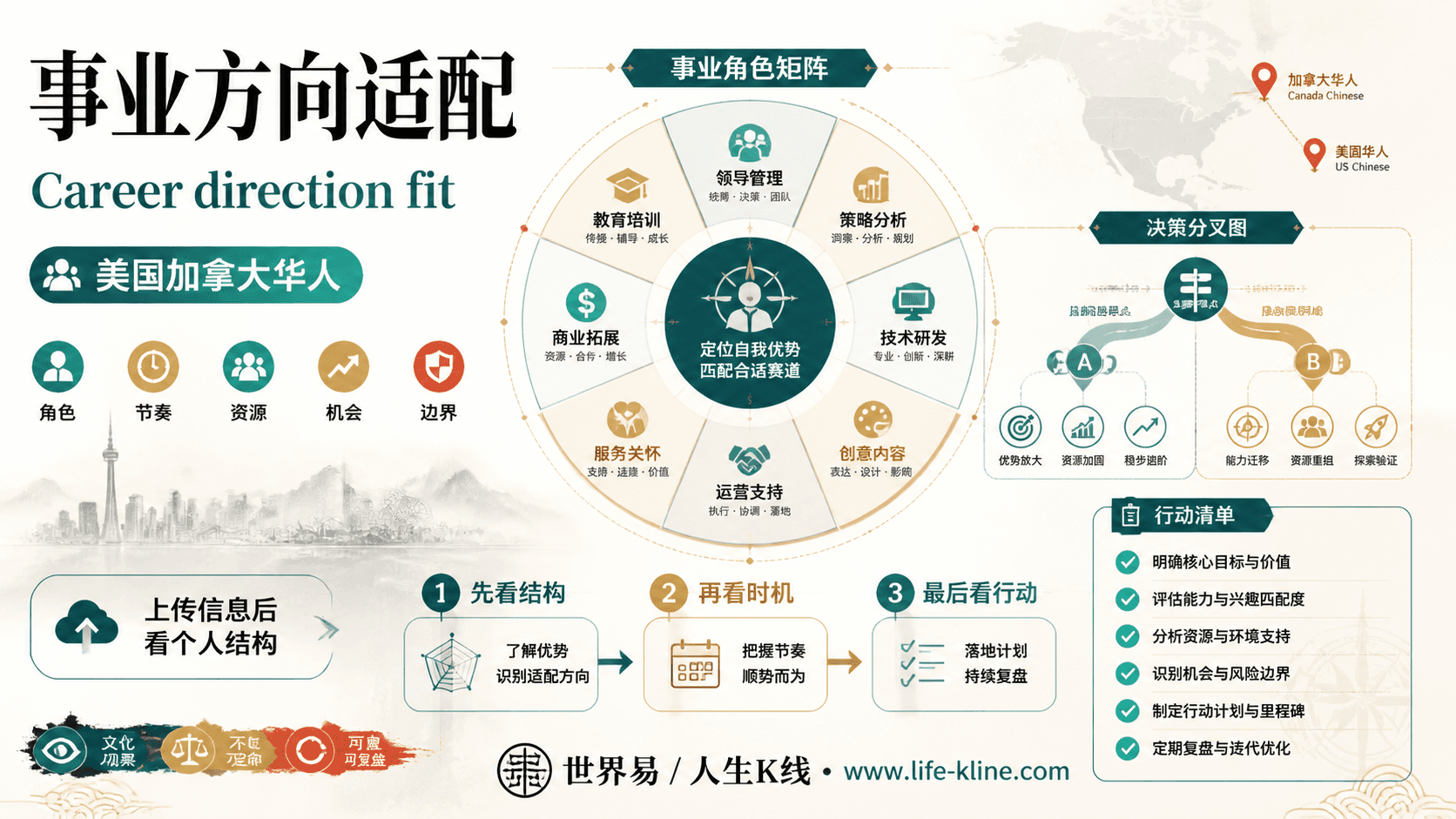
事业方向适配|美国加拿大华人
这张图把《Metaphysical Assistance in Exit Strategies and Selling Timing for the Education and Training Industry》里的命理概念转成关系、边界和应用场景,适合先看图建立结构,再回到知识文章正文理解细节。
事业方向适配不应被写成固定结论。更适合美国加拿大华人的读法,是把传统术语翻译成结构、时机、环境、行动和复盘。
查看图片解读