BaZi Analysis and Decision Guidance on Family Nurturing Rhythm During Career Choice Period (Ages 25-32)
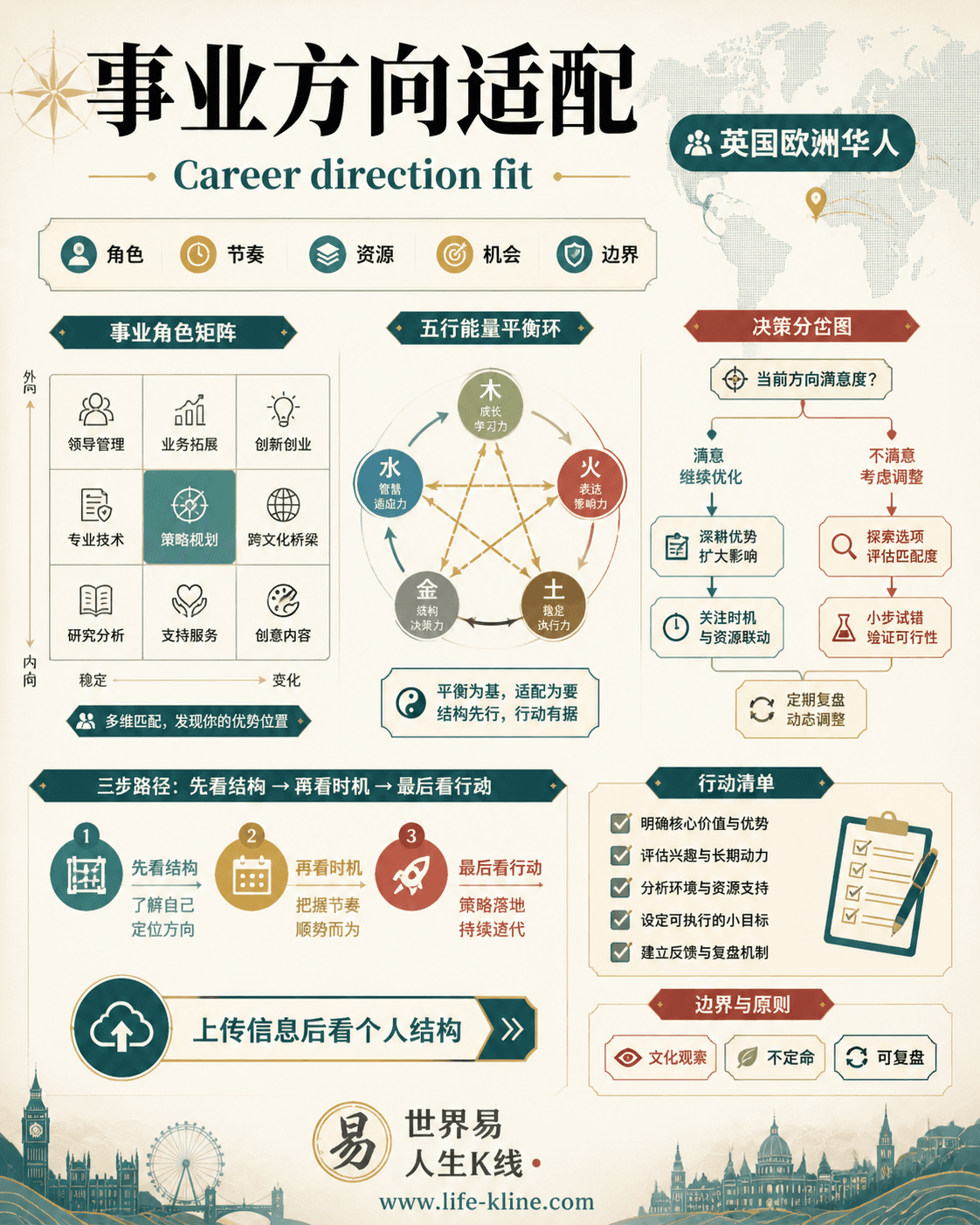
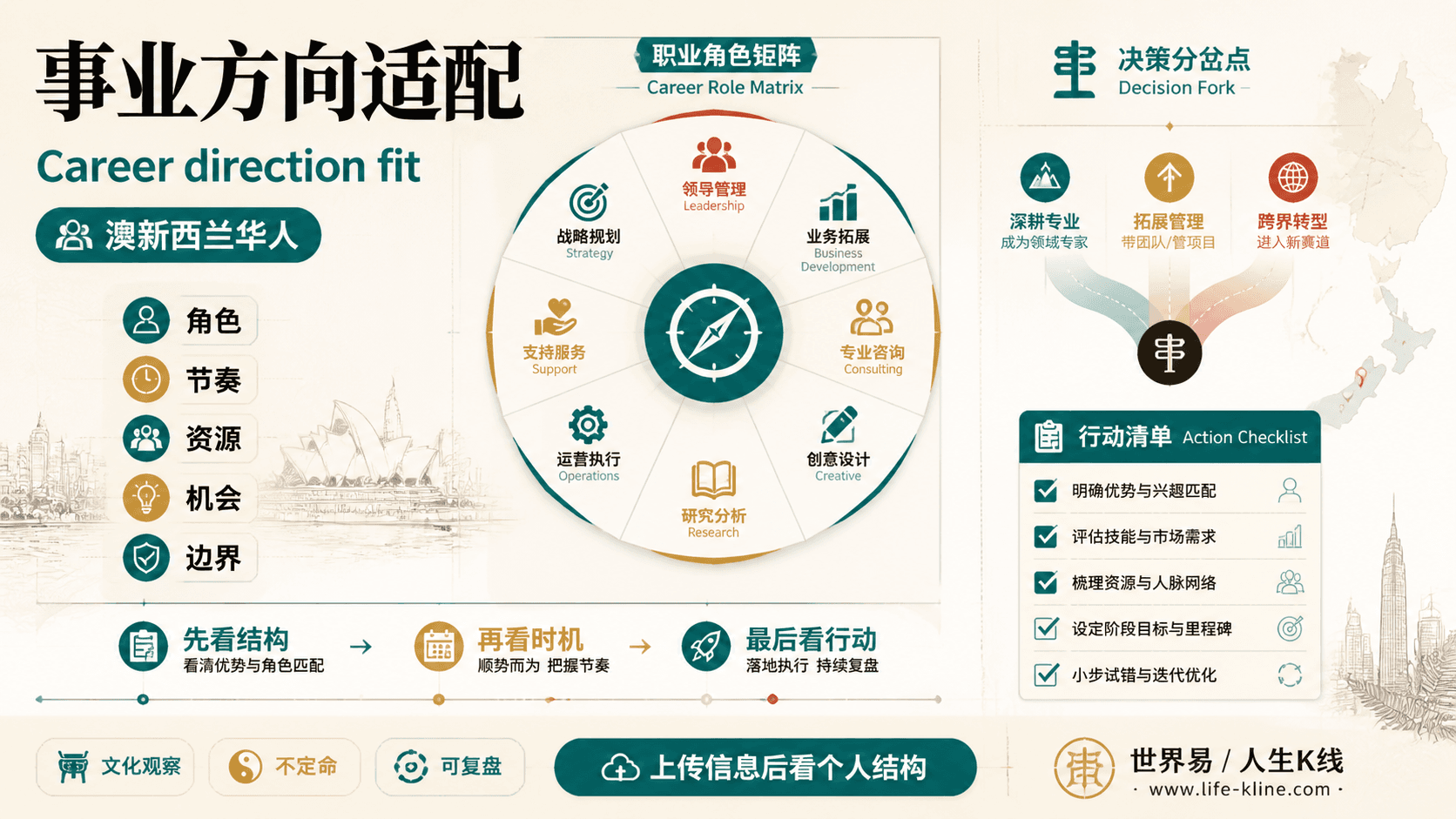
把这篇文章落到自己身上验证:先看结构,再进入个人分析,不做泛泛阅读。
Why This Decision Is Especially Difficult at This Life Stage
Ages 25-32 represent a crucial period for career decisions, where personal career positioning, job changes, further education, and even city selection become common practical issues. At this stage, parents often bear the main family responsibilities, needing to balance career development with child growth, creating a complex situation of multiple overlapping pressures.
Societal expectations generally require parents to provide sufficient support for their children’s education and growth, while avoiding excessive interference that might limit the children’s autonomy. How to manage the tightness or looseness of nurturing rhythm becomes a core challenge for parents during this stage.
From a metaphysical perspective, the strength of the Day Master, pattern characteristics, and reasonable allocation of Yong Shen can amplify or suppress parents’ ability to handle pressure and family responsibilities. Da Yun and Liu Nian reflect the current luck environment, influencing the timing and strategy parents use to manage nurturing rhythm.
Therefore, the decision on nurturing rhythm during the 25-32 life stage is essentially a compounded test of multiple real-life dilemmas and BaZi structural factors. Precise judgment of the interaction between metaphysical traits and phase-specific pressures is especially needed to formulate a scientifically sound nurturing rhythm plan.
Three Core Dimensions of BaZi Judgment
First, the strength of the Day Master and the pattern determine the parents’ own energy and psychological endurance. A neutral or strong Day Master often has better regulation and coping ability. For example, a neutral 丁 (Ding) Fire Day Master has the advantage of flexibility and adaptability, while a relatively weak Day Master may show fatigue under pressure and require support from the Yong Shen.
Second, the relationship between Yong Shen (favorable element) and Ji Shen (unfavorable element) reveals the adjustment directions parents should focus on in managing nurturing rhythm. Yong Shen represents elements beneficial to the parents themselves; rationally supporting the Yong Shen helps relieve nurturing pressure. Ji Shen indicates potential conflicts and tension points.
Third, Da Yun (decade luck cycle) and Liu Nian (annual fortune) reflect the luck environment parents are currently in. A stable Da Yun favors maintaining and stabilizing the nurturing rhythm, while a favorable Da Yun offers opportunities to moderately adjust the rhythm, flexibly responding to Liu Nian changes to avoid blind aggression or passive waiting.
By integrating these three dimensions, BaZi can provide parents with a scientific energy structure reference during the career choice period, guiding them to reasonably adjust their attention and intervention level towards their children amid real-life difficulties.
Three Real BaZi Chart Cases
Case 1: This chart has a 丁 (Ding) Fire Day Master, neutral with a偏正印 (partial Zheng Yin) pattern, Yong Shen is Wood, and Ji Shen is Water. Currently in the 9th year of the 庚午 (Geng Wu) Da Yun, with the Liu Nian being 丙午 (Bing Wu). The neutral 丁 Fire Day Master trait gives the parents certain adaptability, and the Zheng Yin pattern symbolizes support and resources. The Wood Yong Shen helps enhance vitality. During the critical career choice period of ages 25-32, such parents often maintain a balance between career and family. The nurturing rhythm can be moderately relaxed to give children space for autonomous development. However, the 庚午 Da Yun suggests maintaining stability; parents should avoid blindly aggressive adjustments. It is recommended to first assess family resource support and children’s independence, then gradually adjust nurturing tightness to avoid tension in parent-child relationships caused by impatience.
Case 2: This chart has a 壬 (Ren) Water Day Master, relatively weak, with a 偏财 (Pian Cai) pattern. Yong Shen is Metal, Ji Shen are Wood and Fire. Currently in the 8th year of the 壬戌 (Ren Xu) Da Yun, with Liu Nian 丙午 (Bing Wu). The weak 壬 Water Day Master indicates parents often feel energy insufficient under pressure. The Pian Cai pattern means heavy reliance on external resources, but Ji Shen Wood and Fire suggest emotions and actions are easily drained. During the 25-32 career choice period, these parents tend to tightly hold onto resource security, but emotional fluctuations may cause overly tense nurturing or conflicts. It is advised to first assess emotional state and resource stability, properly utilize Metal Yong Shen to strengthen internal support, avoid excessive interference due to emotional loss of control, and appropriately relax nurturing rhythm for long-term development.
Case 3: This chart has a 癸 (Gui) Water Day Master, relatively weak, with a 正官 (Zheng Guan) pattern. Yong Shen is Fire, Ji Shen is Wood. Currently in the 5th year of the 壬午 (Ren Wu) Da Yun, with Liu Nian 丙午 (Bing Wu), which is a favorable luck period. The weak 癸 Water Day Master shows limited parental energy, but the Zheng Guan pattern represents strong sense of discipline and responsibility. The Fire Yong Shen helps stimulate motivation and action. Parents in this phase are in a favorable luck environment, possessing strong career and family coordination ability, able to timely adjust nurturing rhythm to align with children’s career needs. It is recommended to first assess current work and family load balance, leverage the auspicious Da Yun, flexibly adjust nurturing strategies, maintaining necessary constraints while granting children autonomy to promote harmonious parent-child relationships.
The above three cases combine their respective Day Master strength, pattern, Yong Shen, and Da Yun/Liu Nian, reflecting the differences and adjustment suggestions in parental nurturing rhythm at the 25-32 stage, demonstrating BaZi’s guiding value in real-life decision-making.
Common Misjudgments and Blind Spots at This Stage
First, ignoring the influence of Day Master strength on nurturing rhythm. Parents with a weak Day Master often cannot bear heavy family responsibility pressure, leading to emotional fluctuations and behavioral imbalance. Blindly clinging tightly can be counterproductive.
Second, over-relying on single lucky/unlucky judgments from Da Yun and Liu Nian, neglecting the subtle dynamics of Yong Shen and Ji Shen. A favorable luck period does not mean aggressive adjustments are fully appropriate; instead, a cautious overall assessment is needed to avoid complacency.
Third, neglecting the interaction between social reality constraints and BaZi structure. BaZi provides an energy trend reference, but real-life factors such as identity responsibilities, economic conditions, and intimate relationships are equally important and indispensable.
Additionally, nurturing rhythm adjustment should be a dynamic process. It is easy to fall into extremes of “too tight” or “too loose,” ignoring the matching between children’s individual development stages and parents’ own capacity, resulting in unbalanced decisions.
Practical Judgment Sequence
Step one: Clarify the strength and pattern characteristics of the parents’ Day Master to assess their basic capacity to bear pressure and regulate. Strong or neutral Day Masters are suitable for moderate rhythm adjustments, while weak Day Masters need to avoid excessive burdens.
Step two: Analyze the relationship between Yong Shen and Ji Shen to identify key factors supporting or hindering reasonable nurturing rhythm. Focus on supporting Yong Shen and suppressing Ji Shen to form a favorable energy field.
Step three: Combine the current Da Yun and Liu Nian to evaluate the real luck environment’s pros and cons for adjusting nurturing rhythm. Stable Da Yun suits maintaining and steady adjustments, favorable Da Yun allows moderate rhythm changes, while adverse Da Yun calls for cautious waiting.
Finally, integrate real-life identity, economic status, and children’s developmental stages to comprehensively judge the timing of actions. When not urgent, it is advisable to wait and accumulate energy; during key turning points, flexible adjustments can ensure nurturing rhythm is both elastic and targeted.
FAQ
Question 1: How exactly does the strength of the Day Master affect the tightness or looseness of nurturing rhythm? Answer: The strength of the Day Master reflects the parents’ own energy and pressure endurance. Strong or neutral Day Masters usually can bear greater pressure and flexibly adjust nurturing rhythm. Weak Day Masters tend to fatigue easily; a looser nurturing rhythm is recommended to avoid excessive tension that strains parent-child relationships.
Question 2: How to judge the specific impact of Yong Shen and Ji Shen on nurturing decisions? Answer: Yong Shen represents elements beneficial to the parents’ energy replenishment and psychological balance. Properly supporting the Yong Shen helps relieve nurturing pressure. Ji Shen indicates factors that may cause conflicts and contradictions, which should be avoided by adjusting environment and behavior to ensure smooth nurturing rhythm.
Question 3: How do Da Yun and Liu Nian guide the timing of nurturing rhythm adjustments? Answer: Da Yun and Liu Nian reflect the luck environment parents are in. Stable Da Yun suggests maintaining the current nurturing rhythm; favorable Da Yun is suitable for moderate adjustments, flexibly responding to Liu Nian changes. During adverse luck periods, caution and steadiness are advised to avoid aggressive moves that could escalate family conflicts.
事业方向适配|美国加拿大华人
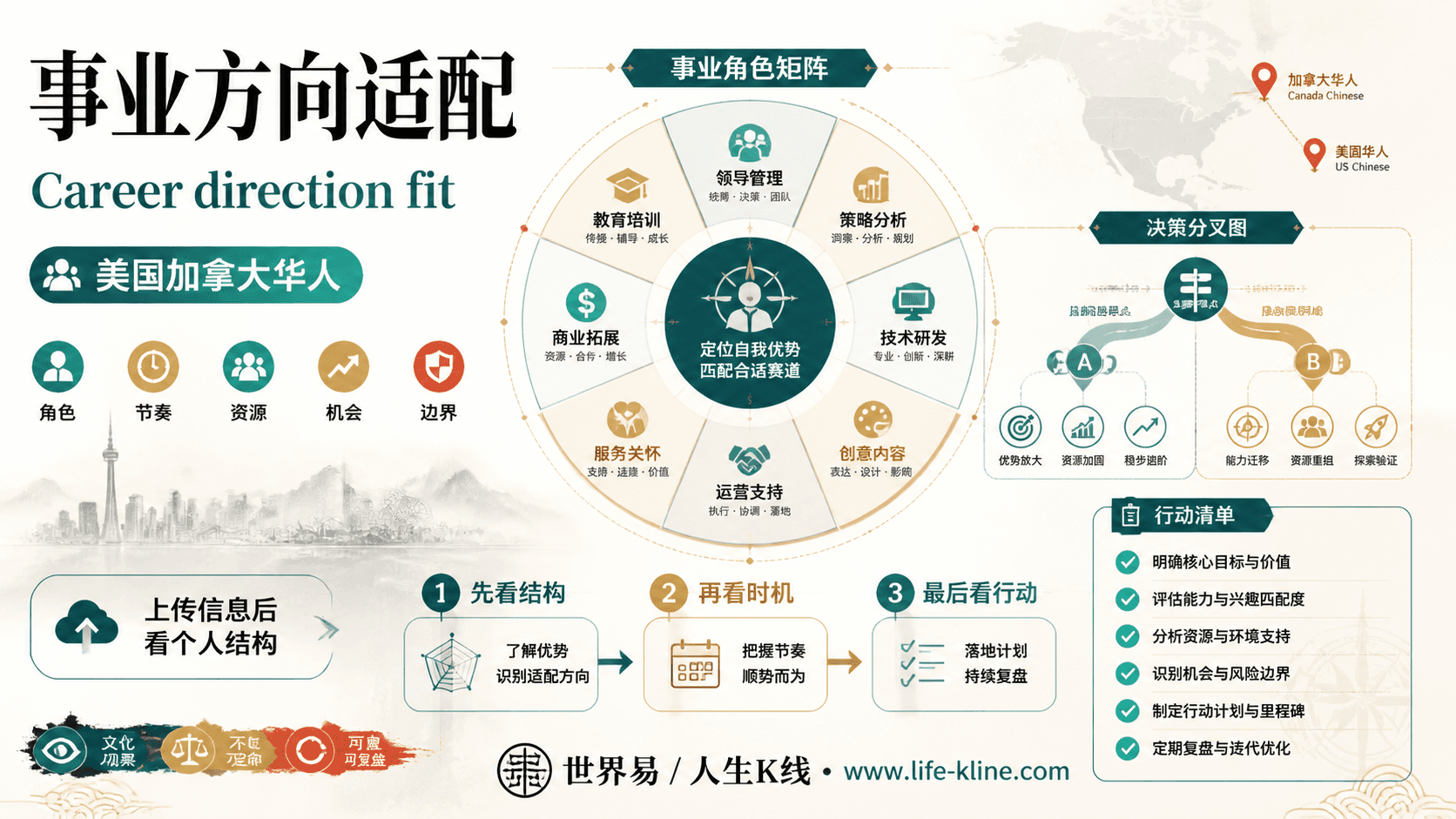
这张图把《BaZi Analysis and Decision Guidance on Family Nurturing Rhythm During Career Choice Period (Ages 25-32)》里的命理概念转成关系、边界和应用场景,适合先看图建立结构,再回到知识文章正文理解细节。
事业方向适配不应被写成固定结论。更适合美国加拿大华人的读法,是把传统术语翻译成结构、时机、环境、行动和复盘。
查看图片解读