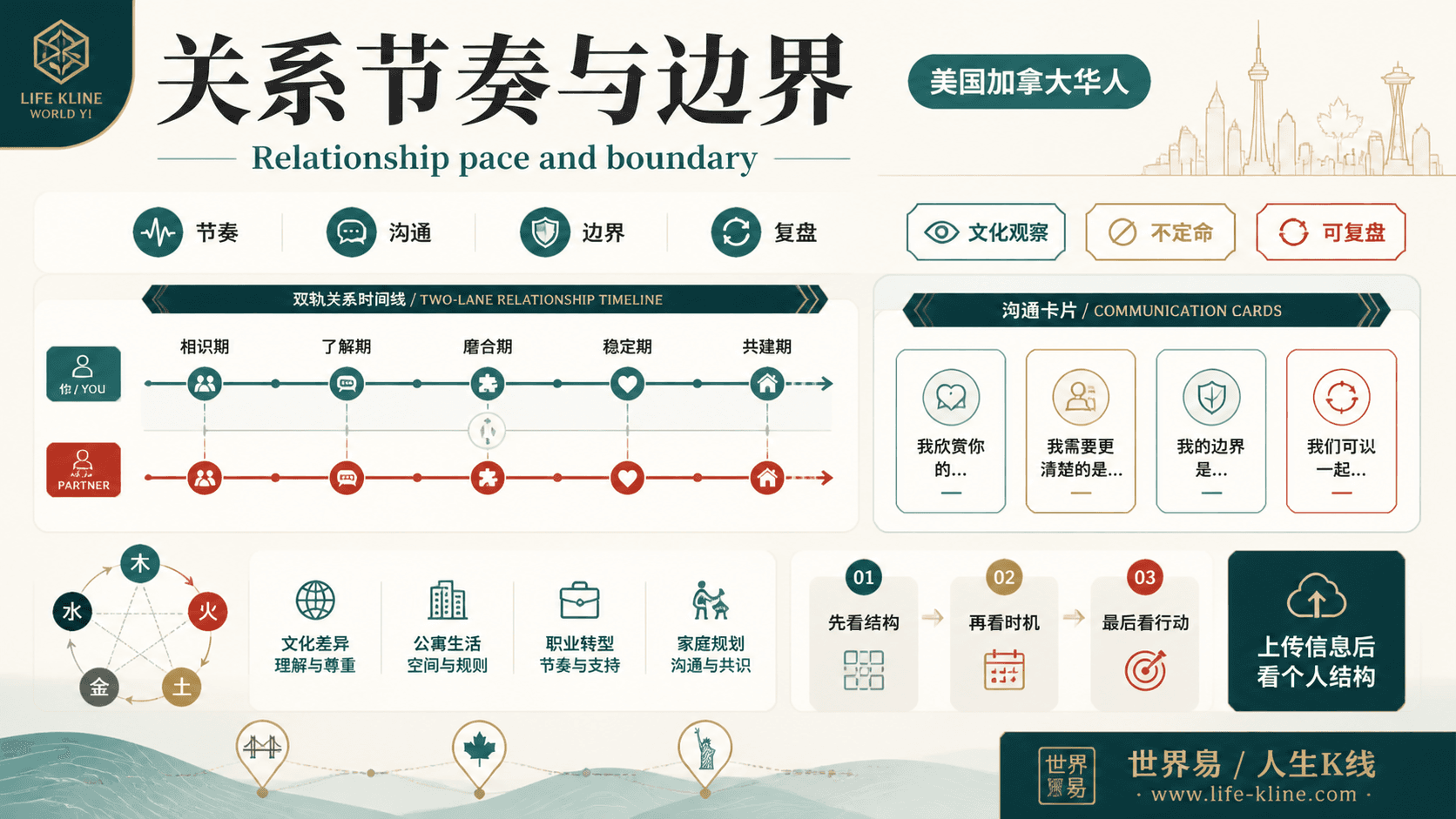
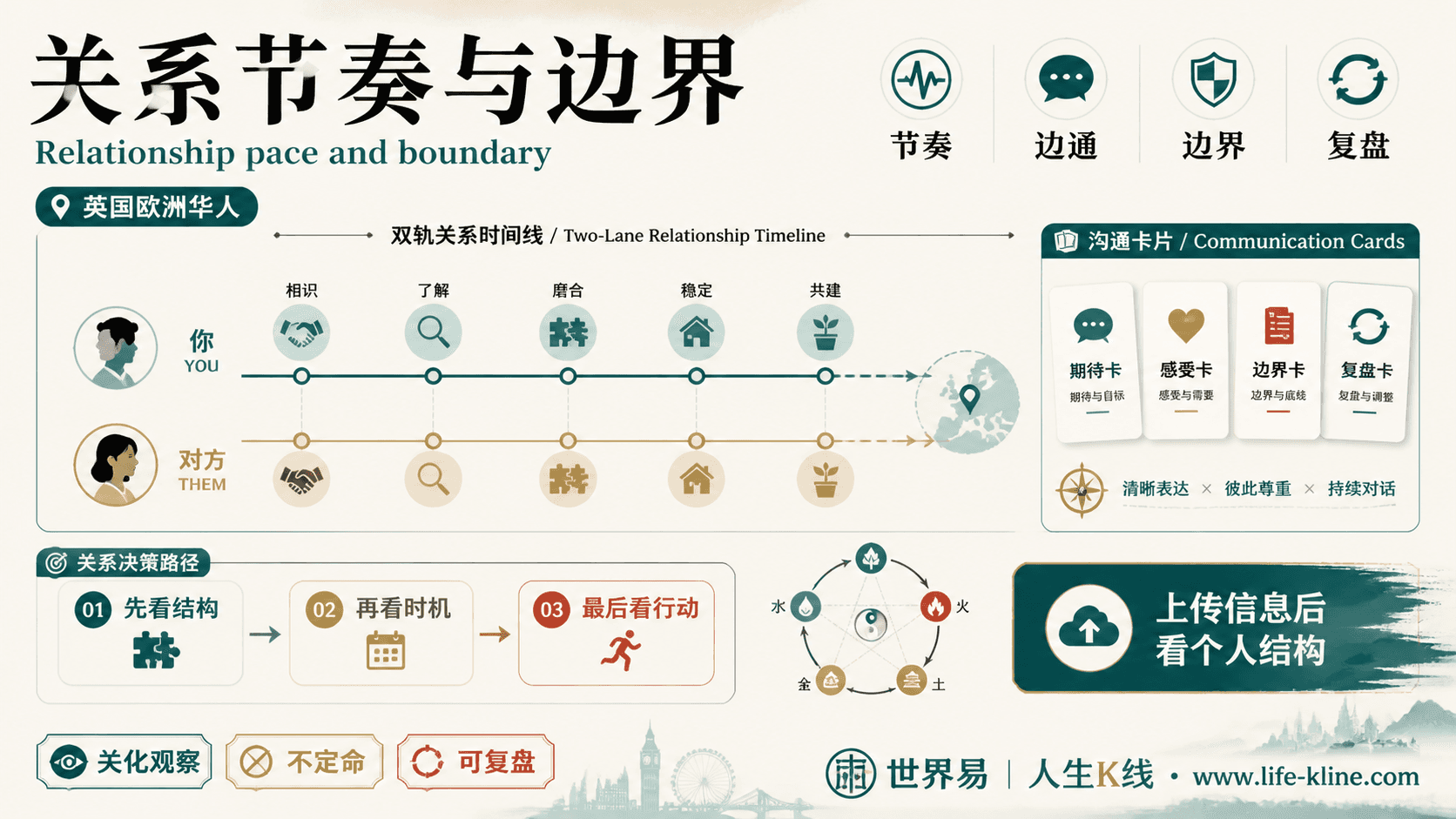
The Five Elements Attributes and Fate Analysis of the Earthly Branch Chen (辰)
把这篇文章落到自己身上验证:先看结构,再进入个人分析,不做泛泛阅读。
Concept Definition
Chen (辰) is the fifth of the twelve Earthly Branches (地支) and is classified as a Yang branch. In the Five Elements system, Chen represents Earth, embodying stability and the characteristic of bearing or carrying. The Earthly Branches are a crucial component of traditional Chinese metaphysics, and Chen, as one of them, carries specific Yin-Yang and Five Elements attributes as well as a complex hidden Heavenly Stems (藏干) structure.
The hidden Heavenly Stems within Chen include Wu (戊), Yi (乙), and Gui (癸). This combination endows Chen with multi-layered Five Elements connotations. Wu (戊) is Yang Earth, Yi (乙) is Yin Wood, and Gui (癸) is Yin Water, indicating that Chen not only represents Earth in the Five Elements but also encompasses Wood and Water elements, reflecting the mutual generating and overcoming relationships among the Five Elements.
Moreover, Chen has unique relational characteristics within the Earthly Branches system. It forms a Six Clash (六冲) relationship with Xu (戌), a Six Harmony (六合) with You (酉), and also involves self-Penalization (相刑) with Chen itself and Harm (相害) with Mao (卯). These relationships collectively influence Chen’s manifestations in fate analysis and the direction of fortune.
Fate Characteristics and Symbolic Meaning
As a Yang branch, Chen exhibits active and extroverted traits. The Earth element inherent in Chen symbolizes a solid foundation and inclusiveness. The Earth nature of Chen means it is often viewed in fate analysis as a force of bearing and harmonizing, capable of coordinating balance among the Five Elements.
Within Chen’s hidden Heavenly Stems, Wu Earth is the principal energy, representing heaviness and reliability; Yi Wood symbolizes flexibility and growth; Gui Water stands for nourishment and flow. This combination of hidden stems gives Chen diversified energies and a complex internal structure, reflecting the multifaceted personality and fortune tendencies of the Day Master (日主) associated with it.
The Six Clash between Chen and Xu signifies conflict and change, implying that when Chen encounters Xu in fate analysis, significant turbulence or transformation may occur. Conversely, the Six Harmony between Chen and You represents harmony and cooperation, which can promote smooth development of matters. The self-Penalization of Chen and the Harm with Mao reveal underlying contradictions and challenges that require careful attention in practical analysis.
Practical Configuration and Interpretation
In a BaZi (Eight Characters) chart, Chen Earth often appears as the Day Master’s Earthly Branch or elsewhere in the chart. The combination of its hidden Heavenly Stems affects the Five Elements balance of the fate structure. For example, when Wu Earth is the principal energy, the individual tends to be steady and reliable, possessing strong bearing capacity and a sense of responsibility; the hidden Yi Wood and Gui Water may bring gentleness and flexibility to the personality.
When Chen clashes with Xu, it often indicates potential major changes in life or work, requiring attention to conflict resolution and emotional management. The Six Harmony between Chen and You helps enhance harmonious interpersonal relationships and cooperation, making it favorable for teamwork or partnership ventures.
Fate analysts must also pay attention to Chen’s self-Penalization and Harm relationships. Self-Penalization of Chen may reflect internal conflicts or self-contradictions, while Harm from Mao suggests possible external obstacles and challenges. Properly utilizing this information aids in more accurate prediction of fate trends and guidance for life decisions.
Common Misunderstandings
Many mistakenly consider Chen as purely representing Earth, overlooking the presence of Yi Wood and Gui Water in its hidden Heavenly Stems, leading to a one-dimensional understanding of its fate structure. In fact, Chen’s multi-layered hidden stem composition enriches its Five Elements expression and requires comprehensive analysis.
Another common misunderstanding is to simplistically interpret the Six Clash between Chen and Xu as inevitably causing conflict and misfortune, neglecting that such clashes can also bring positive changes and growth opportunities. Fate analysis should avoid mechanical interpretations and flexibly apply knowledge according to the specific BaZi chart.
FAQ
Question: Why is Chen classified as a Yang branch? Answer: Chen belongs to the Yang branches among the Earthly Branches, representing Yang qualities such as activity, extroversion, and strong bearing capacity, consistent with its position and Yin-Yang attributes in the twelve Earthly Branches.
Question: How do Chen’s hidden Heavenly Stems affect fate analysis? Answer: Chen contains Wu Earth, Yi Wood, and Gui Water hidden stems. This diverse combination means Chen embodies not only the solid and stable Earth attribute but also the growth of Wood and nourishment of Water, enriching the diversity of the Day Master’s character and fortune manifestations.
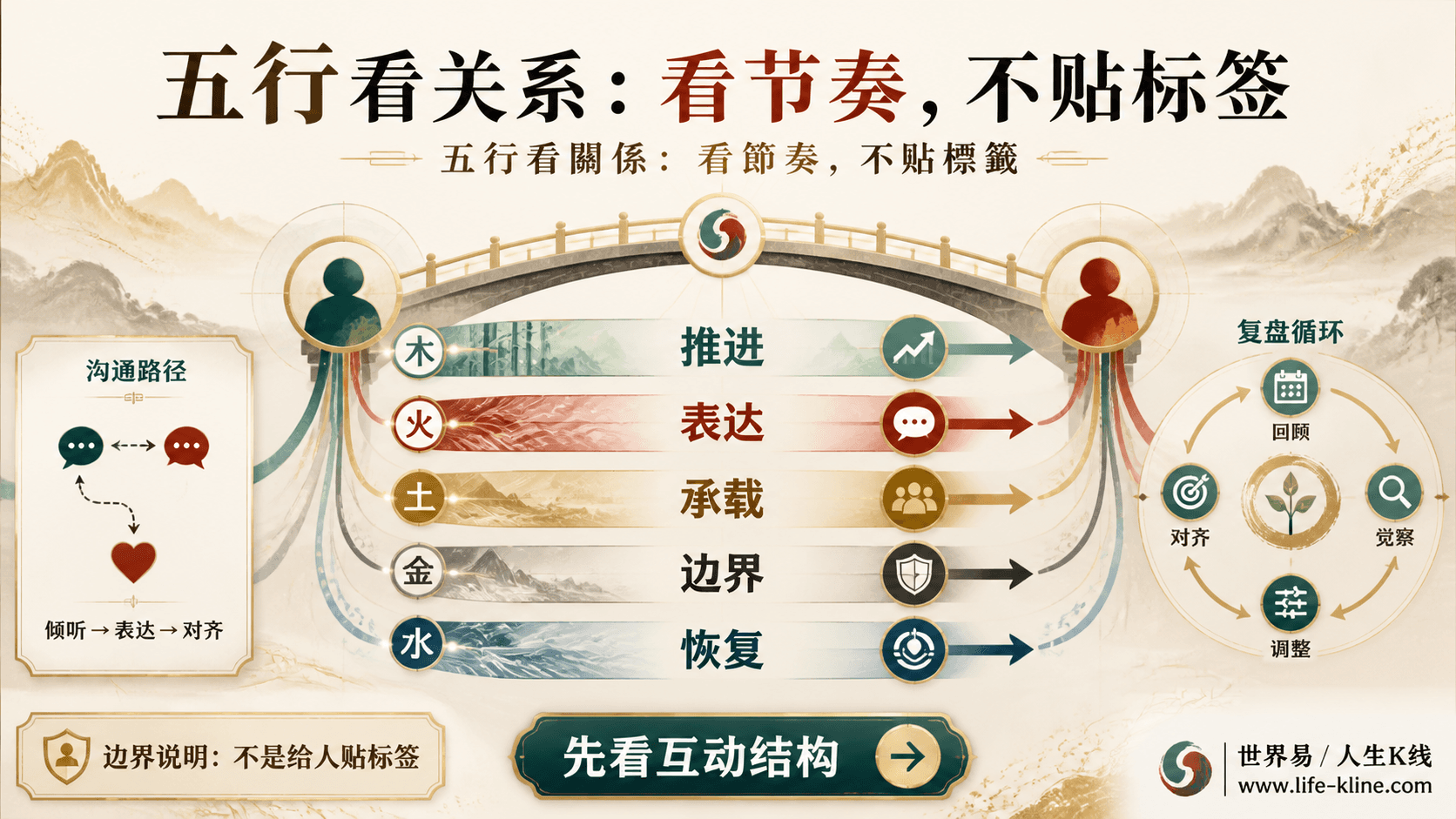
五行与关系节奏图
这张图把《The Five Elements Attributes and Fate Analysis of the Earthly Branch Chen (辰)》里的命理概念转成关系、边界和应用场景,适合先看图建立结构,再回到知识文章正文理解细节。
五行提供一种结构化视角,帮助观察关系中的推进、表达、承载、边界与恢复节奏。它不是性格定型工具,而是辅助我们留意互动的时位、环境与动作选择。
查看图片解读