BaZi Analysis for Designers: Choosing Between Starting Independently or Staying in an Organization
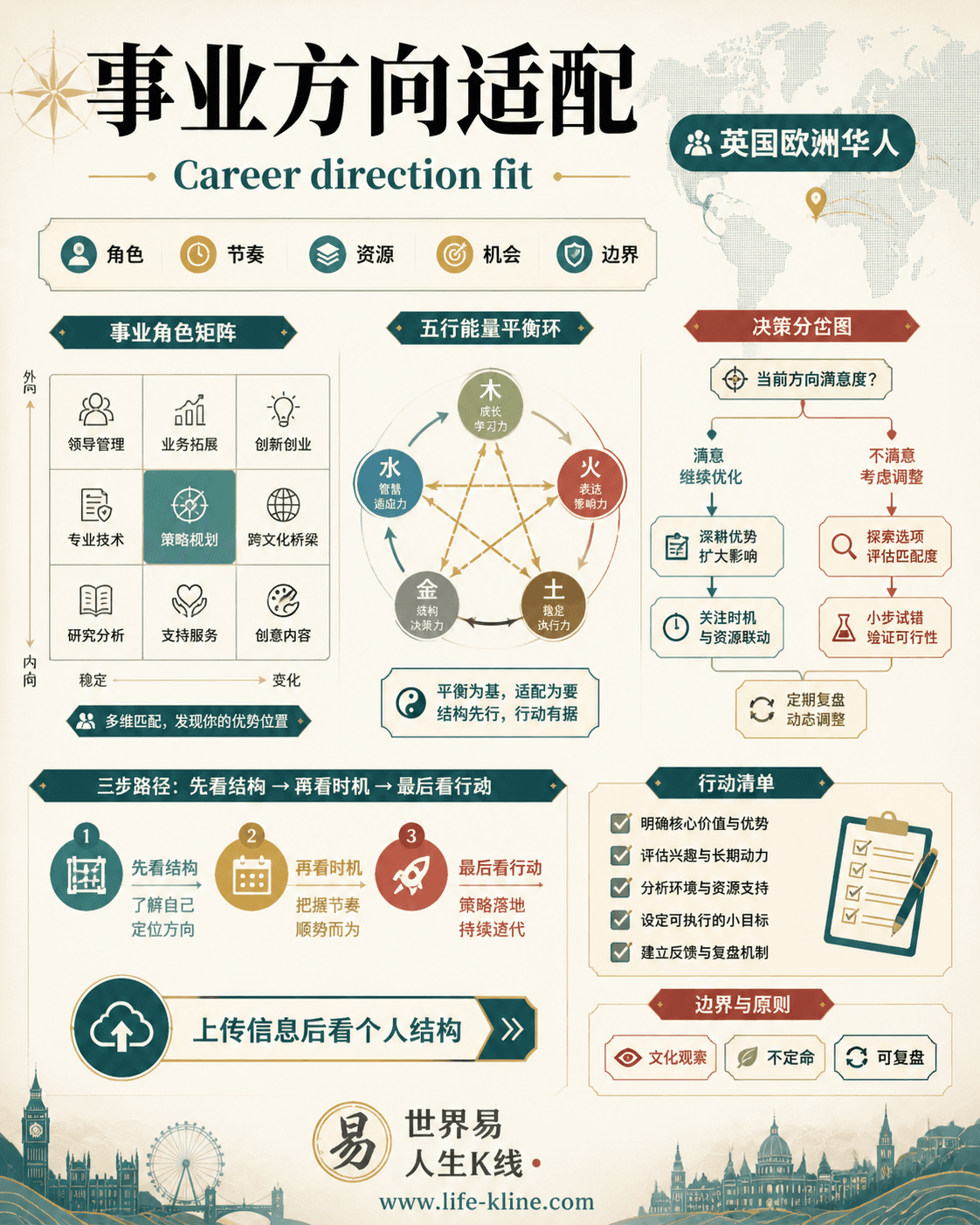
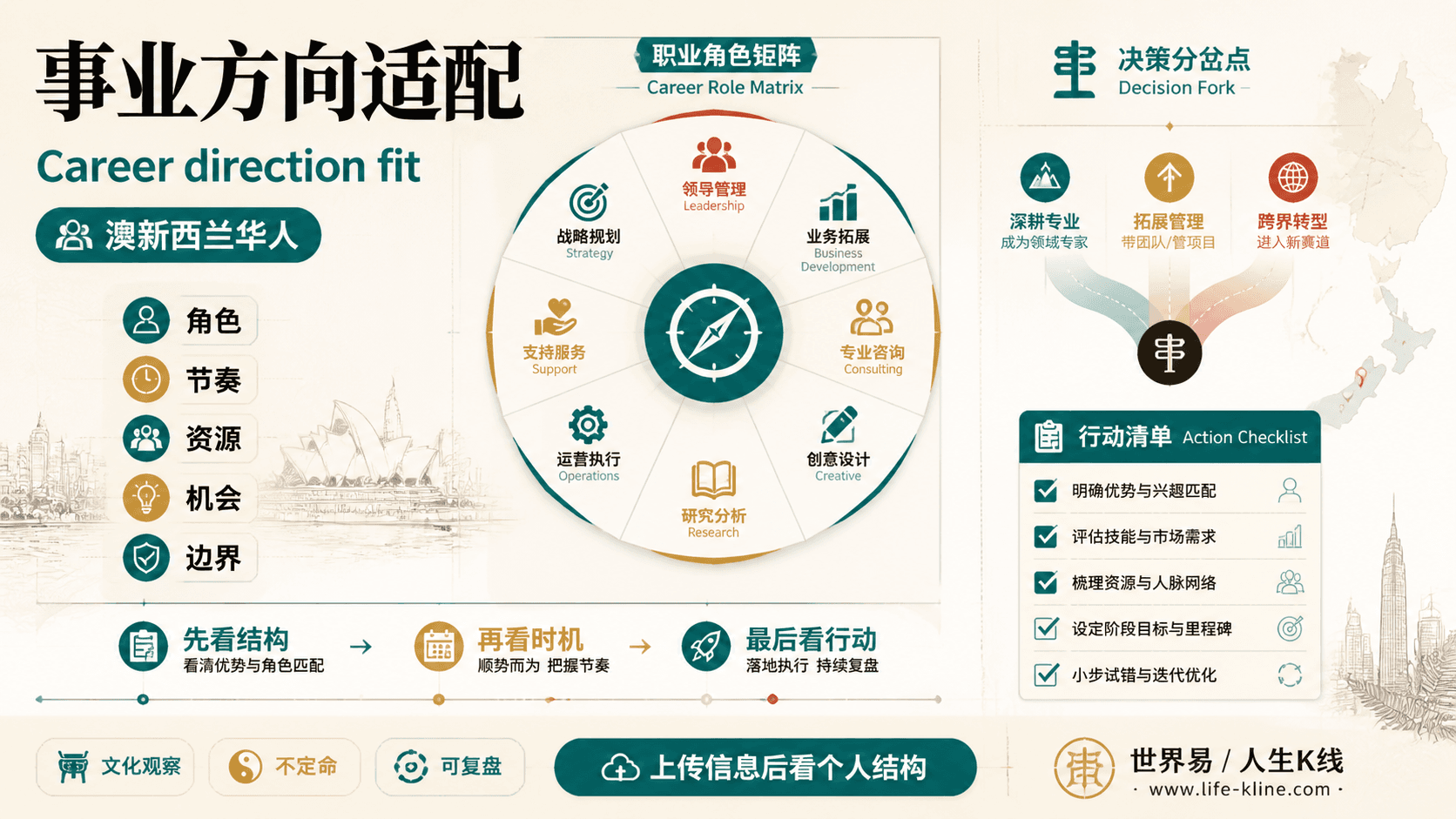
把这篇文章落到自己身上验证:先看结构,再进入个人分析,不做泛泛阅读。
Why This Decision Is Especially Difficult for Designers
The designer profession heavily relies on aesthetic intuition and innovative inspiration. The work pace is variable and often involves repeated revisions and client communications, resulting in significant mental stress. The income model usually depends on the quantity and quality of projects, especially for freelance designers, whose earnings fluctuate greatly and lack stability.
Therefore, when deciding whether to start independently, designers must consider the cycles of inspiration and the stability of client resources. Although starting independently offers greater freedom, it requires bearing more business development and financial risks. The nature of concentrated work bursts and overtime also increases personal burdens.
In contrast, staying within an institutional or large organizational environment may limit creative freedom but provides relatively stable income and resource support, reducing worries. This trade-off is reflected in BaZi by assessing the Day Master’s strength and whether the Yong Shen is effective, which determines one’s ability to handle pressure and seize opportunities.
Moreover, the Shang Guan (Hurting Officer) and Shi Shen (Eating God) elements represent a designer’s creativity and desire for expression. How these factors are balanced within the BaZi structure directly impacts whether one is more suited to entrepreneurship or deepening career within an organization.
Three Core Dimensions of BaZi Judgment
First, the strength of the Day Master determines the designer’s fundamental energy and endurance. A relatively weak Day Master often requires external resources (Yong Shen) for support; otherwise, excessive pressure can hinder sustained creativity, making reliance on an organizational environment more suitable. A relatively strong Day Master is better suited to starting independently, able to proactively control the career pace.
Second, the pattern and Yong Shen reveal the designer’s career foundation and development direction. Designers with Shang Guan and Shi Shen as main elements, if their Yong Shen is Wood, indicate a need for growth and harmonization, as Wood supports creative development. Patterns such as Pian Yin (Partial Seal) or Jie Cai (Rob Wealth) reflect different resource relationships and interpersonal interaction modes, affecting adaptability to team or independent environments.
Third, the Da Yun and Liu Nian reflect fluctuations in the designer’s fortune over different periods, determining timing for action and risk tolerance. Favorable luck cycles suit proactive moves like starting independently; during weaker periods, it is wiser to cautiously maintain and rely on organizational resources.
By integrating these three dimensions, designers should arrange their career paths reasonably according to their BaZi characteristics and current fortune, avoiding reckless advances or excessive conservatism to achieve sustainable career growth.
Three Real BaZi Case Studies
Case 1: This female designer has a relatively weak Bing Fire (丙, Bing) Day Master, a Pian Yin (Partial Seal) pattern, with Wood as the Yong Shen, and is currently in the Wu Zi (戊子, Wu Zi) Da Yun. The weak Bing Fire Day Master means insufficient personal energy, requiring Wood Yong Shen support. The Pian Yin pattern indicates reliance on external resources and support. Her aesthetic inspiration is easily influenced by the environment, and the Wu Zi Da Yun is relatively weak. The current Liu Nian is Bing Wu (丙午, Bing Wu), suggesting caution. Considering her repeated client pressures and overtime, this BaZi is more suitable for staying within an organization to leverage system stability and avoid the risks of independent entrepreneurship. The recommended judgment sequence is: first confirm if the Wood Yong Shen is effective, then evaluate whether the Da Yun and Liu Nian support breakthroughs; currently, cautious maintenance is advisable.
Case 2: This male designer has a relatively strong Wu Earth (戊, Wu) Day Master, a Zheng Guan (Proper Officer) pattern, with Wood and Water as Yong Shen, and is currently in the Geng Yin (庚寅, Geng Yin) Da Yun. The strong Wu Earth Day Master shows abundant internal energy and leadership ability. The Zheng Guan pattern represents an orderly career path and good social resource support. Wood and Water Yong Shen assist his career growth. The Geng Yin Da Yun is a favorable luck cycle, and the current Liu Nian is Bing Wu (丙午, Bing Wu), which aligns well with his fortune, leading to progress in career and wealth. In the context of the volatility of freelance design work, this BaZi suits starting independently, leveraging personal leadership and social strengths. The recommended judgment sequence is: confirm that the current Da Yun is auspicious, combine with Liu Nian momentum, and seize the opportunity for entrepreneurship timely.
Case 3: This male designer has a relatively weak Ren Water (壬, Ren) Day Master, a Jie Cai (Rob Wealth) pattern, with Wood as Yong Shen, and is currently in the Ding You (丁酉, Ding You) Da Yun. The weak Ren Water Day Master indicates unstable creative inspiration, requiring Wood Yong Shen support for growth. The Jie Cai pattern reflects competition and resource contention, suggesting the designer may face many ups and downs with clients and inspiration cycles. The Ding You Da Yun is stable, suitable for maintaining the status quo, while the current Liu Nian is Bing Wu (丙午, Bing Wu), requiring flexibility. His work environment involves frequent concentrated overtime and fluctuating inspiration cycles. It is recommended that this designer deepen experience within an organization temporarily, accumulate resources and experience, and consider independent entrepreneurship when the Da Yun turns favorable. The judgment sequence is: focus on checking the current Da Yun’s stability and whether the Yong Shen is effective, avoiding impulsive entrepreneurship.
These three cases demonstrate that the Day Master’s strength and the effectiveness of the Yong Shen in a designer’s BaZi are closely related to career path choices. Reasonably combining Da Yun and Liu Nian can effectively guide decisions between starting independently and staying in an organization.
Common Misjudgments and Blind Spots for Designers
Designers often overlook the supportive role of the Yong Shen in their BaZi when making decisions, blindly pursuing the freedom of independent entrepreneurship, which leads to shortages in funding and client resources later, making the career unsustainable. This is especially true for those with weak Day Masters lacking stable external support, who easily fall into difficulties.
Another blind spot is over-reliance on the auspiciousness or inauspiciousness of the Liu Nian (annual fortune), neglecting the long-term trend of the Da Yun (decade luck cycle). Although Liu Nian shows short-term fluctuations, the Da Yun sets the career tone; ignoring this may cause decision errors.
Although designers with strong Shang Guan and Shi Shen elements have high creativity, if the Ji Shen (unfavorable element) is excessive in the BaZi, negative emotions and external disturbances may affect decisions, causing frequent changes and lack of long-term planning.
Additionally, the income volatility of freelance designers is often overestimated, while the value of resource accumulation and network expansion within stable organizations is underestimated, leading to a high failure rate in early entrepreneurship.
Practical Judgment Sequence
First, confirm the Day Master’s strength to judge whether one’s energy is sufficient to bear the pressures of independent entrepreneurship. Those with a relatively strong Day Master and effective Yong Shen are more suited for entrepreneurship; otherwise, reliance on an organization is advisable.
Second, analyze the pattern and Yong Shen to clarify the career foundation and required resources, judging whether there is a stable external support environment.
Third, combine the current Da Yun and Liu Nian to assess the auspiciousness of fortune and determine the timing for action. Favorable luck periods suit active career expansion; during unfavorable times, it is better to maintain and accumulate.
Finally, consider the designer’s actual work rhythm and pressures, such as inspiration cycles, repeated client demands, and overtime, to judge whether one can handle the fluctuations and challenges of independent entrepreneurship, avoiding impulsive decisions.
FAQ
Question 1: If a designer’s Day Master is weak, does that mean they cannot start independently? Answer: Not necessarily. A weak Day Master requires checking whether the Yong Shen is effective and whether Da Yun and Liu Nian are supportive. With sufficient external resource support, independent entrepreneurship is possible; otherwise, it is recommended to accumulate experience first.
Question 2: Which has a greater impact on decision-making, Da Yun or Liu Nian? Answer: Da Yun determines the overall trend and tone of the career, while Liu Nian affects short-term opportunities and challenges. Decisions should mainly consider Da Yun, with Liu Nian as a supplement for comprehensive evaluation.
Question 3: How can designers with many Shang Guan and Shi Shen elements avoid career volatility? Answer: They need to harmonize the Ji Shen through the Yong Shen to enhance personal stability, and reasonably plan their work rhythm to avoid frequent changes caused by emotions and external disturbances.
事业方向适配|美国加拿大华人
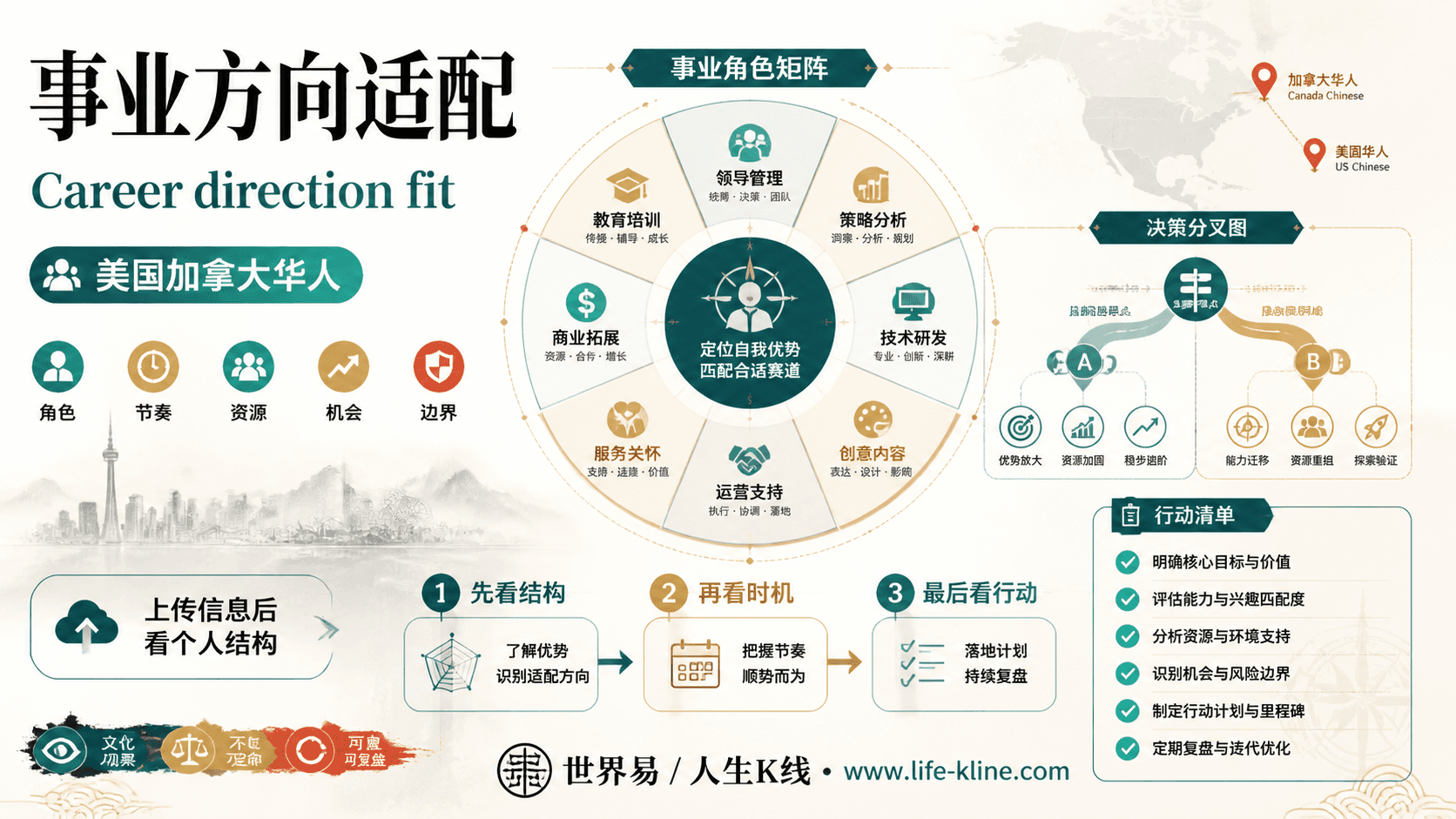
这张图把《BaZi Analysis for Designers: Choosing Between Starting Independently or Staying in an Organization》里的命理概念转成关系、边界和应用场景,适合先看图建立结构,再回到知识文章正文理解细节。
事业方向适配不应被写成固定结论。更适合美国加拿大华人的读法,是把传统术语翻译成结构、时机、环境、行动和复盘。
查看图片解读