Metaphysical Analysis and Practical Guide for Consulting Startup Capital and Leverage Decisions
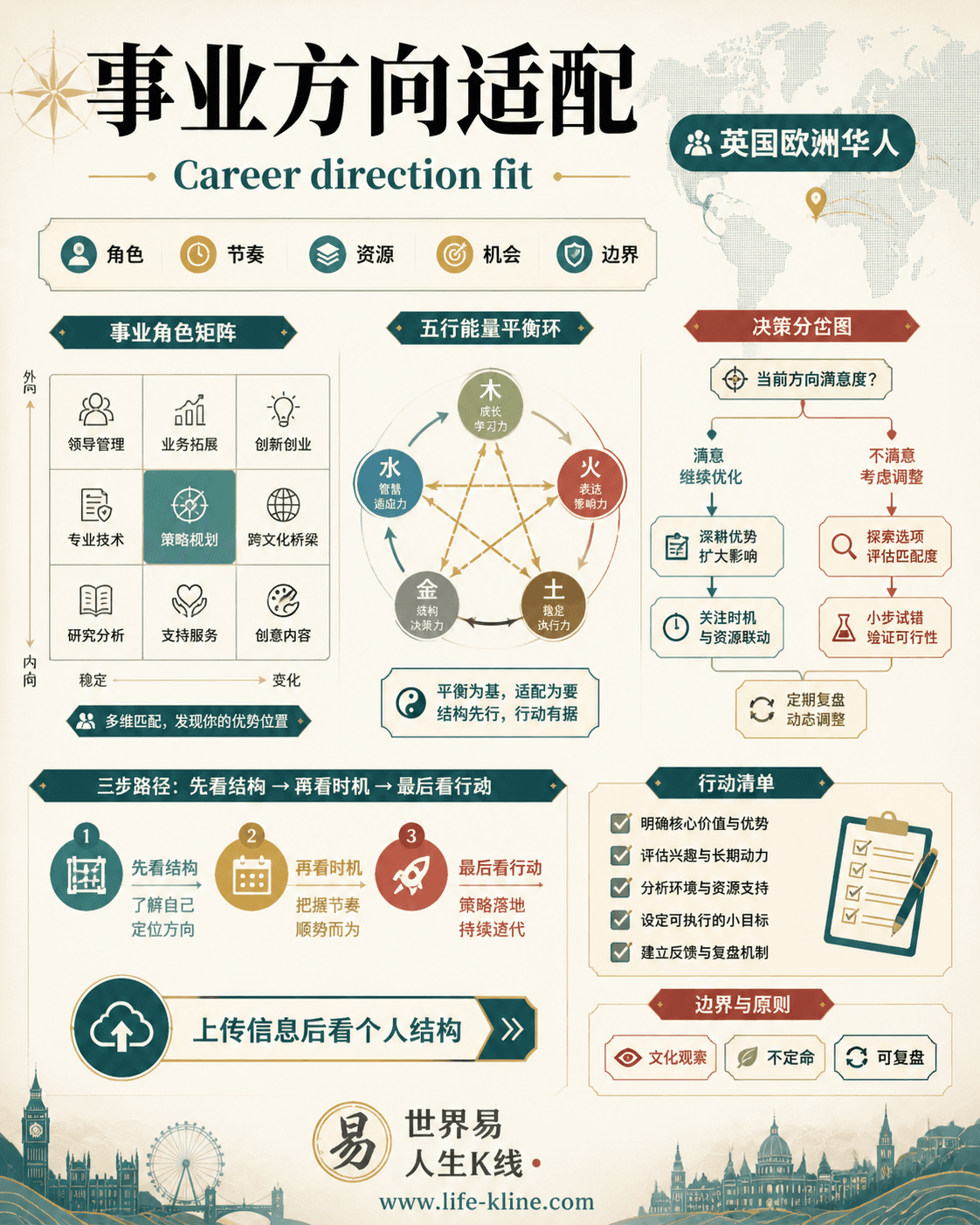
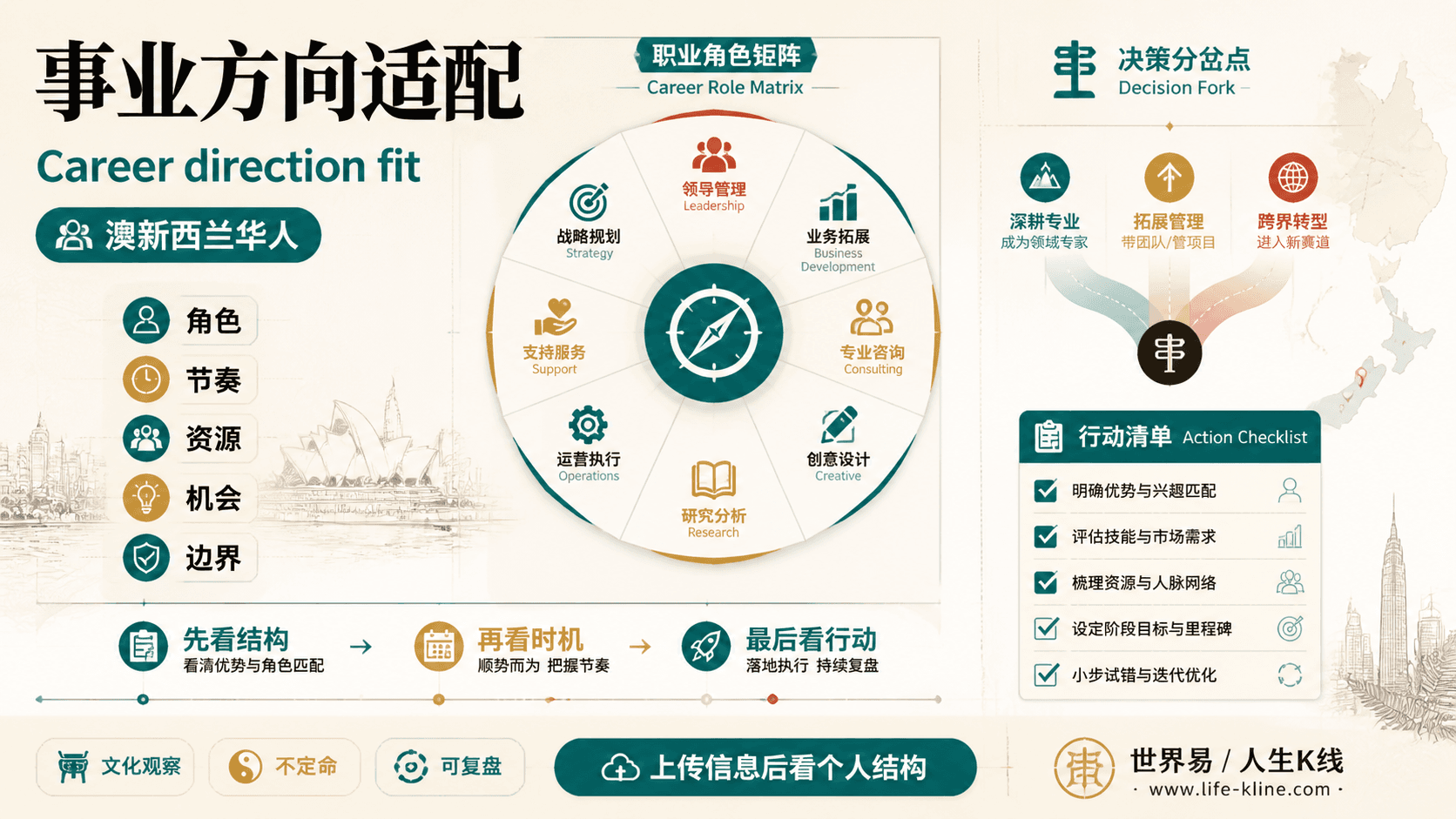
把这篇文章落到自己身上验证:先看结构,再进入个人分析,不做泛泛阅读。
Why This Decision Is Particularly Difficult in This Industry
The core competitiveness of the consulting and professional service industry lies in the professional capabilities of human resources and the influence of personal branding, which determines a "people as productivity" operational structure. Project income is often cyclical and unstable, with a concentrated client base that heavily relies on brand trust. This requires startup capital allocation to fully consider liquidity and risk tolerance.
In leverage decisions, light asset operations can reduce fixed costs and alleviate financial pressure caused by client loss or project delays, but may limit business expansion speed and team size. Conversely, heavy asset investment helps quickly accumulate resources and market share but may increase financial burden amid client project fluctuations and policy changes.
Psychologically, entrepreneurs tend to overestimate their personal abilities and business growth speed, neglecting industry uncertainties and client dependencies, leading to excessive capital investment and concentrated risks. The metaphysical structure provides a rhythm reference to help entrepreneurs adjust capital leverage according to different cycles and fortunes, avoiding blind expansion or excessive conservatism.
Therefore, considering operational structure, psychological biases, and metaphysical rhythms comprehensively, startup capital scale and leverage decisions in consulting are especially complex. Careful evaluation of current fortune and Yong Shen status is required, with dynamic strategy adjustments to balance growth and risk.
Three Core Dimensions of Metaphysical Judgment
The strength of the Day Master directly affects the entrepreneur’s leadership and stress-bearing capacity. For example, a relatively strong Day Master has greater risk resistance and decision-making ability, suitable for bearing larger capital leverage; a weaker Day Master requires support from the Yong Shen and cautious capital scale selection.
The combination of Wealth Stars, Bi Jian (Peer/Rob Wealth), and Guan Sha (Officer/Seven Kill) reflects capital liquidity, competitive pressure, and external environment impact on entrepreneurship. When Wealth Stars are strong and supported by Yong Shen, capital liquidity is good, favoring moderate leverage. Strong Bi Jian indicates intense competition, necessitating attention to risk diversification. Strong Guan Sha represents high pressure, possibly affecting capital arrangements due to policies or client relations.
The interaction between Da Yun (decade luck cycle) and Liu Nian (annual fortune) reflects the current fortune rhythm. Favorable fortune phases (great luck Da Yun) support capital investment and business expansion, while adverse or unlucky periods call for caution, favoring light asset trial and stable operations. The strength or weakness of the Yong Shen also indicates the ability to mitigate risks and determines leverage tolerance.
Combining these three dimensions, entrepreneurs need to integrate their BaZi structure with industry characteristics to reasonably judge startup capital scale and leverage, acting in accordance with the fortune rhythm while keeping risks controllable.
Three Real BaZi Case Studies
Case 1: This gentleman’s Day Master is Geng Metal (庚, Geng) and relatively weak, classified as a Pian Cai (偏财) pattern. His Yong Shen is Earth, while Water and Wood are Ji Shen (unfavorable elements). He is currently in the Ji Wei Da Yun (己未, a great luck cycle) and Bing Wu Liu Nian (丙午 year). The Pian Cai pattern shows prominent Wealth Star effects, and the Earth Yong Shen is the source of wealth generation, conducive to stable capital inflow. The Ji Wei Da Yun strengthens Earth energy, enhancing Yong Shen power, and the Liu Nian aligns well, overall supporting moderate leverage. Considering consulting’s human-centric nature, startup capital should not be excessive but can moderately increase leverage to support team expansion and brand building. Due to favorable Da Yun, risks are relatively controllable. It is recommended to conduct thorough commercial due diligence to confirm client stability, then flexibly adjust leverage ratio based on capital turnover capacity to avoid cash flow tension caused by client concentration.
Case 2: This lady’s Day Master is Yi Wood (乙, Yi), balanced and belonging to a Cong Cai (从财) pattern. Her Yong Shen are Earth and Fire, with Water and Wood as Ji Shen. She is currently in the Jia Yin Da Yun (甲寅, an unfavorable luck cycle) and Bing Wu Liu Nian (丙午 year). The Jia Yin Da Yun is relatively weak and requires caution against major changes, indicating strong external environmental pressure. Although Wealth Stars are abundant, Yong Shen is constrained, posing hidden risks to capital liquidity. The project-based income and client dependency in consulting further increase capital risk, making heavy asset investment risky. A light asset strategy is advised, prioritizing small-scale project trials and managing cash flow prudently to reduce operational leverage, avoiding funding chain breaks caused by adverse Da Yun. Strengthening risk assessment and contingency planning, combined with professional financial advice, is essential for dynamically adjusting capital input rhythm.
Case 3: This gentleman’s Day Master is Ding Fire (丁, Ding) and relatively weak, classified as a Zheng Guan (正官) pattern. His Yong Shen is Wood, with Earth and Metal as Ji Shen. He is currently in the Yi Mao Da Yun (乙卯, a great luck cycle) and Bing Wu Liu Nian (丙午 year). The Zheng Guan pattern reflects career pressure and responsibility, with Wood Yong Shen indicating reliance on Wood’s nurturing energy. The Yi Mao Da Yun is a great luck cycle, and the Liu Nian aligns favorably. In consulting, Zheng Guan represents project management and standardized development. Good fortune supports reasonable leverage expansion. It is recommended, based on thorough financial due diligence and stable client structure, to moderately invest in heavy assets to expand team and service capabilities. However, continuous monitoring of Da Yun and Liu Nian changes is necessary to timely adjust capital strategies and avoid excessive optimism leading to concentrated risks.
Common Misjudgments and Blind Spots in This Industry
A common misjudgment among consulting and professional service entrepreneurs is over-reliance on personal brand and core team, neglecting liquidity risk. Excessive leverage may cause cash flow breaks when clients delay or withdraw, affecting project delivery and brand reputation.
Another blind spot is ignoring changes in fortune rhythm, with fixed thinking favoring rapid heavy asset expansion without dynamically adjusting according to Da Yun and Liu Nian. The metaphysical signals of Yong Shen strength and Da Yun/Liu Nian interactions are important risk indicators; neglecting them risks falling into extremes of blind optimism or excessive conservatism.
Additionally, entrepreneurs often underestimate the impact of policy environment and competitive pressure, especially the role of Guan Sha stars. Industry policy changes or intensified competition directly affect client structure and project stability. If these external pressures are not reflected in capital planning, leverage risks will be amplified.
In summary, consulting industry capital leverage decisions must avoid one-dimensional optimism or pessimism, and instead integrate operational structure, metaphysical rhythms, and market environment to achieve dynamic balance between risk identification and capital allocation.
Practical Judgment Sequence
First, assess the current strength relationship between the Day Master and Yong Shen in the BaZi chart to determine personal risk resistance and capital allocation flexibility. If the Day Master is weak and Yong Shen is not strong, a light asset model is recommended to reduce fixed capital investment and maintain liquidity.
Second, combine the interaction of Da Yun and Liu Nian to evaluate the current fortune phase. Favorable fortune allows moderate leverage expansion but should be accompanied by detailed client credit and project risk assessments. During adverse fortune or weak Da Yun, it is advisable to slow capital input and strengthen cash flow management to avoid funding chain breaks.
Finally, integrate actual industry operations, focusing on client concentration and project cyclicality, and dynamically adjust leverage ratios. Entrepreneurs are advised to work with professional financial advisors to develop phased capital usage plans and contingency measures to ensure capital safety and business development synchronization under varying fortune rhythms.
In conclusion, metaphysics serves as a rhythm-assisting tool and cannot replace commercial due diligence and financial planning. Entrepreneurship carries risks and investments require caution. Reasonably combining metaphysical rhythms with industry characteristics can effectively enhance capital utilization efficiency and risk control capabilities.
FAQ
Question 1: Does a weak Yong Shen in BaZi necessarily mean startup capital must be limited? Answer: A weak Yong Shen usually indicates lower risk resistance and suggests cautious capital investment, but it is not an absolute restriction. The specific capital scale should be judged by combining Da Yun, Liu Nian, and industry realities, using commercial due diligence and financial planning to flexibly adjust leverage strategies.
Question 2: Why is it particularly important to pay attention to Da Yun and Liu Nian influences on capital decisions in the consulting industry? Answer: Da Yun and Liu Nian reflect the rhythm of personal fortune. Favorable timing benefits capital turnover and business expansion, while adverse fortune increases capital risk. Adjusting leverage according to fortune helps avoid high-risk phases and improves capital efficiency.
Question 3: After a failed heavy asset startup capital investment, how does metaphysics guide adjustment direction? Answer: After failure, focus on changes in Guan Sha stars and Yong Shen in the BaZi chart, combined with Da Yun and Liu Nian to determine if it is an adjustment period. If Da Yun is unfavorable, shifting to light asset operations and strengthening risk management is advised. If fortune improves, gradual capital reinvestment can be considered. Always combine with professional financial advice to formulate adjustment plans.
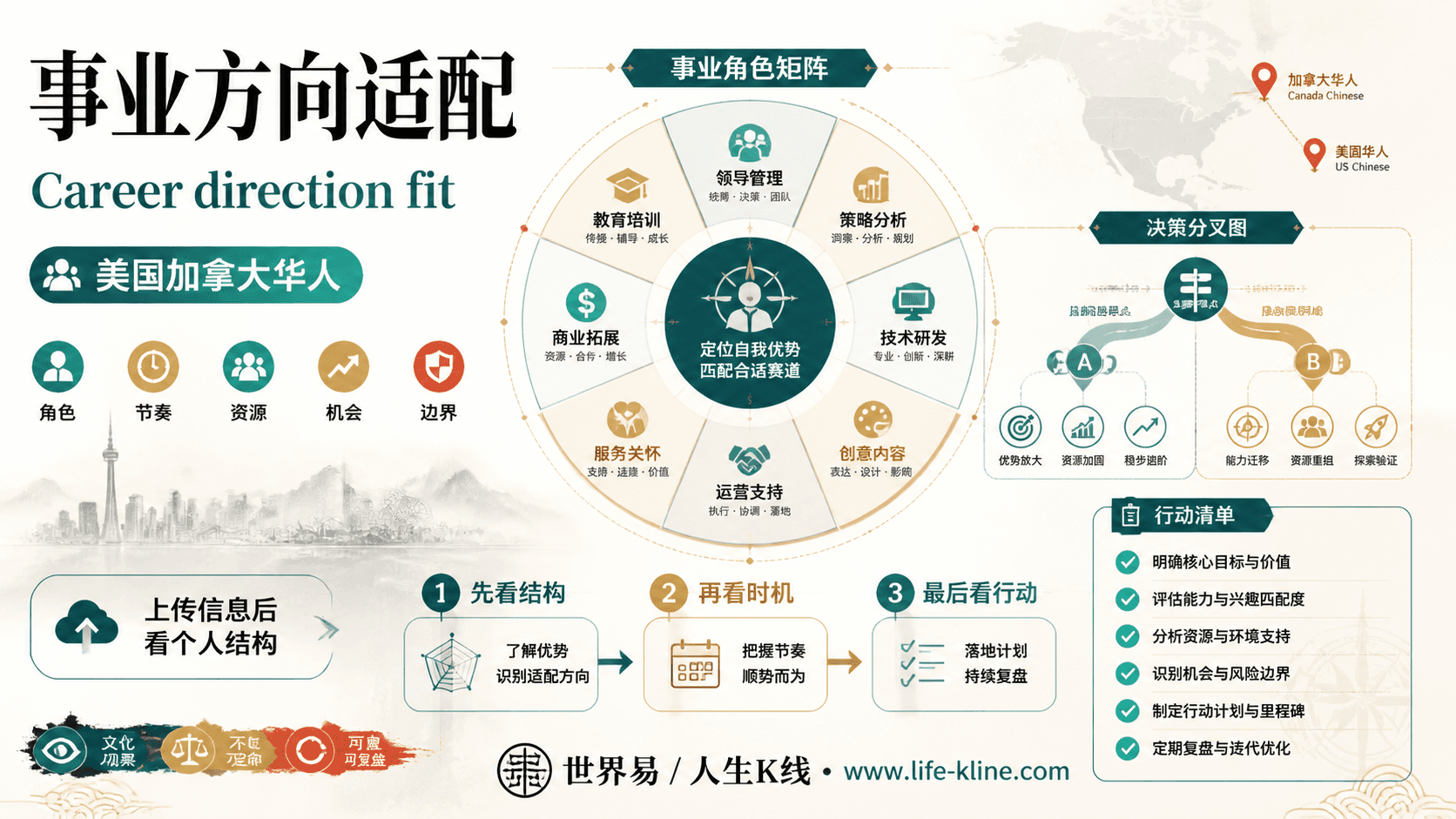
事业方向适配|美国加拿大华人
这张图把《Metaphysical Analysis and Practical Guide for Consulting Startup Capital and Leverage Decisions》里的命理概念转成关系、边界和应用场景,适合先看图建立结构,再回到知识文章正文理解细节。
事业方向适配不应被写成固定结论。更适合美国加拿大华人的读法,是把传统术语翻译成结构、时机、环境、行动和复盘。
查看图片解读