Astrological Analysis of Exit Strategies and Selling Timing for Community Shops
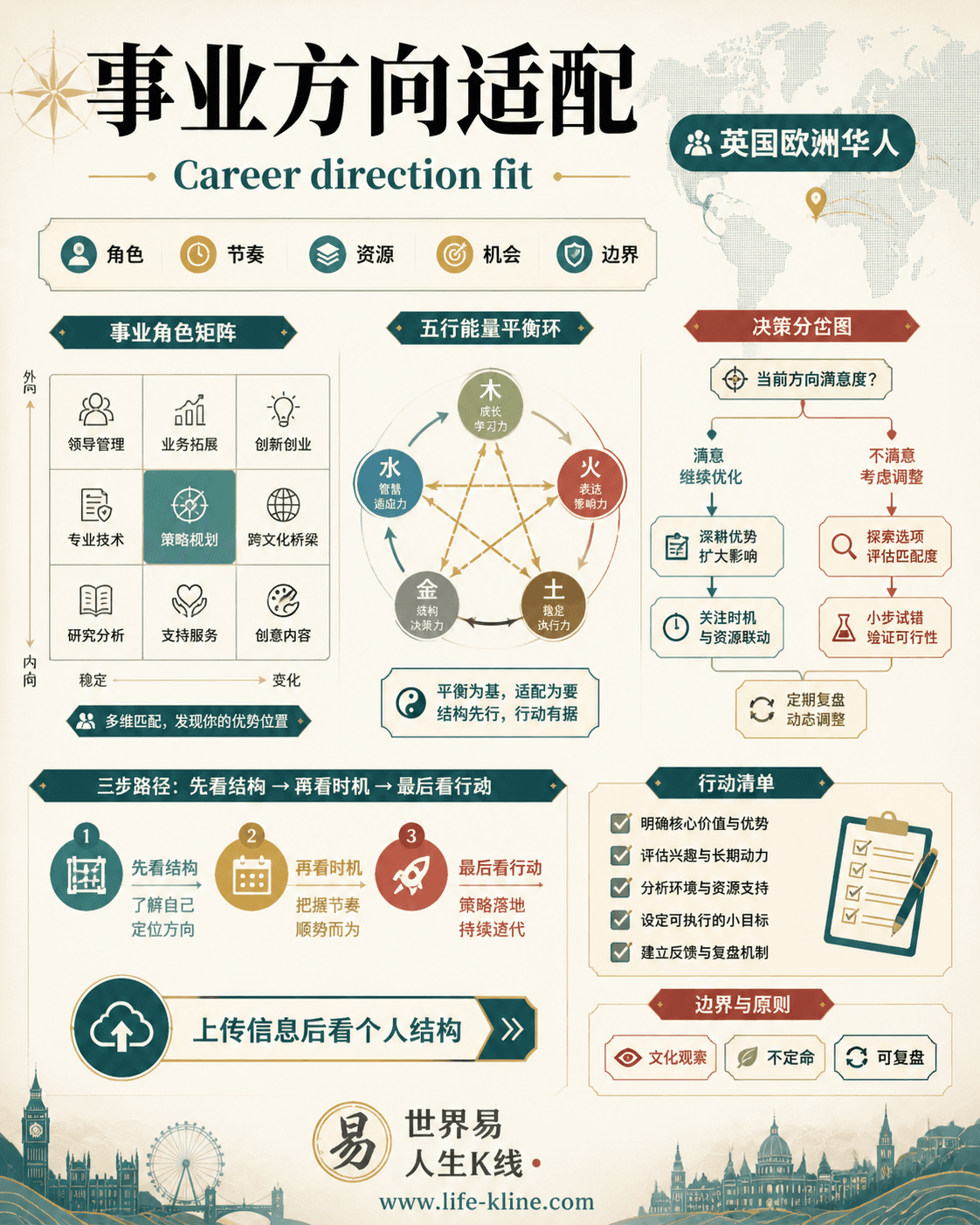
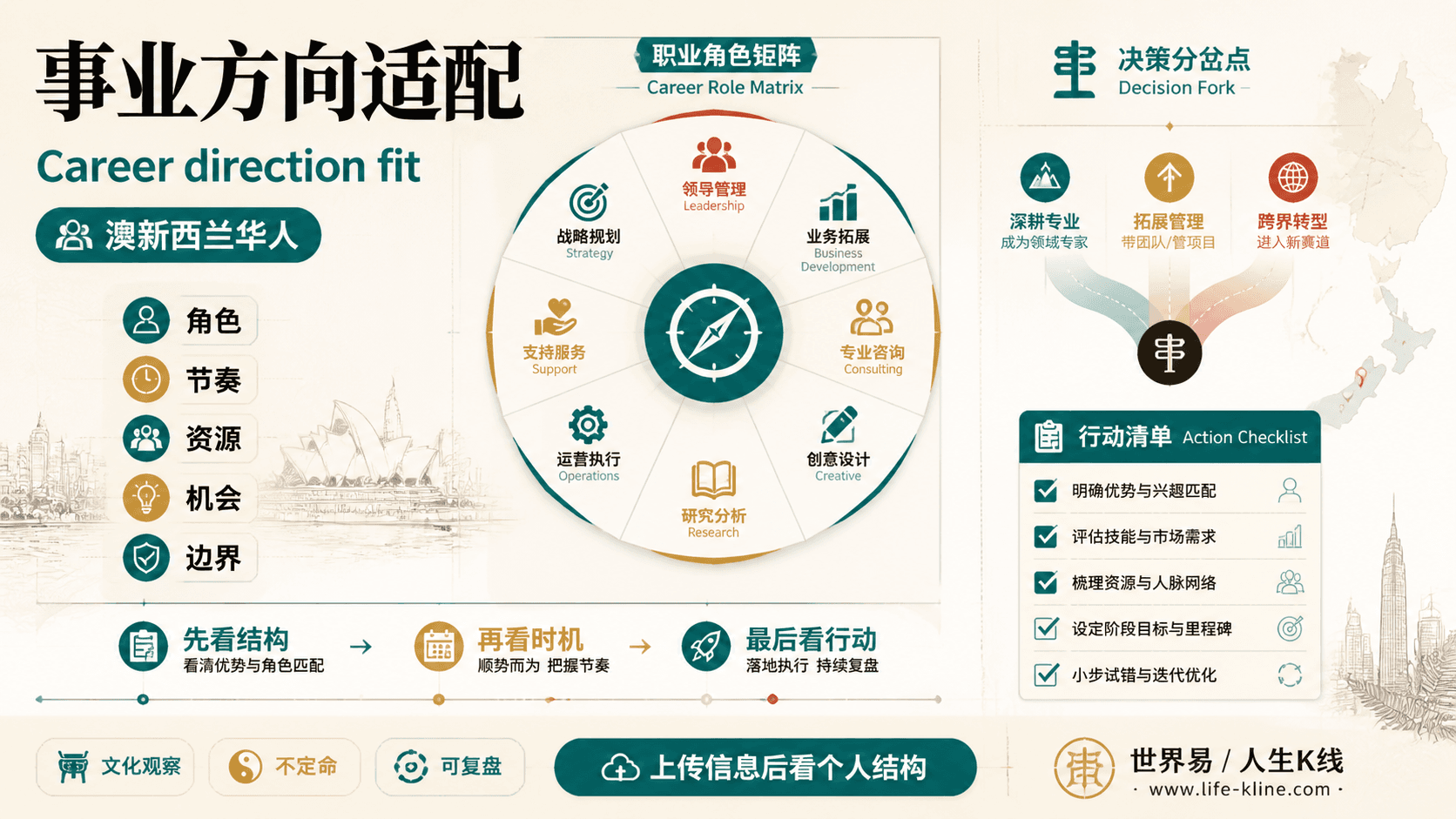
把这篇文章落到自己身上验证:先看结构,再进入个人分析,不做泛泛阅读。
Why This Decision Is Especially Difficult in This Industry
Community shops and local service industries are characterized by low entry barriers and intense competition, with operators often running family-style businesses where financial chains and personal relationships are closely intertwined. Low profit margins and rental pressures create a clear survival threshold, making the timing of exit or sale decisions require a dual consideration of economic benefits and interpersonal maintenance.
In such an environment, entrepreneurs often develop psychological biases in decision-making due to emotional investment and market fluctuations, making it difficult to rationally judge when to sell and exit or to continue persevering. Selling is not only a choice for capital recovery but also involves balancing risks and opportunities related to future livelihood security and career transformation.
Astrological structures can provide auxiliary references for cyclical rhythms and potential pressure signals in such decisions, especially the strength of the Day Master, Yong Shen, and the combination of wealth stars, Bi Jian (peer stars), and Guan Sha (official and killing stars), which reflect the entrepreneur’s resource allocation ability and stress state. The clashes and combinations between Liu Nian (annual fortune) and Da Yun (decade luck cycle) indicate possible critical turning points.
By integrating business structure with astrological rhythms, entrepreneurs can more scientifically assess the cost of persistence and the timing for selling, though this must be combined with business due diligence and professional financial analysis to avoid neglecting substantive operational risks due to overreliance on astrology.
Three Core Dimensions of Astrological Judgment
First, the strength of the Day Master and the pattern positioning form the foundation for judging the entrepreneur’s own energy and resource mobilization capabilities. For example, a relatively strong Wu (戊, Earth) Day Master with a Pian Cai (偏财, indirect wealth) pattern indicates a strong attraction to wealth and external resource support; whereas a balanced Bing (丙, Fire) Day Master with a Cong Er (从儿) pattern shows moderate self-regulation ability and environmental adaptability.
Second, the combination of wealth stars, Bi Jian (peer stars), Guan Sha (official and killing stars), and Yin stars (印星, resource/support stars) reflects cash flow, interpersonal cooperation, and pressure status. Wealth stars represent wealth and income; Bi Jian symbolizes competition and cooperation; Guan Sha embodies external pressure and constraints; Yin stars relate to support and stability. A proper Yong Shen can neutralize Ji Shen (unfavorable elements), helping entrepreneurs balance operational pressure.
Finally, the interaction between Da Yun and Liu Nian is key to observing selling windows and the cost of holding on. Da Yun represents long-term trends, while Liu Nian reflects short-term fluctuations. When Liu Nian clashes or combines with Da Yun, it often signals changes in the business environment. Clashes to wealth stars or strong Bi Jian may indicate selling opportunities or the need for cautious preservation.
By synthesizing these three dimensions, entrepreneurs can identify appropriate timing nodes for adjusting business strategies. Especially under family-style operations and rental pressures, properly grasping astrological selling windows helps avoid risks from capital chain breaks and interpersonal disputes.
Three Real BaZi Chart Case Studies
Case 1: This female entrepreneur has a Wu (戊, Earth) Day Master, relatively strong, with a Pian Cai (偏财, indirect wealth) pattern. Her Yong Shen is Wood, and Ji Shen is Fire. She is currently in the 7th year of the Wu Yin (戊寅) Da Yun and the Bing Wu (丙午) Liu Nian. The strong Wu Earth Day Master with a Pian Cai pattern shows strong wealth attraction and external resource support during her entrepreneurial process. The Wood Yong Shen symbolizes regulation and growth, while the Fire Ji Shen represents consumption and risk. The Wu Yin Da Yun is stable and suitable for preservation; the Bing Wu Liu Nian has strong Fire but requires adaptive responses. Applied to community shop operations, the Pian Cai pattern corresponds to interpersonal repeat purchases and cash flow; the Wood Yong Shen suggests the entrepreneur should timely introduce new resources or adjust transformation; the Fire Ji Shen hints at increasing rental pressure and competition risks. The selling timing should focus on operational pressure caused by the strong Fire in the Liu Nian. If the Fire becomes too strong causing capital overdraft, the selling window gradually appears. The judgment recommendation is to combine financial status to assess rental and labor cost pressures; if the Liu Nian pressure is high and capital chain tight, selling should be prioritized; otherwise, steady preservation is advised.
Case 2: This female entrepreneur’s Day Master is Bing (丙, Fire), balanced, with a Cong Er (从儿) pattern. Her Yong Shen are Earth and Metal, and Ji Shen is Wood. She is currently in the 6th year of the Gui Wei (癸未) Da Yun and the Bing Wu (丙午) Liu Nian. The balanced Bing Fire Day Master reflects moderate self-motivation and environmental adaptability. The Cong Er pattern indicates reliance on external forces. The Earth and Metal Yong Shen represent stability and wealth accumulation as supporting forces, while the Wood Ji Shen may induce disturbances and competition. In community shop operations, the Earth and Metal Yong Shen help alleviate rental and interpersonal pressures, maintaining operational stability, but the Wood Ji Shen may bring intense competition and market variability. The current Bing Wu Liu Nian with strong Fire enhances the Day Master’s energy, favorable for short-term preservation but caution is needed against excessive consumption. Selling timing judgment should focus on balancing market competition and self-resource support. When the Wood Ji Shen is strong, competition pressure may make continued operation difficult, suitable for initiating exit or sale processes. It is recommended to coordinate with financial due diligence to evaluate the ability to maintain cash flow and customer retention during high competition periods.
Case 3: This female entrepreneur’s Day Master is Yi (乙, Wood), balanced, with a Shang Guan (伤官) pattern. Her Yong Shen is Water, and Ji Shen is Metal. She is currently in the 10th year of the Ji Mao (己卯) Da Yun and the Bing Wu (丙午) Liu Nian. The balanced Yi Wood Day Master with a Shang Guan pattern indicates flexibility and innovation ability. The Water Yong Shen symbolizes nourishment and support, while the Metal Ji Shen represents potential pressure and obstacles. In the community shop local service business model, the Shang Guan pattern brings certain adaptability and innovation advantages, beneficial for enhancing customer experience and repurchase rates. The Water Yong Shen helps ease operational pressure, but the Metal Ji Shen warns that rental and competition pressures cannot be ignored. The current Ji Mao Da Yun is stable, and the Bing Wu Liu Nian with strong Fire overall favors the preservation phase, but when the Metal Ji Shen strengthens, capital chain tightness or intensified external competition may occur. Regarding selling timing, focus should be on the fluctuations of the Metal Ji Shen and financial pressure. If the capital burden is too heavy and market competition fierce, initiating selling is a reasonable choice. It is suggested to combine market research and financial statements to evaluate whether innovation can continue to generate returns and timely adjust the exit rhythm.
Common Misjudgments and Blind Spots in This Industry
Community shop entrepreneurs often overly rely on personal relationships and neglect the actual carrying capacity of the capital chain, resulting in continuous investment without timely stop-loss. In BaZi, a strong Bi Jian (peer star) can easily trigger blind competition and internal friction, and entrepreneurs need to be alert to the resulting expansion of financial pressure.
Another blind spot is overtrusting short-term favorable Liu Nian signals while ignoring the impact of long-term Da Yun trends. For example, when Liu Nian shows beneficial clashes or combinations with wealth stars, if Da Yun is in a depletion phase, short-term performance improvements may not be sustainable, and misjudging the selling timing can bring greater risks.
Under family-style operation models, the cooperation relationship between entrepreneurs and family members is complex. In BaZi, the relationship between Bi Jian (peer stars) and Yin stars (resource/support stars) reflects partnership pressure and support strength. Ignoring changes in these relationships can easily lead to conflicts between personal feelings and interests when formulating exit strategies, affecting the smooth progress of selling processes.
Finally, rental pressure is the most direct survival threshold for community shops. The strength of Guan Sha (official and killing stars) in BaZi reflects external constraints and pressure status. Failure to timely identify intense Guan Sha signals may cause entrepreneurs to underestimate the cost of holding on, leading to capital chain breaks.
Practical Judgment Sequence
Step 1: Examine the combinations of wealth stars, Bi Jian (peer stars), and Guan Sha (official/killing stars) in the BaZi chart, combined with the current Da Yun and Liu Nian, to identify pressure points and potential changes in cash flow. For example, if wealth stars are restrained or Bi Jian is strong, it indicates capital pressure and intensified competition, requiring focus on cash flow and cost control.
Step 2: Integrate operational realities to assess whether rental and core customer stickiness can support the current business scale. If the Yong Shen is damaged or Ji Shen strengthened in BaZi, and operational data shows decline signals, the selling window should be prioritized to avoid capital chain breaks.
Step 3: Decide whether to act or wait. If Da Yun is in a stable preservation phase and Liu Nian shows no obvious clashes or restraints, it is advisable to seek steady progress; however, if Liu Nian clashes or combines with Da Yun, showing clear pressure signals and financial due diligence indicates increased risk, initiating exit or selling processes is recommended.
Throughout the judgment process, BaZi can only serve as an auxiliary rhythm reference and cannot replace professional due diligence. Entrepreneurs should combine market conditions, financial analysis, and interpersonal relationships to formulate multi-dimensional selling strategies, dynamically adjusting to reduce operational risks.
FAQ
Question 1: Can BaZi determine the exact selling time? Answer: BaZi provides cyclical trends and pressure signals but cannot specify precise timing. Selling timing must be judged comprehensively with financial status and market environment, with BaZi serving as auxiliary reference.
Question 2: What if BaZi suggests preservation but the market suddenly deteriorates? Answer: BaZi rhythms reflect major trends; sudden events require reliance on business due diligence and contingency plans. BaZi cannot replace dynamic adjustments and must be combined with actual circumstances for flexible responses.
Question 3: How to balance interpersonal relationships and economic interests when selling? Answer: In BaZi, Bi Jian (peer stars) and Yin stars (resource/support stars) reflect the strength of interpersonal relationships. Entrepreneurs should evaluate the economic cost of emotional investment to avoid delaying reasonable exits due to feelings, and formulate rational selling plans combined with financial due diligence.
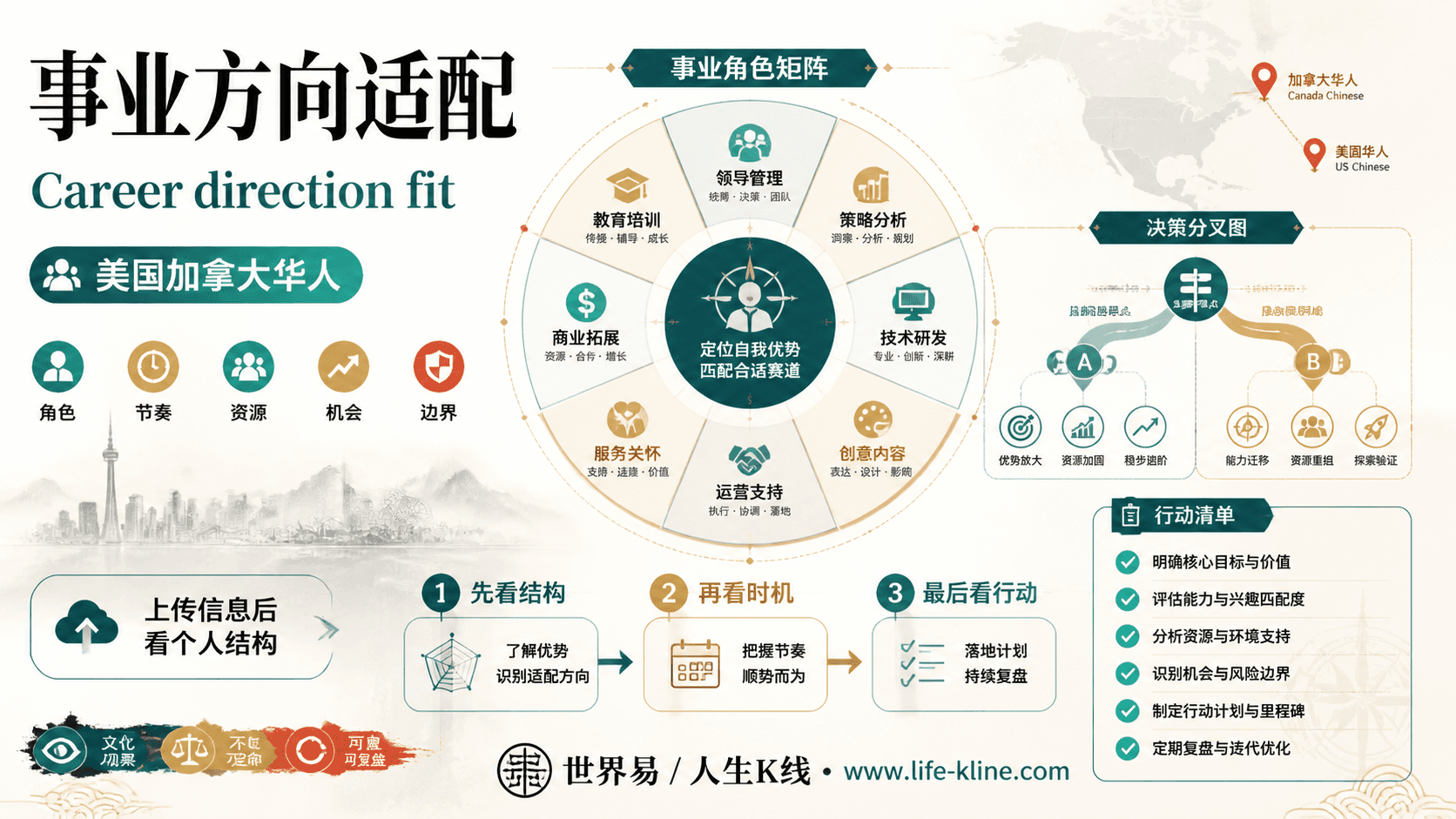
事业方向适配|美国加拿大华人
这张图把《Astrological Analysis of Exit Strategies and Selling Timing for Community Shops》里的命理概念转成关系、边界和应用场景,适合先看图建立结构,再回到知识文章正文理解细节。
事业方向适配不应被写成固定结论。更适合美国加拿大华人的读法,是把传统术语翻译成结构、时机、环境、行动和复盘。
查看图片解读