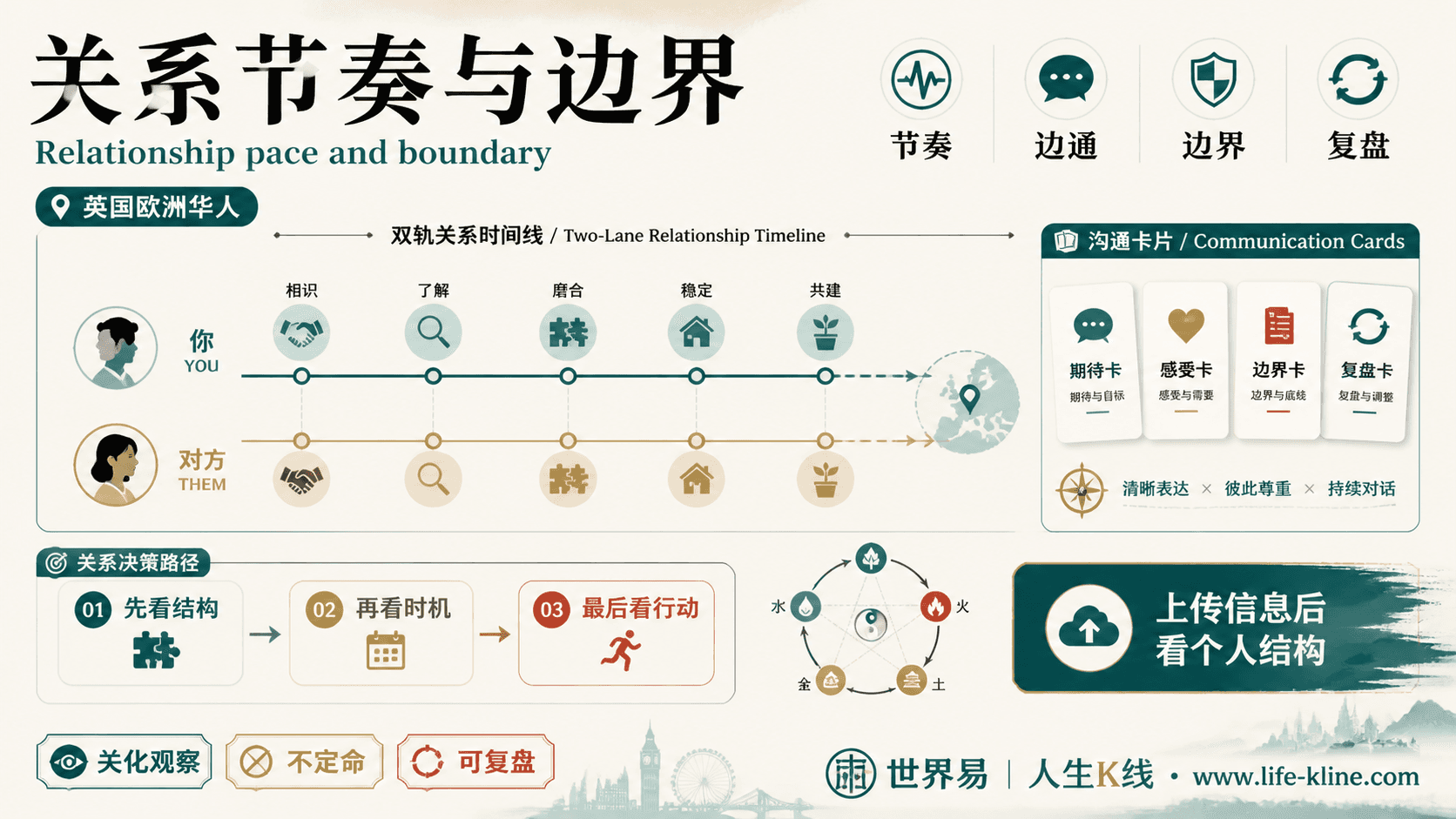
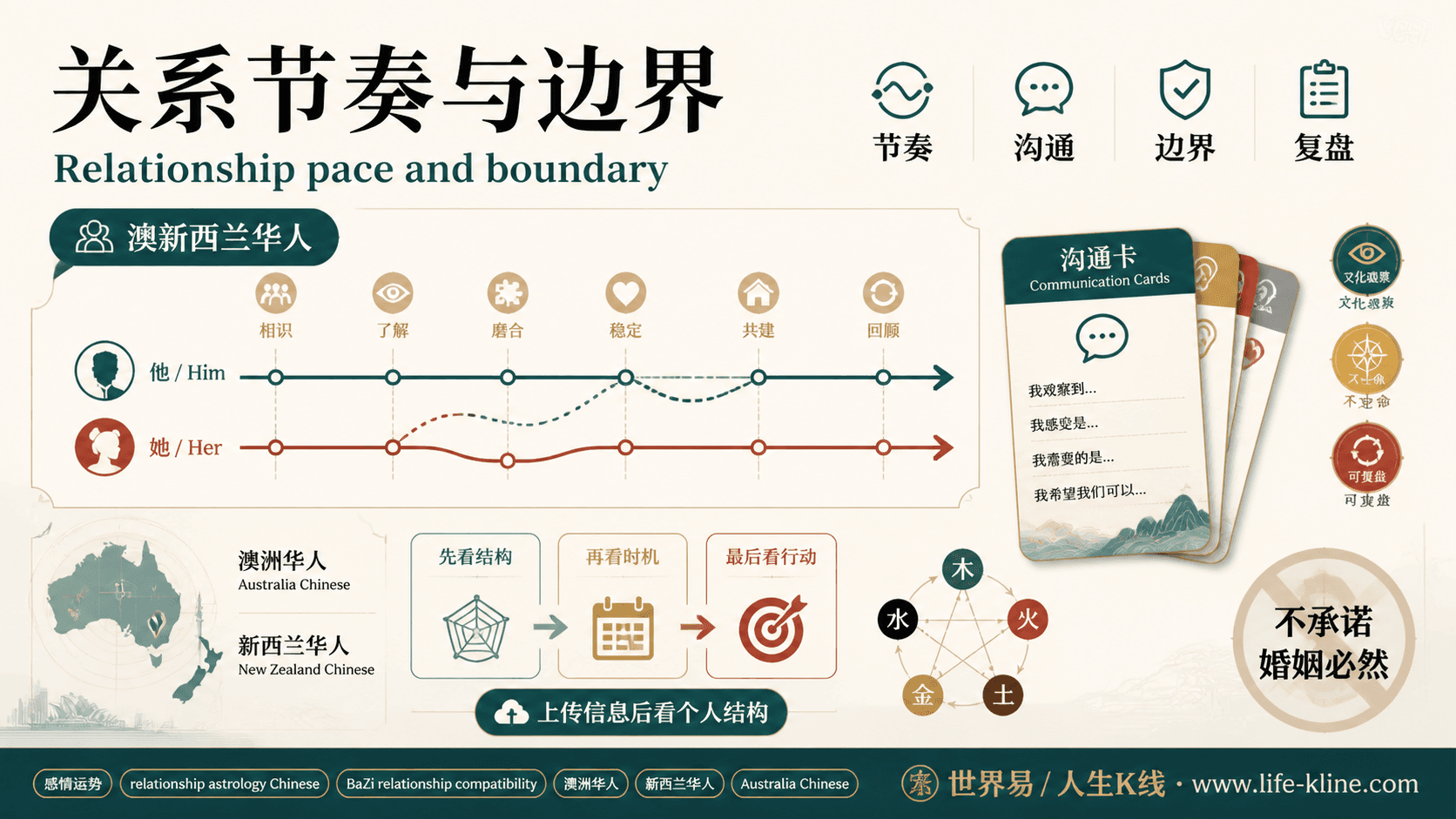
Analysis of Methods and Rhythms for Reconnecting with Old Friends in Partnership Startups
把这篇文章落到自己身上验证:先看结构,再进入个人分析,不做泛泛阅读。
Why This Decision Is Especially Difficult in This Scenario
Reconnecting friendships in partnership startups faces multiple complex pressures, where clear equity division and exit mechanisms directly impact the trust foundation. Old friendships inherently involve emotional investments; however, increased intimacy can easily trigger jealousy and social comparisons, intensifying underlying conflicts. Ambiguity in responsibilities or information asymmetry during cooperation may lead to trust collapse, resulting not only in financial losses but also psychological trauma and relationship breakdown.
Against this backdrop, the method and rhythm of reconnecting old friends become critical, balancing emotional security while preventing relationship breakdown caused by rushing. The BaZi structure reflects an individual's internal rhythm and social energy, helping identify restart windows and potential costs. For example, the strength of the Day Master and the quantity of Bi Jian/Jie Cai (companions) indicate the interaction activity between self and friends, while Cai Xing (wealth stars) and Guan Sha (official and killing stars) suggest interests and pressure states in cooperation.
The overlay of social dynamics and BaZi makes this decision not only a rational trade-off but also involves subconscious rhythms and emotional fluctuations. Incorrect timing may amplify jealousy and trust collapse risks, whereas appropriate timing helps gradually restore the cooperation foundation and avoid excessive emotional exhaustion.
Therefore, the difficulty in deciding to reconnect old friends lies in integrating BaZi rhythms with social realities, progressively adjusting the cooperation framework, balancing legal contract protections with psychological comfort, and reducing the overall cost of restarting.
Three Core Dimensions of BaZi Judgment
The Day Master and Bi Jian/Jie Cai are the foundation for analyzing friend relationships. The strength of the Day Master reflects individual subjective energy and social initiative, while Bi Jian/Jie Cai symbolize friend stars; a larger number indicates strong social expansion ability, facilitating gathering old friends but possibly intensifying conflicts due to competitive pressure. A relatively strong Day Master indicates self-confidence and action capability, whereas a weak one requires caution to prevent emotional fluctuations from affecting cooperation.
Shi Shen/Shang Guan (expression and creativity stars) correspond to communication and proposal abilities in partnership startups. A strong Shi Shen/Shang Guan indicates good self-expression, beneficial for clarifying division of labor and cooperation content, but excessive strength may cause verbal conflicts, requiring rhythm control. Cai Xing (wealth stars) symbolize the flow of interests and resources, key indicators for equity, dividends, and capital input in cooperation. Moderate Cai Xing helps maintain social debts and interest balance; excessive or insufficient Cai Xing may lead to cooperation imbalance.
Guan Sha (official and killing stars) represent pressure and regulation, usually corresponding to legal contracts and external pressures in cooperation. Strong Guan Sha indicates a strict cooperation framework and good risk control but may bring significant cooperation pressure, affecting emotional stability. The interaction of Liu Nian (annual fortune) and Da Yun (decade luck cycle) reflects the current phase’s fortune rhythm. Stable periods suit maintaining and steady progress, while weak or disruptive periods require caution in handling old friend relationships to avoid escalating emotional and interest disputes.
In summary, the three core dimensions—Day Master and Bi Jian/Jie Cai, Shi Shen/Shang Guan and Cai Xing, Guan Sha and Liu Nian/Da Yun—together form the BaZi interpretative framework, helping control the rhythm and cost of reconnecting old friends.
Three Real BaZi Chart Cases
Case 1: Female, Yi Wood (乙, Yi) Day Master relatively strong, Yang Ren pattern, Metal and Earth as Yong Shen (favorable elements), Water as Ji Shen (unfavorable element). Currently in the 9th year of Ding Hai (丁亥, Ding Hai) Da Yun, with Bing Wu (丙午, Bing Wu) Liu Nian. The relatively strong Yi Wood Day Master shows strong self-drive and expressive ability; the Yang Ren pattern sharpens decisiveness, suitable for actively reconnecting old friends. Metal and Earth Yong Shen suggest rational pragmatism, focusing on resource integration and stable maintenance in cooperation. The Ding Hai Da Yun is stable, and the Bing Wu Liu Nian supports adaptability, indicating the current period suits steady probing, avoiding emotionally intense conflicts. It is recommended to start reconnecting with small-scale, low-risk cooperation attempts, paying attention to the other party’s response rhythm, gradually confirming trust and cooperation willingness, and avoiding pushing forward all at once to prevent relationship pressure. Legal details must be concurrently perfected to prevent emotional and financial confusion.
Case 2: Male, Ren Water (壬, Ren) Day Master relatively weak, Bi Jian pattern, Metal as Yong Shen, Wood and Fire as Ji Shen. Currently in the 7th year of Wu Yin (戊寅, Wu Yin) Da Yun, with Bing Wu (丙午, Bing Wu) Liu Nian. The relatively weak Ren Water Day Master indicates insufficient social energy, and the Bi Jian pattern reflects competition and self-protection awareness within the social circle. Metal Yong Shen suggests the need for rational and rule-based support, while Wood and Fire Ji Shen are potential sources of conflict. In partnership startups, reconnecting old friends requires more caution to avoid communication barriers caused by self-defensive psychology. The Wu Yin Da Yun is stable, but weak Water may cause emotional volatility. It is advised to adopt gradual communication during reconnection, emphasizing rule and contract details to prevent friction from misunderstandings. Waiting for the other party to express proactive willingness is key to reducing risk.
Case 3: Male, Jia Wood (甲, Jia) Day Master relatively strong, Qi Sha pattern, Metal and Earth as Yong Shen, Water as Ji Shen. Currently in the 9th year of Gui Mao (癸卯, Gui Mao) Da Yun, with Bing Wu (丙午, Bing Wu) Liu Nian. The relatively strong Jia Wood Day Master and Qi Sha pattern bring strong aggressiveness and action capability, but the Gui Mao Da Yun is relatively weak, requiring caution overall. Yong Shen Metal and Earth indicate the need to strengthen rationality and stability, while Ji Shen Water represents emotional fluctuations and uncertainty. This chart suits maintaining high vigilance and rhythm control when reconnecting old friends, avoiding impulsiveness that may cause cooperation breakdown. It is recommended to base cooperation on a rational framework, clarify division of labor and exit mechanisms, gradually test cooperation depth, and leave room for feedback at key points to maximize risk control. Legal consultation is indispensable to ensure cooperation rights protection.
All three cases illustrate how different BaZi structures correspond to cooperation rhythms and risk points, combined with social dynamics, providing scientific auxiliary references for reconnecting old friends.
Common Misjudgments and Blind Spots in This Scenario
Many partnership startup entrepreneurs are easily driven by emotions when reconnecting old friends, neglecting interest balance and legal frameworks in cooperation, leading to trust collapse. BaZi structures are often misunderstood as absolute predictions rather than rhythmic references, causing neglect of one’s or the other party’s real state and changes, resulting in premature or delayed decisions.
Another blind spot is over-reliance on past relationship foundations, ignoring fortune fluctuations brought by Da Yun and Liu Nian. Even with deep old friendship feelings, if the current BaZi rhythm signals pressure and conflict, rash reconnection may exacerbate contradictions, incurring high emotional and financial costs.
Meanwhile, social dynamics in cooperation are complex; factors like jealousy, social comparison, and power struggles cannot be underestimated. Pure BaZi judgment cannot cover all risks. Legal and professional psychological consultations are indispensable aids; mistaking BaZi as a substitute for these professional channels is a common misjudgment.
Therefore, when restarting old friend relationships, one should avoid wishful optimism and blind actions, combine BaZi cycles with reality, rationally assess risks and benefits, and advance cooperation step by step.
Practical Judgment Sequence
Step 1: Sort out both parties’ current BaZi rhythms, focusing on Day Master strength, Bi Jian/Jie Cai interactions, and changes in Yong Shen and Ji Shen, combined with Da Yun and Liu Nian to assess overall cooperation suitability. If BaZi shows stable or adaptable phases, tentative contact can be considered; if it shows pressure or disruption, delay advancement.
Step 2: Combine social dynamics to evaluate emotional states and trust foundations of both parties, paying special attention to potential risks of jealousy and social comparison. Communication methods and rhythms should follow gradual, low-risk principles, avoiding sudden major equity or division changes to reduce trust collapse costs.
Step 3: Clarify the legal contract framework to ensure all cooperation terms are transparent and enforceable. BaZi assists in judging timing and rhythm, but real-world money and legal disputes must follow formal channels; BaZi serves only as rhythm assistance. Multiple rounds of confirmation and feedback on cooperation details are important strategies to reduce emotional and psychological consumption.
FAQ
Question 1: How does BaZi specifically indicate the best timing to restart old friend relationships? Answer: BaZi reflects cooperation rhythm through the stability or disruption of Da Yun and Liu Nian. Stable or adaptable phases suit tentative contact, while pressure or disruption phases recommend cautious waiting. Judgments combine Day Master strength and interactions of Yong Shen and Ji Shen to assess emotional and cooperative energy.
Question 2: If BaZi shows high pressure, does it mean reconciliation is impossible? Answer: BaZi pressure indicates increased cooperation risk but does not mean inevitable failure. Adjusting restart rhythm, enhancing communication, and legal protections can gradually reduce risks and reasonably prevent trust collapse costs.
Question 3: Can BaZi replace professional legal consultation when facing complex equity and division disputes? Answer: BaZi serves only as rhythmic auxiliary reference and cannot replace legal or professional psychological consultation. Money and legal disputes must follow formal channels to ensure rights protection and risk control.
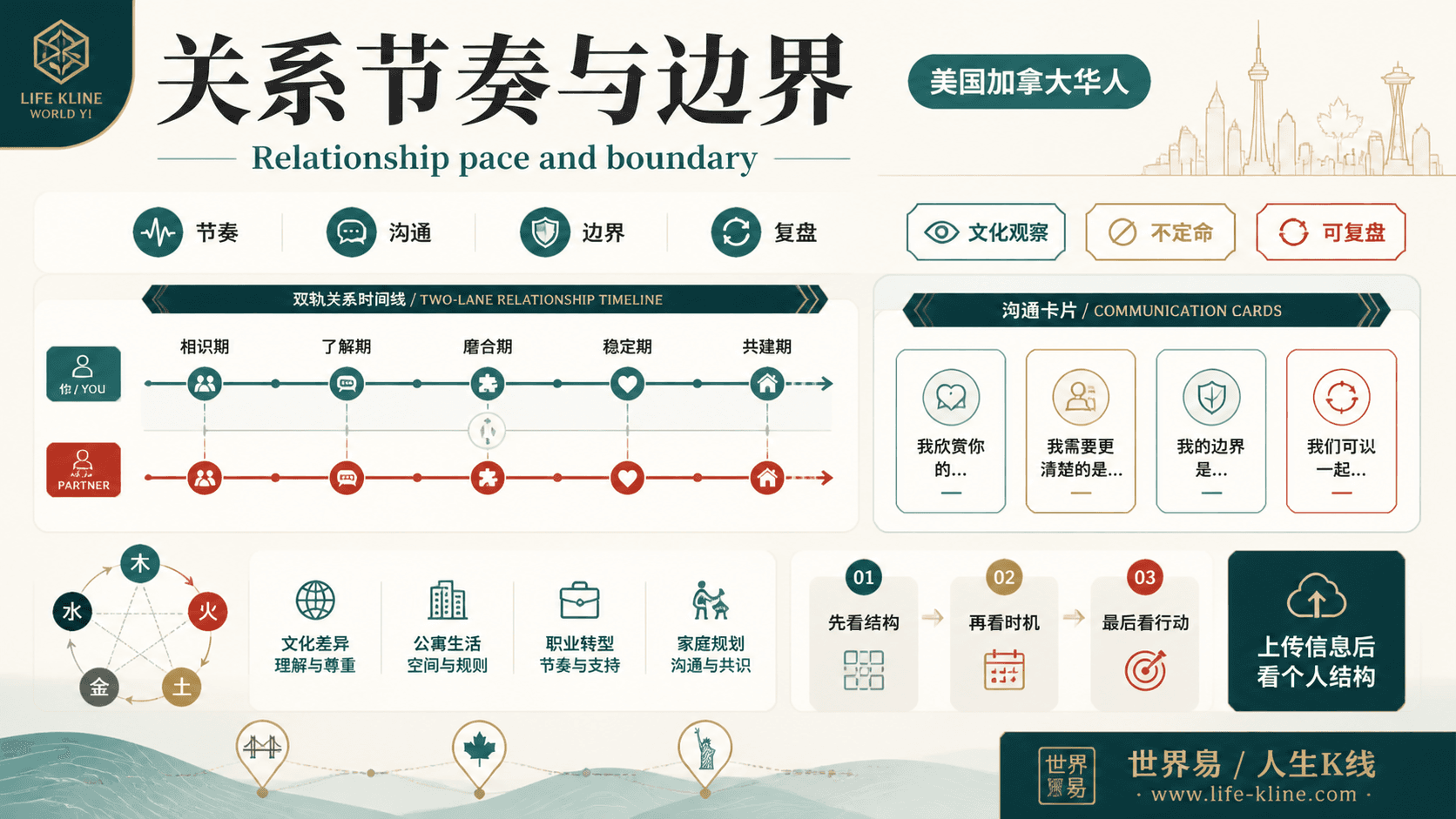
关系节奏与边界|美国加拿大华人
这张图把《Analysis of Methods and Rhythms for Reconnecting with Old Friends in Partnership Startups》里的命理概念转成关系、边界和应用场景,适合先看图建立结构,再回到知识文章正文理解细节。
关系节奏与边界不应被写成固定结论。更适合美国加拿大华人的读法,是把传统术语翻译成结构、时机、环境、行动和复盘。
查看图片解读