Second Migration Decision for Chinese in Australia and New Zealand: A Metaphysical Perspective on Timing and Risks
把这篇文章落到自己身上验证:先看结构,再进入个人分析,不做泛泛阅读。
Why This Scenario Is Especially Difficult for Overseas Chinese
The decision for a second migration is particularly challenging for Chinese in Australia and New Zealand, primarily because it affects family stability. The first migration usually involves adjustments to language, culture, and lifestyle habits, establishing a social network and economic foundation. A second migration risks disrupting the existing social support system, especially for families with children’s educational needs, as moving across cities or countries entails significant living and psychological costs.
Secondly, the tax systems and social welfare policies differ between Australia and New Zealand, making second migrations complex in terms of tax planning and asset restructuring. For example, moving from Australia to New Zealand or vice versa requires reassessing tax residency status, pension arrangements, and healthcare coverage, increasing uncertainty and risk in decision-making.
Additionally, cross-border exchange rate fluctuations and currency conversion costs impact financial stability after migration, especially when family income sources are diversified, necessitating careful consideration of migration timing. Cultural differences and social integration issues should not be overlooked; although Australian and New Zealand cultures are similar, subtle differences can affect the speed of personal and family adaptation.
From a metaphysical perspective, the complexity of second migration decisions is amplified or mitigated by the strength of the Day Master, the pattern’s Yong Shen and Ji Shen, and the Da Yun and Liu Nian environment. Migration inherently involves change and risk; a stable Da Yun usually advises maintaining the status quo, while the presence of Ji Shen or annual clashes signals caution. Integrating practical realities with metaphysical insights enables a more scientific judgment of migration timing and rationality.
Three Core Dimensions of Metaphysical Judgment
First, the strength of the Day Master and the pattern determine an individual’s internal energy and ability to cope with external changes. For example, a relatively strong Day Master usually has strong self-motivation and adaptability but may be impulsive if overly strong; a relatively weak Day Master depends more on external support, so migration decisions require careful consideration of environmental stability.
Second, the Yong Shen (favorable element) and Ji Shen (unfavorable element) reflect the Five Elements forces the person needs to harmonize. In migration decisions, if the Yong Shen is supported, the environment favors the changes brought by migration; conversely, the presence of Ji Shen may indicate obstacles or increased risks during migration. For instance, if the Yong Shen is Metal, a Metal-strong environment benefits development, whereas if Earth is the Ji Shen, a strong Earth environment calls for caution.
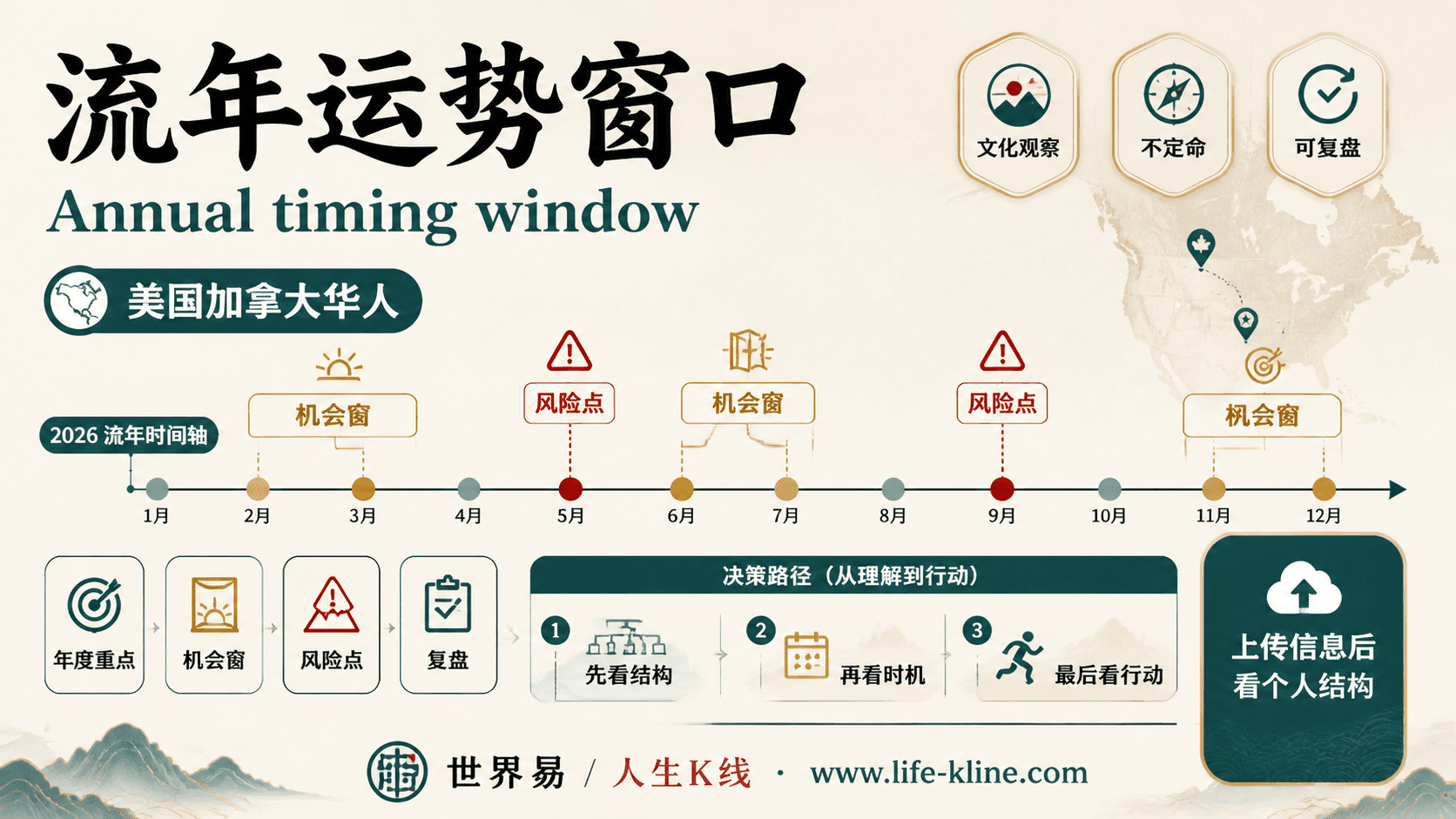
Finally, the Da Yun (decade luck cycle) and Liu Nian (annual fortune) are dynamic variables reflecting the person’s fortune fluctuations in specific periods. A stable Da Yun suggests maintaining the status quo to avoid risks from premature migration, while Liu Nian requires flexible adjustments based on the year’s specific conditions. The interaction between Da Yun and Liu Nian directly affects the timing of decisions.
These three dimensions overlap to form the overall metaphysical framework for migration decisions. Combined with the practical constraints of the Australia-New Zealand region, metaphysical judgment helps clarify the pros and cons of migration, avoiding blind actions.
Three Real BaZi Chart Cases
Case 1: The chart belongs to a female with a Xin Metal (辛, Xin) Day Master, relatively strong, belonging to the Zheng Yin (正印) pattern. The Yong Shen is Metal, and the Ji Shen is Earth. She is currently in the Jia Zi (甲子, Jia Zi) Da Yun (ages 34-43), which is stable and suitable for maintaining the status quo. The Liu Nian is Bing Wu (丙午, Bing Wu). In the context of migration between Australia and New Zealand, the relatively strong Xin Metal Day Master with Metal as Yong Shen indicates strong self-regulation and adaptability, but the Ji Shen Earth warns against acting rashly in an Earth-strong or overly pressured environment. The stable Jia Zi Da Yun corresponds to a period of stability in reality, suitable for consolidating the current life foundation. For the second migration decision, the relatively strong Xin Metal Day Master should be cautious of depletion caused by blindly pursuing change and should first assess the support level of existing resources and environment, especially regarding taxation and family support, before taking action.
Case 2: Female with a Ren Water (壬, Ren) Day Master, relatively weak, in the Zheng Yin pattern. Yong Shen is Metal, Ji Shen are Wood and Fire. Currently in the Yi You (乙酉, Yi You) Da Yun (ages 35-44), with Liu Nian Bing Wu (丙午, Bing Wu). The relatively weak Ren Water Day Master shows reliance on external environmental support in decision-making, and the Yong Shen Metal represents the need for Metal’s strength to compensate for personal deficiency. The stable Yi You Da Yun suggests she has likely established some economic and social foundation in Australia-New Zealand. The presence of Ji Shen Wood and Fire indicates that migration decisions should avoid excessive environmental shocks, especially cultural and social adaptation pressures. For second migration, the relatively weak Ren Water Day Master should be more cautious, prioritizing the stability of existing networks and tax planning, avoiding resource disruption caused by premature migration. It is recommended to conduct environmental assessment and risk evaluation before deciding whether to act.
Case 3: Male with a Jia Wood (甲, Jia) Day Master, relatively strong, in the Shang Guan (伤官) pattern. Yong Shen is Fire, Ji Shen is Water. Currently in the Gui Wei (癸未, Gui Wei) Da Yun (ages 32-41), with Liu Nian Bing Wu (丙午, Bing Wu). The relatively strong Jia Wood Day Master indicates a strong personality with strong expansion drive; the Shang Guan pattern expresses creativity and desire for change. Yong Shen Fire helps stimulate potential, while Ji Shen Water represents potential obstacles. The stable Gui Wei Da Yun suggests it is currently suitable to maintain the status quo, but the strong Jia Wood nature may cause internal desire to break through the current situation. In reality, cross-city or cross-country migration in Australia-New Zealand brings taxation and family distance challenges that may affect his decision-making. This chart requires caution in second migration to avoid resource misalignment caused by premature action. It is advised to fully weigh family responsibilities and economic benefits and confirm that Da Yun and Liu Nian support migration before acting, avoiding impulsiveness.
All three cases reflect the commonality that a stable Da Yun favors maintaining the status quo. Combined with differences in Day Master strength and Yong Shen and Ji Shen, they respectively illustrate different migration strategies and risk warnings. Real-life issues such as family distance, tax planning, and cultural adaptation intertwine with metaphysical principles of “maintaining” and “changing,” making second migration decisions more complex.
Common Misconceptions Among Overseas Chinese in This Scenario
First, neglecting the importance of family stability. Many Chinese focus excessively on economic benefits or personal development during second migration, overlooking practical needs such as children’s education, spouse employment, and elderly care, leading to family tension and adaptation difficulties after migration.
Second, underestimating differences in tax and social security systems. Australia and New Zealand have significant differences in taxation and welfare policies; insufficient planning before migration may result in increased tax burdens or loss of welfare rights, affecting migration outcomes.
Third, migrating too early. Metaphysics advises maintaining the status quo during stable Da Yun periods, but some Chinese, due to excessive anticipation or anxiety about the new environment, migrate prematurely without waiting for supportive Liu Nian, resulting in poor adaptation and even economic and psychological pressures.
Fourth, ignoring cross-border exchange rate risks and capital flow costs. Migration involves cross-border fund transfers and exchange rate fluctuations; without prior financial risk control, wealth may shrink or liquidity become constrained, impacting post-migration quality of life.
Practical Judgment Sequence
First, assess whether the current Da Yun and Liu Nian are in a stable or migration-supportive state. When Da Yun advises maintaining the status quo, priority should be given to consolidating the current life foundation to avoid uncertain risks from blind migration. Liu Nian’s dynamic nature reminds us to adjust migration plans flexibly according to the specific environment of the year.
Second, combine the strength of the Day Master and the Yong Shen and Ji Shen to judge whether one has sufficient internal energy and resources to cope with changes brought by migration. A relatively strong Day Master supported by Yong Shen may consider timely action; a relatively weak Day Master needs greater caution, ensuring sufficient external support before acting.
Third, consider practical constraints including family members’ needs, tax residency status, and cross-border fund arrangements, systematically identifying potential risks. Issues such as tax residency conversion, welfare qualification changes, and exchange rate fluctuations require advance planning and confirmation.
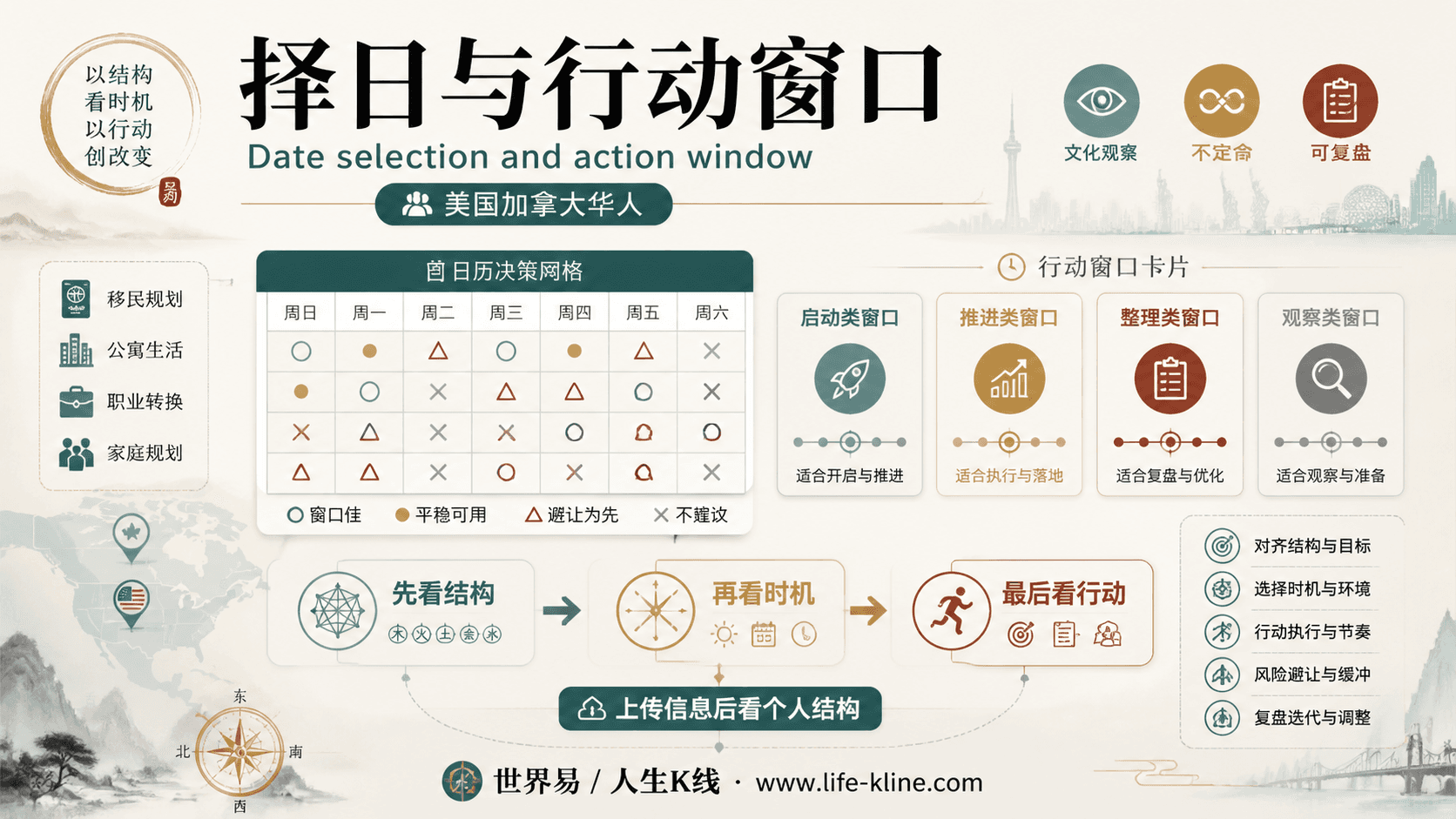
Finally, only when the above conditions are favorable and risks controllable should one choose the timing to act. At the same time, prepare to handle possible cultural adaptation and lifestyle changes to ensure rapid stabilization after migration and avoid resource loss and psychological stress caused by premature migration.
FAQ
Question 1: Why is it inadvisable to migrate too early during a stable Da Yun period? Answer: A stable Da Yun period means overall fortune is steady and it is advisable to maintain and accumulate. Premature migration may disrupt the stable foundation, causing resource and support breakdowns and increasing migration risks.
Question 2: How do Yong Shen and Ji Shen affect migration decisions? Answer: Yong Shen represents the Five Elements forces the person needs to harmonize; an environment supportive of Yong Shen favors successful migration. Ji Shen represents unfavorable elements; when Ji Shen is strong, migration risks increase and caution is advised.
Question 3: How to combine practical tax planning with metaphysical judgment for migration decisions? Answer: One must first clarify tax residency status and tax obligations after migration, then use metaphysical judgment of Da Yun and Liu Nian to determine timing, avoiding rash actions during unfavorable Ji Shen periods or adverse Da Yun, thereby reducing tax and life risks.
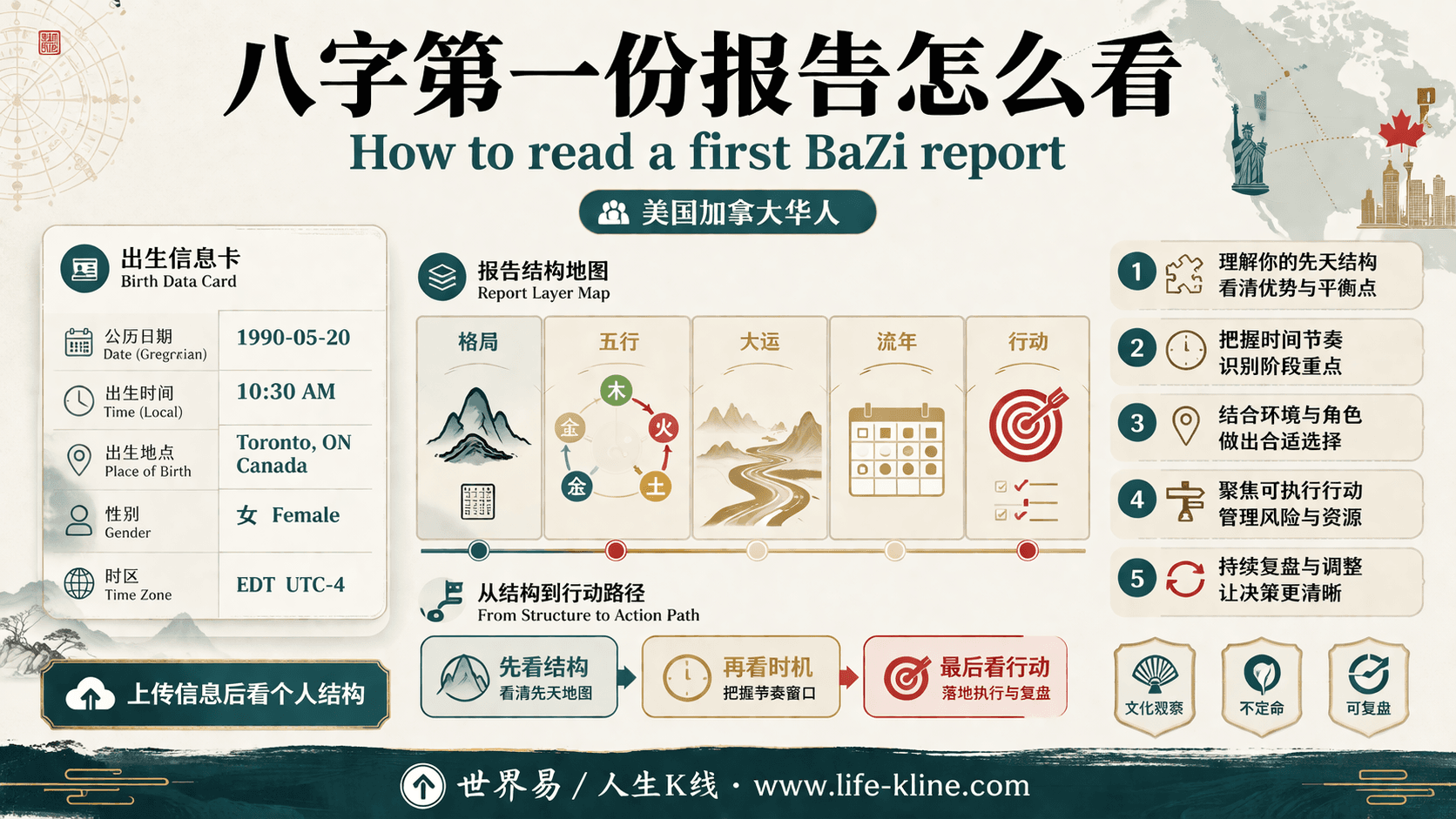
八字第一份报告怎么看|美国加拿大华人
这张图把《Second Migration Decision for Chinese in Australia and New Zealand: A Metaphysical Perspective on Timing and Risks》里的命理概念转成关系、边界和应用场景,适合先看图建立结构,再回到知识文章正文理解细节。
八字第一份报告怎么看不应被写成固定结论。更适合美国加拿大华人的读法,是把传统术语翻译成结构、时机、环境、行动和复盘。
查看图片解读