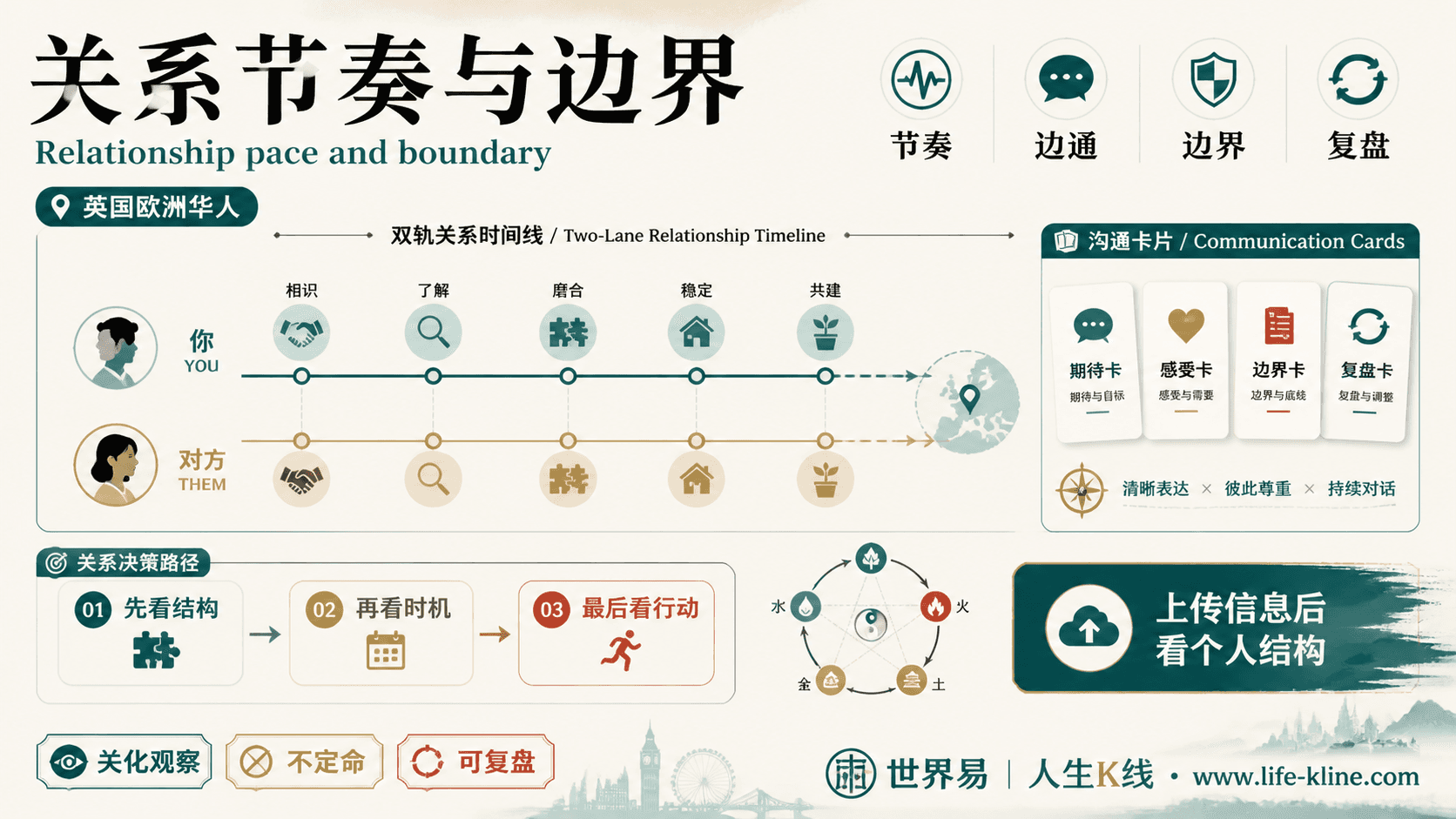
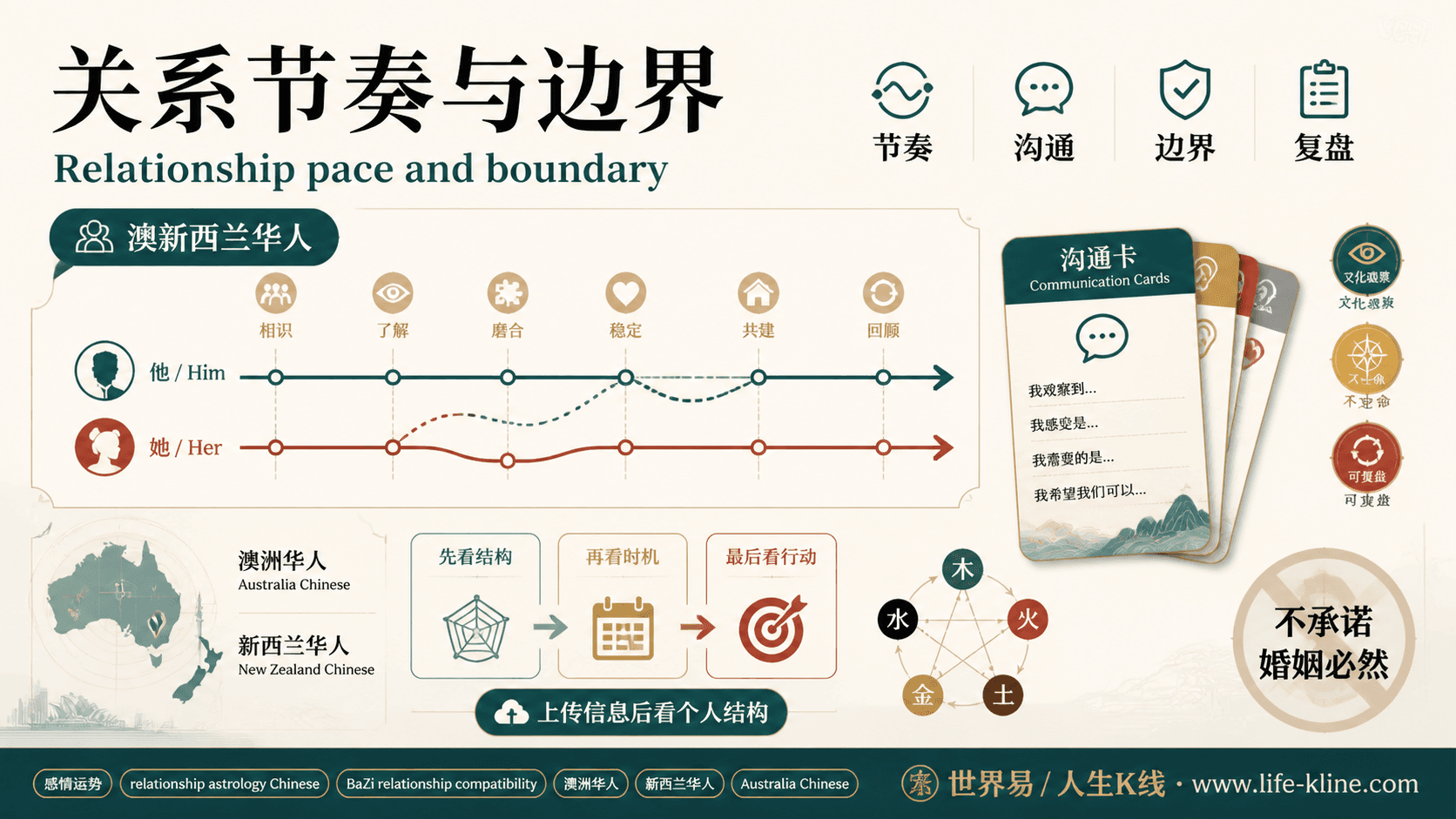
Astrological Analysis and Practical Guide to Overseas Family Role Reallocation for Chinese in Australia and New Zealand
把这篇文章落到自己身上验证:先看结构,再进入个人分析,不做泛泛阅读。
Why This Scenario Is Especially Difficult for Overseas Chinese
Chinese in Australia and New Zealand face multiple practical constraints when reallocating family roles overseas. Firstly, cross-national relocation fundamentally changes geographical distances, tax statuses, and social resource distribution among family members. Traditional “master and subordinate” roles within the family become overlapped or misaligned due to environmental changes, increasing the complexity of role responsibilities.
Secondly, cultural differences create value conflicts in responsibility allocation and role positioning within overseas families. Traditional Chinese family ethics emphasize elder authority and filial piety, whereas Australian and New Zealand societies stress individual independence and equality. This cultural tension exacerbates the difficulty of role reallocation.
Furthermore, metaphysical structures in family members’ BaZi charts reflect different master-subordinate relationships and Yong Shen (favorable element) needs. When applied to overseas environments, these metaphysical characteristics are further amplified or offset by real-world resources, emotional support, and social pressures. For example, the compatibility of the Yong Shen with the local environment affects its effectiveness.
In summary, the overseas family role reallocation of Chinese in Australia and New Zealand is not only an adjustment of daily life but a complex process intertwining cultural psychology and metaphysical structures. It requires comprehensive judgment and scientific approaches to achieve family harmony and stability.
Three Core Dimensions of Metaphysical Judgment
First, the Day Master and pattern determine an individual’s fundamental energy and role positioning within the family. The strength of the Day Master reflects leadership ability, while patterns such as Zheng Yin (Proper Seal), Pian Yin (Indirect Seal), Zheng Guan (Proper Officer), etc., reveal potential for family support or management. For example, a relatively strong Geng (庚, Geng) Metal Day Master tends to assume more responsibilities, whereas a weaker Yi (乙, Yi) Wood Day Master may require more external support.
Second, the Yong Shen and Ji Shen (unfavorable element) represent the most critical Five Elements needing adjustment in the individual’s BaZi chart, corresponding to resource integration and risk control in reality. When the Yong Shen is strong, it indicates suitability for actively undertaking responsibilities; when the Ji Shen is restrained, it signals potential pressure and conflict points. The interaction of Da Yun (decade luck cycles) and Liu Nian (annual fortune) reflects current fortune fluctuations, determining the timing and risks of actions.
Third, the overlay effects of palace environments and Da Yun/Liu Nian influence the dynamic changes of family roles. In overseas settings, the uncertainties of a Liu Nian such as the Bing Wu (丙午, Bing Wu) Fire year combined with the stability of Da Yun jointly affect the adjustment rhythm of “master and subordinate” relationships among family members, creating complex interactive scenarios.
Combining these three dimensions, metaphysical judgment must focus not only on the static structure of individual BaZi charts but also integrate Da Yun, Liu Nian, and real-world environmental factors to accurately grasp the timing and strategy for family role reallocation.
Three Real BaZi Chart Cases
Case 1: Male, aged 55-60, Day Master is relatively strong Geng (庚, Geng) Metal, pattern is Zheng Yin (Proper Seal), Yong Shen is Water, Ji Shen is Earth, currently in Yi You (乙酉, Yi You) Da Yun, suitable for maintaining stability. This BaZi chart’s strong Geng Metal Day Master and Zheng Yin pattern demonstrate strong support ability and sense of responsibility. In the Australian context, this elder typically assumes the family’s economic and decision-making core role. The complex overseas tax and cross-border issues challenge the Water Yong Shen, but the stability of Yi You Da Yun favors maintaining family stability. During family role reallocation, this chart’s dominant position tends to be amplified, especially in resource allocation and family governance. It is recommended to first assess the external environment’s compatibility with the Water Yong Shen to ensure the leading role’s burden is not excessive and adjust responsibilities timely.
Case 2: Female, aged 55-60, Day Master is relatively weak Ren (壬, Ren) Water, pattern is Pian Yin (Indirect Seal), Yong Shen is Metal, Ji Shen are Wood and Fire, currently in Yi Hai (乙亥, Yi Hai) Da Yun, also a stability-maintaining luck cycle. The weak Ren Water Day Master and Pian Yin pattern indicate this individual mostly undertakes auxiliary and coordinating roles within the family, relying on Metal support from the environment. The flexible management and bridging role of women in Australian and New Zealand family relations correspond to this BaZi characteristic. The stability of Yi Hai Da Yun helps maintain harmony, but the Ji Shen Wood and Fire warn of challenges in cultural adaptation and emotional management. During family role reallocation, the female’s subordinate role may be triggered by real responsibilities, potentially causing role overextension. It is advised to focus on the Metal Yong Shen’s resource support, reasonably allocate household and emotional labor, and avoid identity-related stress accumulation.
Case 3: Male, aged 25-30, Day Master is relatively weak Yi (乙, Yi) Wood, pattern is Zheng Guan (Proper Officer), Yong Shen is Water, Ji Shen are Fire and Earth, currently at the beginning of Gui Wei (癸未, Gui Wei) Da Yun, suitable for maintaining stability. The weak Yi Wood Day Master and Zheng Guan pattern indicate this young member has potential to comply with rules and undertake external responsibilities but requires Water nourishment; Fire and Earth Ji Shen represent environmental impacts. Young Chinese in Australia often face dual pressures of family and personal growth. The combination of Gui Wei Da Yun and Bing Wu (丙午, Bing Wu) Liu Nian presents a stable yet adaptive state. In family role reallocation, the young member’s master-subordinate transition is dynamic; the chart suggests reliance on family Water Yong Shen support to gradually assume responsibility. It is recommended to prioritize observing the current Da Yun and Liu Nian’s environmental fit and act opportunely to avoid blindly taking on excessive burdens.
Common Misconceptions Among Overseas Chinese in This Scenario
Many overseas Chinese families overlook the crucial role of Day Master strength and Yong Shen in metaphysical judgment during role reallocation, simply dividing responsibilities by age or traditional seniority. This leads to some members bearing excessive or passive roles, adversely affecting family harmony and personal development.
Another common misconception is ignoring the impact of Da Yun and Liu Nian on the dynamic changes of family roles. Rushing to adjust role divisions without considering whether the current fortune phase is stable or fluctuating often causes family conflicts and psychological stress.
Additionally, cultural conflicts and practical pressures often cause overseas Chinese to neglect the negative effects of Ji Shen, such as tax burdens, cross-border capital flow restrictions, and language-cultural barriers, which suppress the effectiveness of the Yong Shen. Failure to adjust accordingly exacerbates family role misalignment.
In summary, neglecting the integrated judgment of metaphysics and real-world multidimensional interactions is the most widespread and serious misconception in overseas family role reallocation and deserves serious attention.
Practical Judgment Sequence
First, start from the individual’s Day Master strength and pattern to clarify who possesses dominant power in metaphysics and who is in an auxiliary position. This provides a basis for the basic family role positioning. Combine with real-world factors such as economic capacity and family responsibilities for initial matching.
Second, focus on evaluating the current state of Yong Shen and Ji Shen, especially the supportive or suppressive effects of Da Yun and Liu Nian environments on the Yong Shen. When the Yong Shen is strong, it is suitable to undertake more family responsibilities; when the Ji Shen is constrained, avoid forcibly increasing burdens and adopt maintenance or gradual strategies.
Finally, integrate specific overseas practical constraints such as tax status, cross-border capital flow, cultural differences, and emotional support systems to dynamically adjust family members’ role distribution. Act opportunely, align with Da Yun and Liu Nian changes, and avoid unnecessary conflicts and stress caused by improper timing.
FAQ
Question 1: In overseas family role reallocation, how to determine who should bear more responsibility? Answer: Combine the Day Master’s strength, pattern type, and the gain or loss of Yong Shen in the BaZi chart, while also considering real-world economic capacity and emotional support to comprehensively evaluate who is more suitable to assume the leading responsibility.
Question 2: How do Da Yun and Liu Nian affect overseas family role adjustments? Answer: Da Yun and Liu Nian reflect the individual’s phase-specific fortune changes. Stable periods are suitable for maintaining and consolidating roles, while fluctuating periods require flexible adjustments with caution to avoid internal family conflicts caused by rapid changes.
Question 3: What impact do cultural differences have on the master-subordinate relationships in metaphysics? Answer: Cultural differences may amplify or suppress the master-subordinate relationships in metaphysics. For example, the emphasis on individual independence in Australia and New Zealand may empower traditionally subordinate members with more initiative, and vice versa. Flexible adjustments should be made based on actual cultural contexts.
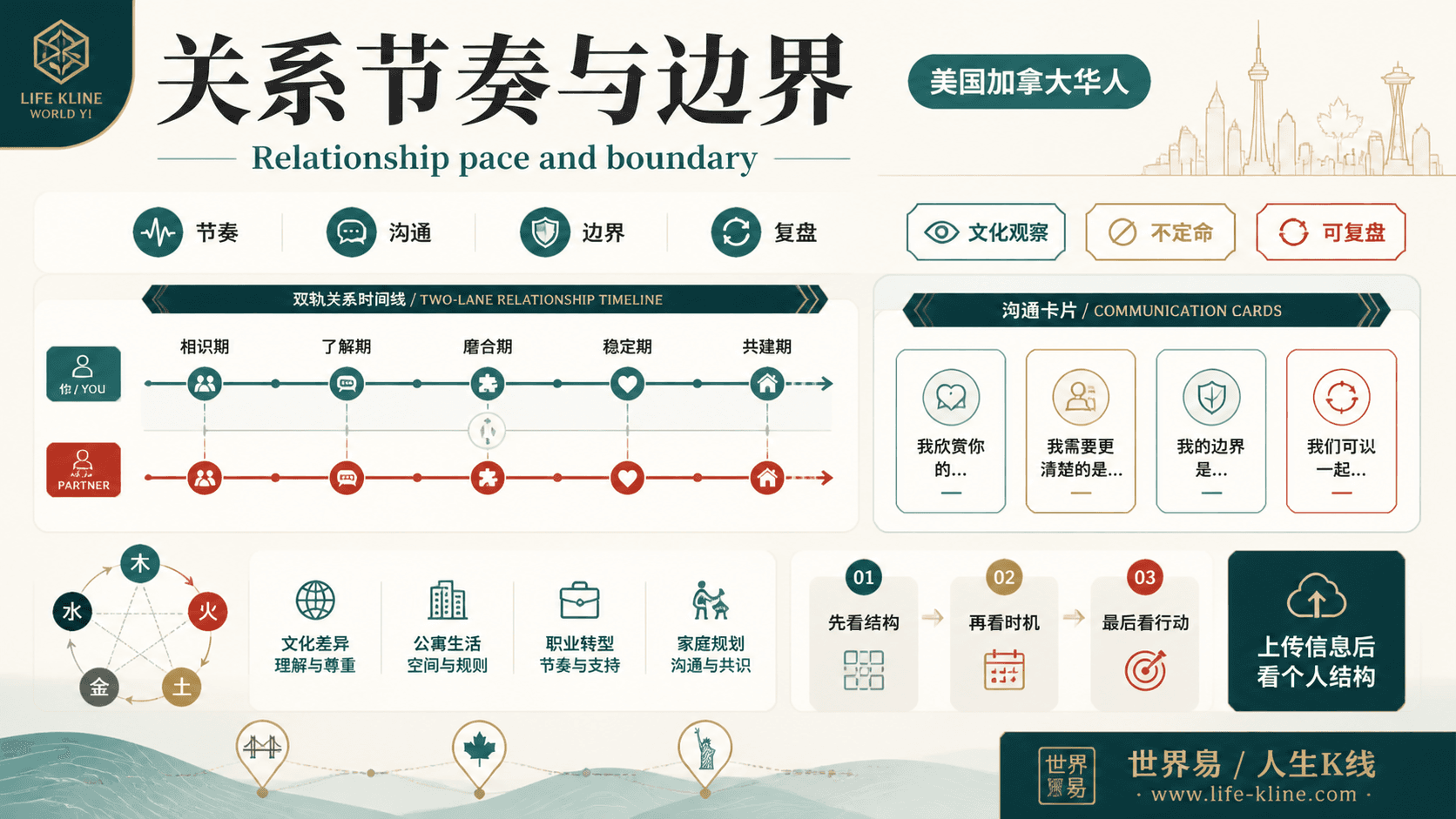
关系节奏与边界|美国加拿大华人
这张图把《Astrological Analysis and Practical Guide to Overseas Family Role Reallocation for Chinese in Australia and New Zealand》里的命理概念转成关系、边界和应用场景,适合先看图建立结构,再回到知识文章正文理解细节。
关系节奏与边界不应被写成固定结论。更适合美国加拿大华人的读法,是把传统术语翻译成结构、时机、环境、行动和复盘。
查看图片解读