Metaphysical Analysis of Medical and Longevity Risk Hedging in Asset Inheritance
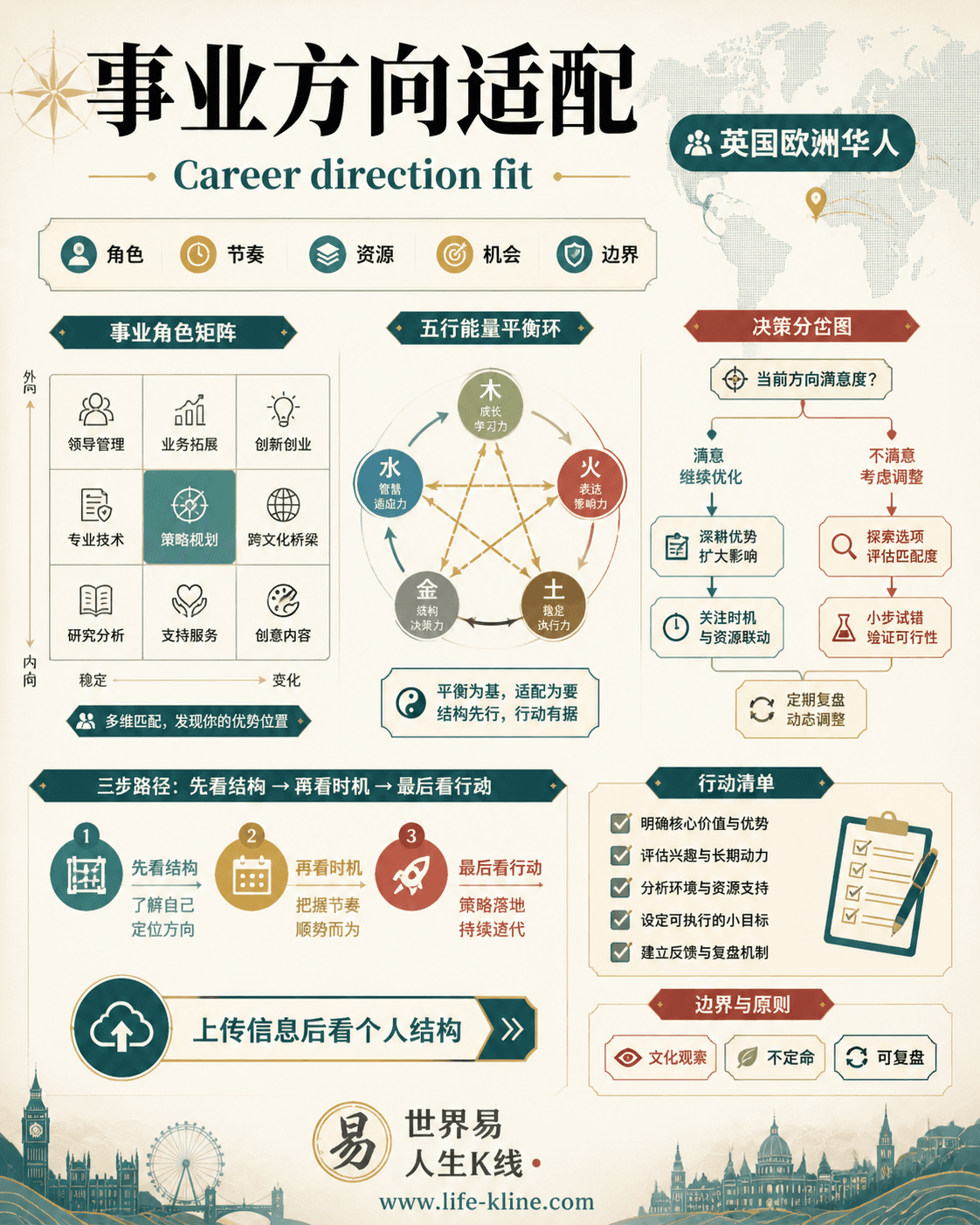
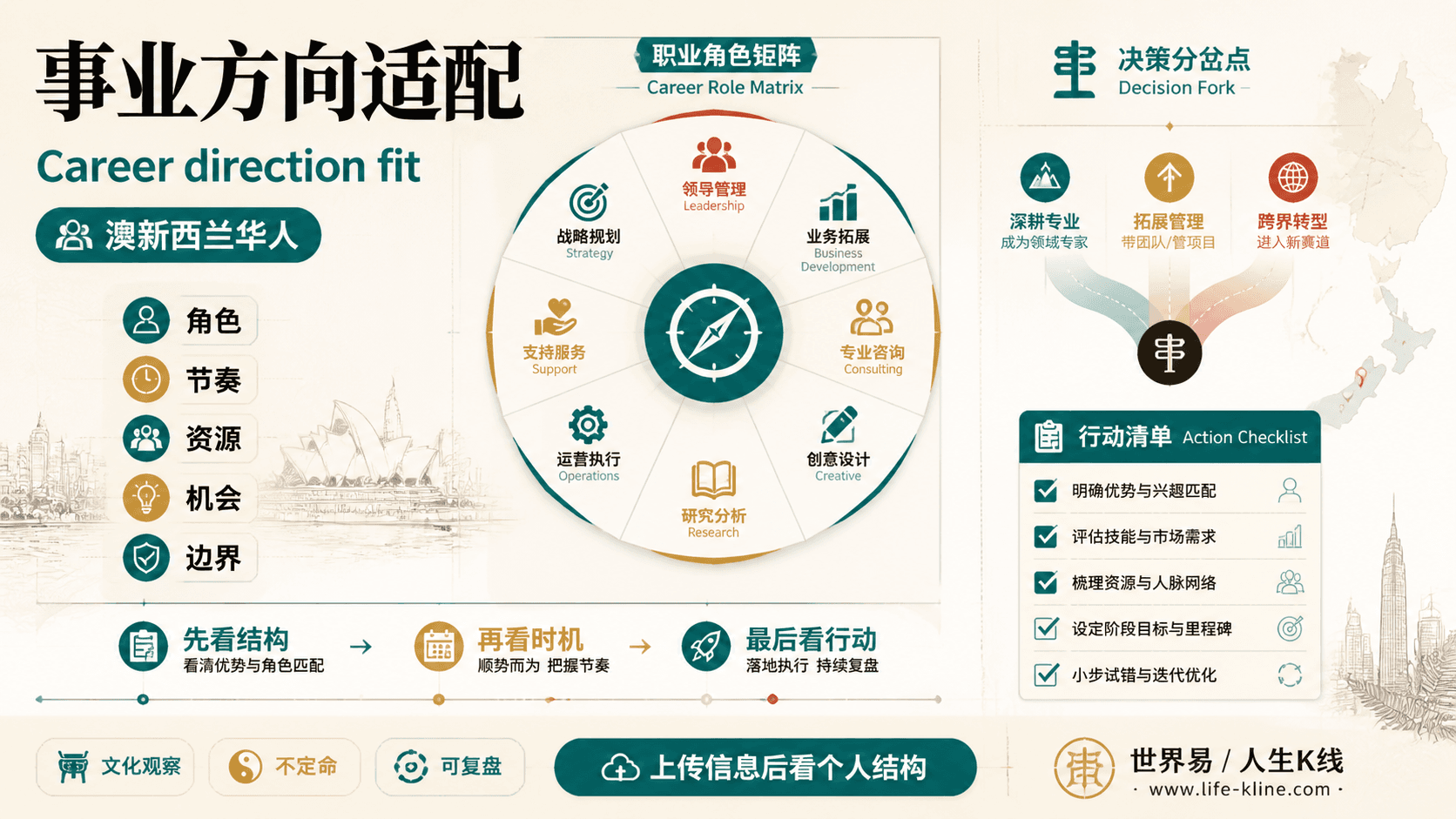
把这篇文章落到自己身上验证:先看结构,再进入个人分析,不做泛泛阅读。
Why This Decision Is Especially Difficult in This Scenario
Asset inheritance and will trust preparation involve multiple complex factors such as inheritance law, tax planning, family relationships, and trust structures. Hedging medical and longevity risks is a core difficulty within this context. In pension structures, social security and medical resources offer limited protection, and psychological expectations and responsibility allocations among family members often cause conflicts, increasing decision-making complexity.
Psychologically, asset owners often hope for longevity but lack sufficient preparation for medical risks and potential long-term care burdens, leading to biased risk assessments. At the same time, setting up wills and trusts must balance beneficiary rights, tax efficiency, and legal compliance. The multidimensional intersection of these factors makes it difficult to fully control risks from a single perspective.
Metaphysical structures provide auxiliary references to an individual's life rhythm, especially through the combinations of financial stars (Cai Xing), Shi Shen (Output Stars), Yin Stars (Resource Stars), and Guan Sha (Officer and Seven Killings). These can reveal potential trends in economic endurance and health fluctuations during different Da Yun (decade luck cycles). Such auxiliary information helps determine when to increase insurance and annuity investments to hedge risks and when higher self-retention risk is tolerable.
Therefore, medical and longevity risk hedging decisions in asset inheritance must integrate professional legal, financial, and medical advice, combined with metaphysical rhythm adjustments to action timing, avoiding blind optimism or excessive defensiveness to achieve optimal resource allocation.
Three Core Dimensions of Metaphysical Judgment
First, the strength of the Day Master and the overall pattern determine the individual's life energy foundation and economic endurance. A relatively weak Day Master usually means limited vitality, requiring prudent arrangements of insurance and annuities to prevent asset chain breaks caused by health fluctuations. Zheng Cai (Direct Wealth) and Jie Cai (Rob Wealth) patterns respectively reflect tendencies of wealth generation and consumption, influencing risk tolerance.
Second, the Cai Xing (financial stars) represent wealth resources and disposable assets, which are central to asset inheritance. Under a Zheng Cai pattern, the financial star is stable, suitable for steady inheritance strategies; a Jie Cai pattern may have wealth outflow risks, requiring careful trust structure and tax planning. Shi Shen (Output Stars) relate to late-life lifestyle preferences and mental state, indirectly affecting medical dependency and long-term care needs.
Finally, the Yin Stars (Resource Stars) and Guan Sha (Officer and Seven Killings) combinations reflect relationships with children and social support, which are also important factors in medical dependency. A strong Yin Star usually indicates good medical and psychological support and close family ties, helping to reduce long-term care pressure. Overly strong Guan Sha may bring legal disputes and family conflicts, affecting smooth execution of wills and trusts.
In summary, these metaphysical dimensions provide rhythmic references for understanding risk points in asset inheritance, helping to judge when to prioritize insurance and annuity allocation and when to accept appropriate self-retention risk. However, decisions must be based on a complete legal and financial framework.
Three Real BaZi Chart Cases
Case 1: This male has a Day Master of Xin Metal (辛, Xin), relatively weak, with a Zheng Cai (Direct Wealth) pattern. Earth is the Yong Shen (favorable element), while Water and Wood are Ji Shen (unfavorable elements). Currently in the Ding Si (丁巳, Ding Fire - Si Earth Snake) Da Yun (decade luck cycle), which is stable. The relatively weak Xin Metal Day Master with Earth as Yong Shen indicates that his economic stability depends on the steadiness of direct wealth resources. Although the Ding Si Da Yun is stable, the presence of Wood and Water as Ji Shen suggests potential fluctuations in health and family relationships. In asset inheritance, priority should be given to hedging medical and longevity risks through insurance and annuities to prevent health issues from undermining financial security. It is recommended to strengthen insurance beneficiary arrangements within trust design to ensure liquidity and risk diversification.
Case 2: This male has a Day Master of Ding Fire (丁, Ding), relatively weak, with a Jie Cai (Rob Wealth) pattern. Wood is the Yong Shen, while Earth and Metal are Ji Shen. He is currently in the Gui You (癸酉, Gui Water - You Metal Rooster) Da Yun, which is stable. The Jie Cai pattern indicates high liquidity and consumption risk of wealth, and the Yong Shen Wood represents vitality, but Ji Shen Earth and Metal may bring health and tax pressures. Under this structure, medical risk and longevity burden have a significant financial impact. It is recommended to prioritize annuity products to ensure stable cash flow in old age and to reasonably use trust structures to reduce tax burdens. Financial planning should focus on preventing sudden medical expenses and inheritance disputes.
Case 3: This female has a Day Master of Yi Wood (乙, Yi), relatively strong, with a Shang Guan (Hurting Officer) pattern. Metal and Earth are Yong Shen, while Water is Ji Shen. She is currently in the Xin You (辛酉, Xin Metal - You Metal Rooster) Da Yun, which is very auspicious. The relatively strong Yi Wood Day Master and Shang Guan pattern indicate good mental condition, with Yong Shen Metal and Earth helping to stabilize assets and health management. The auspicious Da Yun is suitable for proactive asset inheritance planning and trust setup. Although longevity risk exists, due to good resources and family support, she can tolerate higher self-retention risk. It is recommended to focus on legal compliance and tax optimization, with medical insurance adjusted flexibly according to actual health conditions to avoid resource waste.
All three cases demonstrate the rhythmic influence of metaphysical structures on asset inheritance and medical risk hedging. Combined with professional planning, they better address pension challenges scientifically.
Common Misjudgments and Blind Spots in This Scenario
A common misjudgment in asset inheritance and medical risk hedging is over-reliance on metaphysical rhythms while neglecting the legal and financial frameworks, mistakenly treating metaphysical signals as decisive factors. This can lead to insufficient or excessive insurance allocation, affecting liquidity and estate tax burdens.
Another blind spot is ignoring the complexity of family relationships. When Guan Sha (Officer and Seven Killings) is overly strong in metaphysics but inheritance law and family communication are not simultaneously addressed, it often results in difficulties executing wills and trusts, increasing family conflicts and legal disputes during medical care periods.
Additionally, failure to synchronize Da Yun (decade luck cycles) and Liu Nian (annual fortunes) with actual health and medical conditions leads to mistimed medical risk hedging. Some charts with weak Day Masters may neglect insurance supplementation during favorable Da Yun, increasing future risk. Conversely, charts with strong Day Masters that ignore self-retention risk management may waste resources.
Therefore, medical risk hedging in asset inheritance should avoid single-dimensional decision-making, requiring multi-party coordination. Metaphysics serves only as an auxiliary reference; blind following or over-interpretation must be avoided.
Practical Judgment Sequence
Step one: Combine the Day Master’s strength and pattern to assess basic economic endurance and health risk tendencies. A relatively weak Day Master should prioritize preparing insurance and annuity products to prevent medical risks from causing cash flow disruptions. A relatively strong Day Master can bear higher self-retention risk and plan cash flow reasonably.
Step two: Analyze the Cai Xing (financial stars) and Yong Shen (favorable elements) to judge wealth stability and late-life fund availability. Zheng Cai patterns suit steady inheritance strategies, while Jie Cai patterns require strengthened tax and trust arrangements. Shi Shen (Output Stars) and Yin Stars (Resource Stars) provide auxiliary information on late-life lifestyle and medical dependency to help adjust medical insurance coverage.
Step three: Combine changes in Da Yun (decade luck cycles) and Liu Nian (annual fortunes) to select the optimal timing for risk hedging. During auspicious Da Yun periods, adjust self-retention risk ratios appropriately and proceed with asset inheritance and trust configurations accordingly. During stable or unfavorable Da Yun, strengthen insurance protection to reduce sudden medical expense risks.
Throughout the process, collaboration with professional financial planners, legal advisors, and medical experts is essential to ensure decisions comply with laws and personal needs, avoiding isolated metaphysical judgment.
FAQ
Question 1: Can metaphysical judgment replace professional financial and legal planning? Answer: Metaphysical judgment serves only as an auxiliary reference to help understand personal life rhythms and risk tendencies. Decision-making still relies on professional financial planning, legal consultation, and medical evaluation. Metaphysics cannot replace professional advice.
Question 2: Does a weak Day Master necessarily require purchasing high-amount insurance? Answer: A weak Day Master indicates limited economic and health endurance and should prioritize medical insurance and annuity protection. However, the specific coverage amount and products must be tailored to individual actual conditions and financial capacity to avoid blind over-allocation.
Question 3: How to adjust will trust settings according to metaphysics? Answer: Evaluate family relationships and inheritance risks based on Guan Sha (Officer and Seven Killings) and Yin Stars (Resource Stars) combinations in metaphysics. If Guan Sha is strong, it is recommended to strengthen legal clauses in trusts to prevent inheritance disputes; if Yin Stars are strong, trusts can be moderately simplified to enhance flexibility.
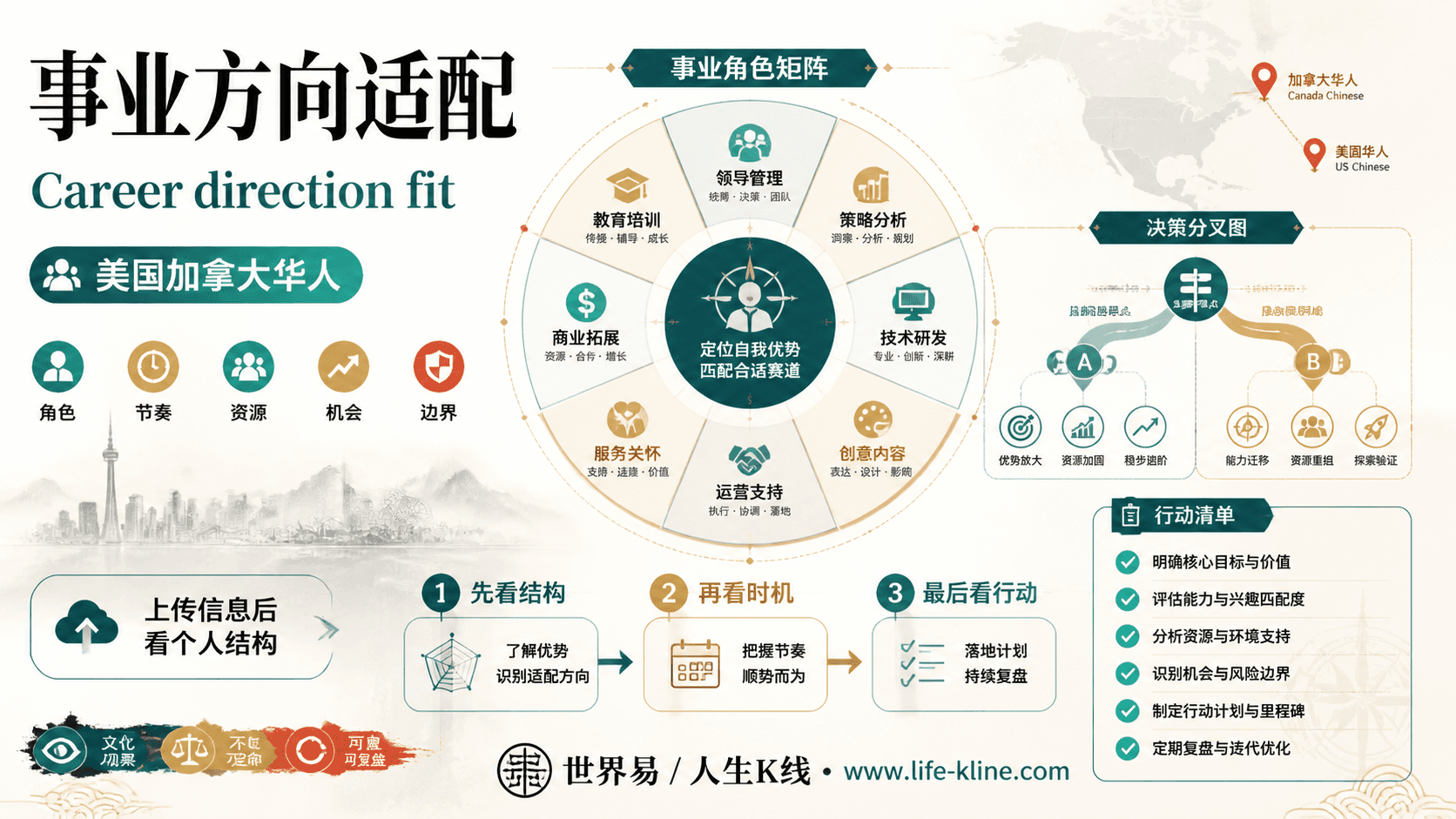
事业方向适配|美国加拿大华人
这张图把《Metaphysical Analysis of Medical and Longevity Risk Hedging in Asset Inheritance》里的命理概念转成关系、边界和应用场景,适合先看图建立结构,再回到知识文章正文理解细节。
事业方向适配不应被写成固定结论。更适合美国加拿大华人的读法,是把传统术语翻译成结构、时机、环境、行动和复盘。
查看图片解读