Analysis of Streamlined vs. Abundant Retirement Decisions from the Perspective of Asset Inheritance
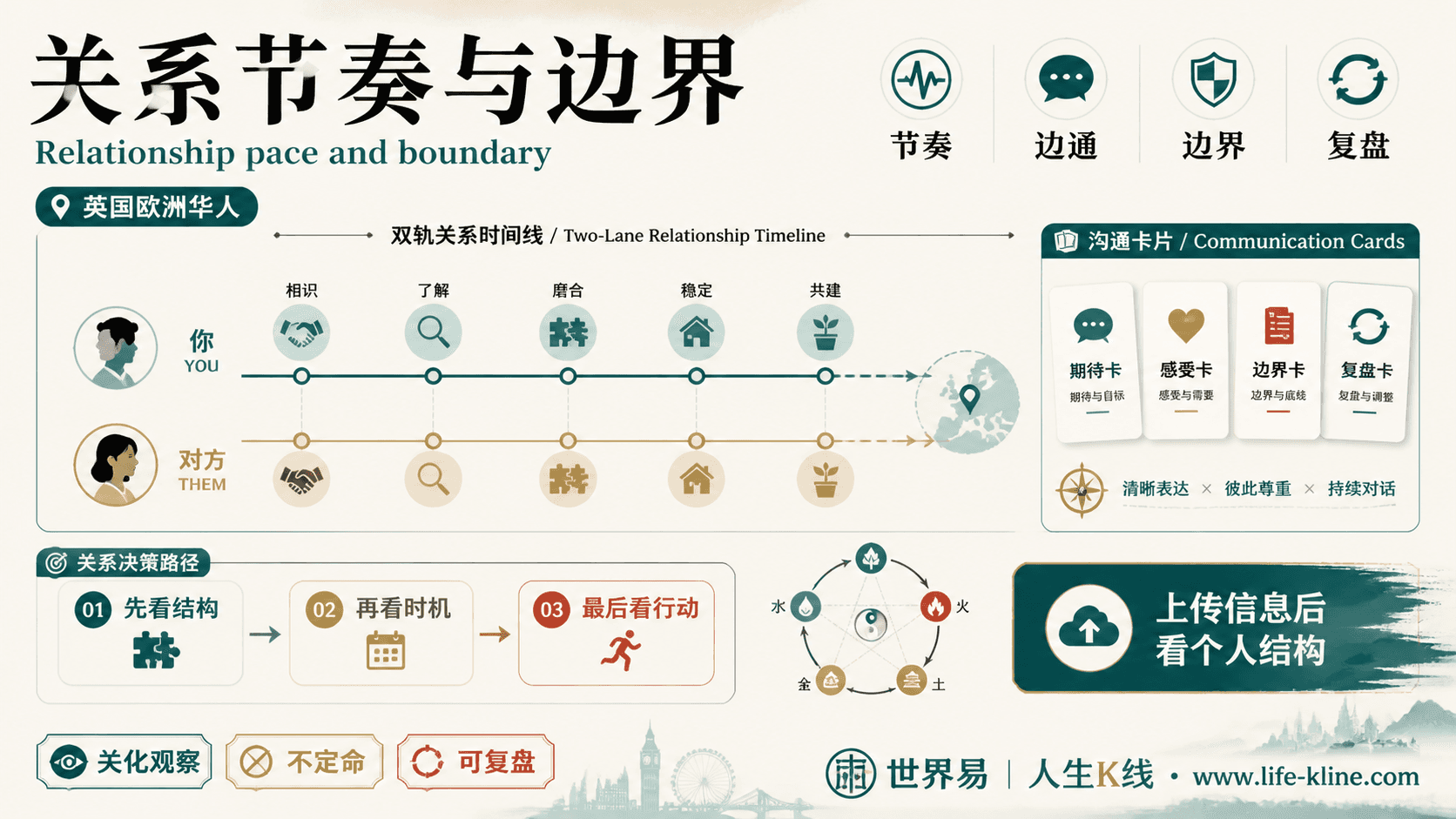
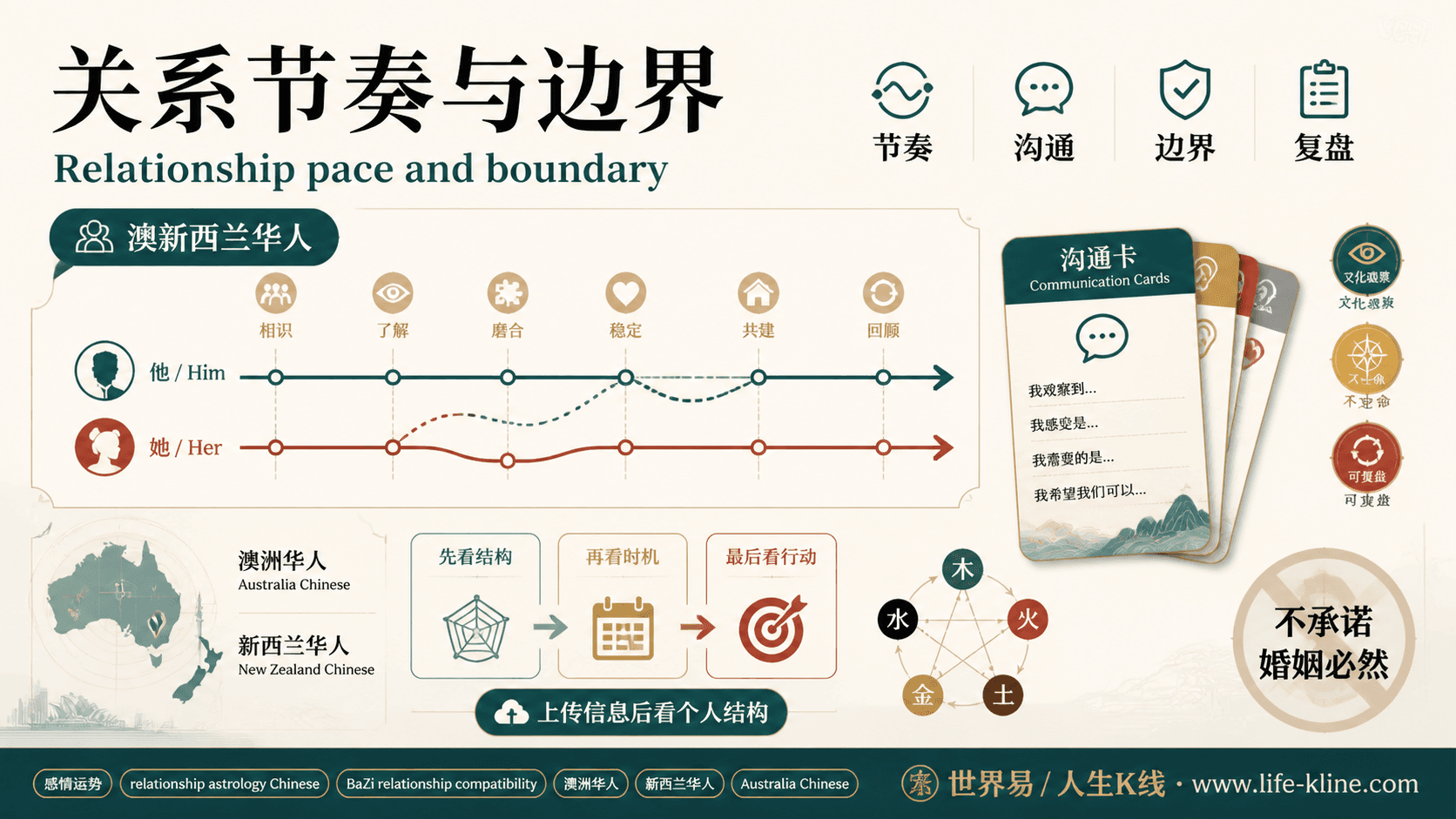
把这篇文章落到自己身上验证:先看结构,再进入个人分析,不做泛泛阅读。
Why This Decision Is Especially Difficult in This Scenario
In the retirement context of asset inheritance and will trust preparation, choosing between streamlined retirement and abundant retirement faces multiple challenges. Firstly, inheritance law and tax planning are complex and frequently changing, directly affecting the efficiency of asset transfer and risk control. Secondly, family relationships are often intricate, and conflicts or poor communication among children exacerbate decision difficulties, especially during retirement stages when psychological pressure is heightened.
Moreover, social security, medical insurance, and beneficiary arrangements in retirement structures complement each other, requiring precise balance between financial liquidity and medical dependency. Psychologically, retirees often oscillate between a sense of security and freedom, prone to overly optimistic or overly cautious biases that impact asset allocation and will trust design.
BaZi structures, as rhythm-assisting tools, can help retirees identify the energy trends of their Wealth Stars (Cai Xing), Shi Shen (Eating God), and Yin Stars (Resource Stars), thereby finding balance points between financial capacity and family interaction patterns. However, BaZi cannot replace legal and financial professional advice and must be integrated with actual policies and medical needs for comprehensive consideration.
Therefore, the difficulty of this decision lies in managing multi-dimensional risks and balancing interests. How to use BaZi judgment to assist precise intervention, avoiding blind expansion or excessive reduction, becomes the key to pension and asset inheritance.
Three Core Dimensions of BaZi Judgment
First, the strength of the Day Master (Ri Zhu) and the late-life Da Yun (decade luck cycle) directly reflect the retiree’s energy state and overall life rhythm. A relatively strong Day Master usually possesses greater autonomy and initiative, favorable for managing complex retirement arrangements. The auspiciousness of the late-life Da Yun indicates the stability of resource flow and family support after retirement.
Second, the configuration of Wealth Stars (Cai Xing) relates to disposable assets and wealth accumulation trends. When Wealth Stars are strong and the Yong Shen (favorable element) is properly aligned, it signifies smooth financial luck, suitable for an abundant retirement strategy; otherwise, a streamlined retirement is advisable to reduce risk. Shi Shen (Eating God) reflects the retiree’s late-life preferences and lifestyle; an active Shi Shen suggests a tendency toward diversified enjoyment and spiritual satisfaction.
Third, the combination of Officer Stars (Zheng Guan / Qi Sha) and Yin Stars (Pian Yin / Zheng Yin) reflects children, medical dependency, and family relationships. Strong Yin Stars indicate a good support system and medical security; if Officer Stars are properly controlled by Yong Shen, it benefits children’s assistance and smooth execution of inheritance law. Otherwise, one must be vigilant about internal family conflicts and legal risks, carefully designing wills and trusts.
In summary, accurately identifying these three dimensions, combined with the current Da Yun and Liu Nian (annual fortune) interactions, is central to assisting asset inheritance and retirement strategy choices. BaZi provides directional rhythm adjustment but must be combined with professional financial planning and legal consultation to ensure scientific and stable decisions.
Three Real BaZi Chart Cases
Case 1: Male, Day Master Bing Fire (丙火) relatively strong, belonging to the Zheng Yin (Proper Resource) pattern. Yong Shen is Earth, Ji Shen (unfavorable element) is Wood. Currently in Wu Shen (戊申) Da Yun, an auspicious cycle, with progress in career and financial luck; Liu Nian Bing Wu (丙午) flows smoothly. The Zheng Yin pattern indicates strong internal support and spiritual strength; although Wealth Stars are not prominent, Yong Shen Earth helps stabilize the financial foundation. This chart suits maintaining stability in asset inheritance, avoiding premature large-scale asset expansion, favoring a streamlined retirement strategy to control risk, combined with steady tax and trust planning to prevent family disputes.
Case 2: Male, Day Master Jia Wood (甲木) relatively strong, Yang Ren (Yang Blade) pattern, Yong Shen are Metal and Earth, Ji Shen is Water. Currently in Bing Zi (丙子) Da Yun, a stable cycle, suitable for maintaining the status quo. The Yang Ren pattern shows a relatively firm personality; the Wealth Star structure is complex, with Metal and Earth Yong Shen indicating wealth accumulation relying on rational management and risk control. Asset inheritance should emphasize tax optimization and clear insurance beneficiary designation, avoiding liquidity risks caused by the Ji Shen Water. This chart suits a moderate strategy, combining family trusts and will design to achieve abundant retirement but requires vigilance against sudden family legal risks.
Case 3: Female, Day Master Bing Fire (丙火) relatively strong, Shang Guan (Hurting Officer) pattern, Yong Shen are Water and Metal, Ji Shen is Wood. Currently in Yi Wei (乙未) Da Yun, a stable cycle suitable for maintaining, with Liu Nian requiring flexible responses. The Shang Guan pattern indicates a rich variety of late-life interests; the Wealth Star structure is flexible, suitable for diversified asset allocation. Yong Shen Water and Metal provide good financial support and medical security. This chart can lean toward abundant retirement in asset inheritance, moderately utilizing wills, trusts, and insurance tools to diversify risks, while paying attention to family harmony to avoid potential legal disputes caused by Ji Shen Wood.
In summary, these three cases demonstrate the auxiliary value of BaZi structures in retirement asset inheritance decisions, corresponding to different risk tolerance levels and family relationship patterns, providing targeted strategy recommendations.
Common Misjudgments and Blind Spots in This Scenario
First, over-reliance on BaZi conclusions while neglecting the professionalism of legal and financial planning. BaZi is only a rhythm aid and cannot replace specific analysis of inheritance law, tax regulations, and medical needs. Sole reliance on BaZi may lead to imbalanced asset arrangements.
Second, ignoring the dynamic changes in family relationships. Although Officer Stars and Yin Stars in BaZi reflect certain children dependency and medical support, actual family conflicts, communication breakdowns, and inheritance disputes often exceed BaZi’s predictive scope, requiring intervention through legal tools and psychological counseling.
Third, failure to reasonably assess the interaction between late-life Da Yun and Liu Nian. The auspiciousness or inauspiciousness of Da Yun and Liu Nian is central to auxiliary judgment; ignoring Liu Nian risks or being overly optimistic can result in insufficient retirement funds or unfair estate distribution, affecting retirement quality.
Fourth, neglecting detailed design of taxation and insurance beneficiaries. BaZi cannot directly reflect tax costs and insurance clauses. The choice between streamlined or abundant retirement must be combined with professional tax planning and trust arrangements to avoid excessive tax burdens or conflicts of interest.
Practical Judgment Sequence
First, assess the strength of the Day Master and the trend of the late-life Da Yun to judge the retiree’s basic energy state and resource flow capacity. If the Day Master is relatively strong and the Da Yun auspicious, it indicates good support, suitable for considering abundant retirement; otherwise, a streamlined retirement is preferred to avoid risks.
Second, closely examine the Wealth Stars and Yong Shen configuration to clarify the stability and growth potential of disposable assets. When Wealth Stars are strong and Yong Shen effective, a more abundant retirement lifestyle can be planned; when Wealth Stars are weak or Ji Shen prominent, priority should be given to securing basic retirement needs and avoiding excessive consumption.
Third, integrate the Officer Stars and Yin Stars structures to evaluate family support systems and medical security, clarifying children’s inheritance and care arrangements. When Officer and Yin Stars are favorable, wills, trusts, and insurance planning can be strengthened to achieve secure wealth transfer; if the structure is complex, careful design is needed to prevent family disputes.
Finally, it is essential to combine the opinions of professional financial planners, legal advisors, and medical experts to formulate retirement fund arrangements and will trust plans that conform to reality. BaZi assists by providing rhythm references, while professional advice ensures compliance and risk control.
In summary, the judgment sequence should start from the internal life rhythm (Day Master and Da Yun), gradually refine asset stability (Wealth Stars and Yong Shen), then family and medical support (Officer Stars and Yin Stars), and finally integrate professional planning to ensure scientific and reasonable retirement decisions.
FAQ
Question 1: Can the strength of the Wealth Stars in BaZi directly determine the amount of retirement funds? Answer: Wealth Stars reflect wealth trends and potential but do not represent specific amounts. Retirement fund planning must combine personal income, social security, investment returns, and tax policies. BaZi serves only as a rhythm-assisting reference and cannot replace professional financial planning.
Question 2: How do Yong Shen and Ji Shen affect risk management in asset inheritance? Answer: Yong Shen represents harmonizing forces that help stabilize wealth and family relationships, while Ji Shen indicates potential risk points. Proper use of Yong Shen to neutralize Ji Shen’s effects helps reduce inheritance disputes and financial fluctuations, but specific operations still require legal and insurance tools.
Question 3: Can BaZi guide the best timing in will trust preparation? Answer: Changes in Da Yun and Liu Nian can suggest suitable timing for adjusting financial structures, but the establishment of trusts and fund transfers should be based on legal procedures and financial status. Combining BaZi rhythm can assist in judging action timing to avoid rash decisions.
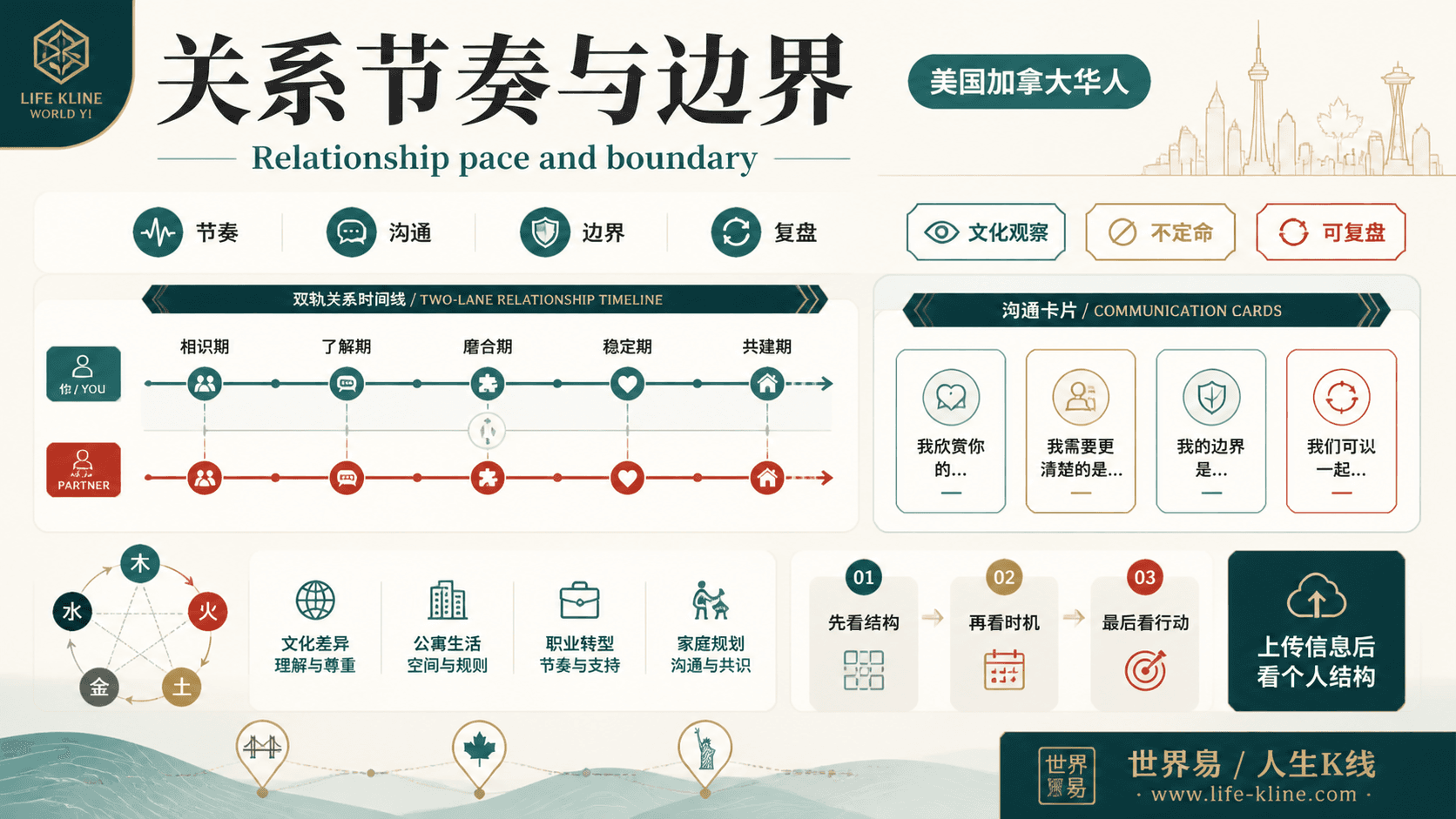
关系节奏与边界|美国加拿大华人
这张图把《Analysis of Streamlined vs. Abundant Retirement Decisions from the Perspective of Asset Inheritance》里的命理概念转成关系、边界和应用场景,适合先看图建立结构,再回到知识文章正文理解细节。
关系节奏与边界不应被写成固定结论。更适合美国加拿大华人的读法,是把传统术语翻译成结构、时机、环境、行动和复盘。
查看图片解读