Complete Guide to Palmistry Fortune-Telling: Analyzing Day Master Patterns and Da Yun Liu Nian
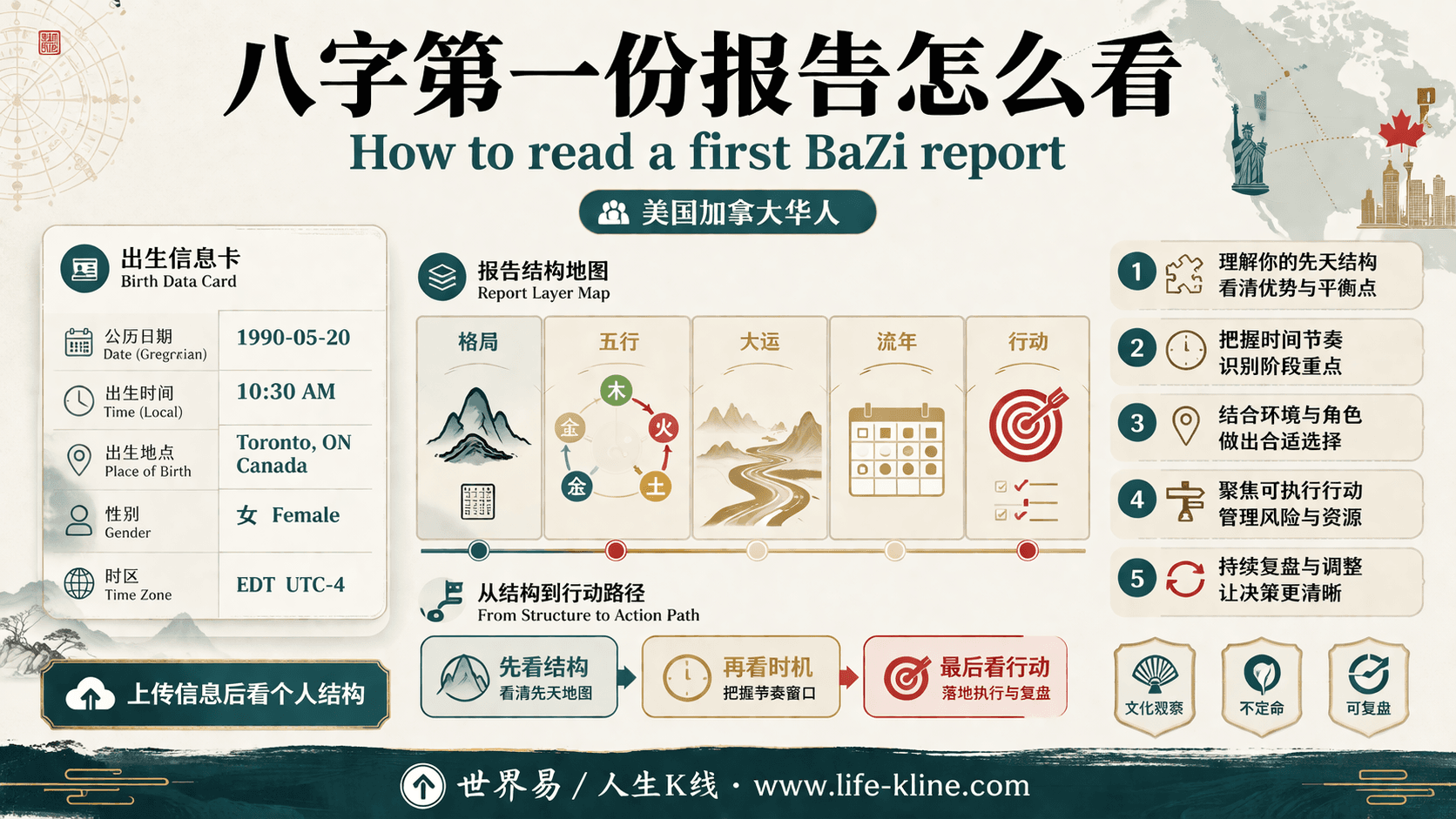
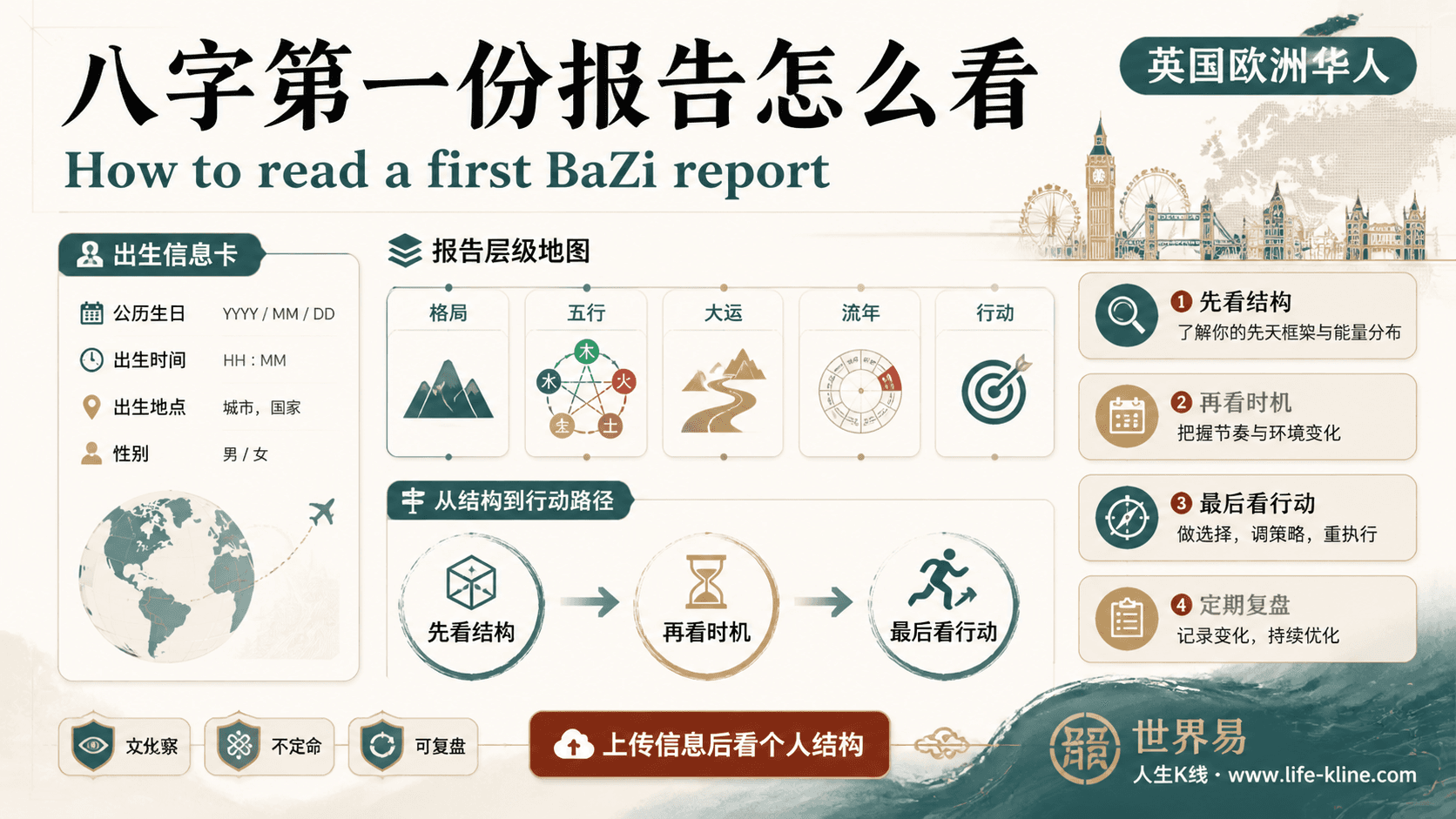
把这篇文章落到自己身上验证:先看结构,再进入个人分析,不做泛泛阅读。
What Is Palmistry Fortune-Telling
Palmistry fortune-telling involves observing the lines, shapes, and mounts of the palm, combined with traditional metaphysical theories, to infer information about an individual's personality, health, career, and fortune. Its origins can be traced back to various ancient Eastern and Western cultures, gradually forming a systematic analytical method.
Modern palmistry fortune-telling not only relies on the external features of the palm but also integrates BaZi Four Pillars metaphysical knowledge, such as the strength of the Day Master, patterns, Yong Shen (favorable elements), and Ji Shen (unfavorable elements), making the judgments more precise and in-depth. By combining birth chart analysis, the details of palmistry are endowed with richer connotations.
The changes in the palm are closely related to a person's innate endowment and acquired environment. Therefore, palmistry fortune-telling emphasizes dynamic observation and comprehensive evaluation, focusing both on innate qualities and current fortune. Integrating metaphysical knowledge allows a better understanding of palm changes and destiny trends.
How to Read Palmistry Fortune-Telling: Core Elements
In palmistry fortune-telling, observing the main lines of the palm such as the Life Line, Head Line, Heart Line, and Career Line is the basic step. The length, depth, branching, and other characteristics of these lines each carry different meanings. Combined with the strength of the Day Master in metaphysics, one can assess a person's internal energy and stress resistance.
The types of patterns, such as Zheng Cai (Proper Wealth) pattern, Pian Cai (Indirect Wealth) pattern, or Pian Yin (Indirect Resource) pattern, determine the overall fortune and personality traits of the individual. Certain palm features, like the hardness of the palm and the shape of the finger joints, often reflect the energy state of these patterns, assisting metaphysical judgment.
Yong Shen (favorable elements) and Ji Shen (unfavorable elements) are key in metaphysical judgment. Yong Shen represents the Five Elements needed to harmonize the birth chart, while Ji Shen are elements detrimental to the individual. The manifestation of Five Elements in the palm, combined with Yong Shen and Ji Shen analysis, can reveal the current fortune’s auspicious or inauspicious changes.
Da Yun (decade luck cycles) and Liu Nian (annual fortune) reflect the changes in a person’s fortune at different life stages. By observing dynamic changes in the palm alongside the influence of Da Yun and Liu Nian, one can predict opportunities and challenges during specific periods, thus maximizing benefits and avoiding harm.
Integrating the above elements, palmistry fortune-telling is not merely a static image interpretation but a dynamic metaphysical analysis. Coupled with birth chart facts, every detail of the palm can be imbued with profound metaphysical meaning, helping the individual better plan their life.
Three Real Birth Chart Cases
Case One involves a female aged between 35 and 40, with a Day Master of Wu Earth (戊土, Wu Tu) that is relatively strong, belonging to the Zheng Cai (Proper Wealth) pattern. Her Yong Shen is Metal, and Ji Shen is Fire. She is currently in the Ding You (丁酉) Da Yun, with the Liu Nian being Bing Wu (丙午). According to metaphysics, this Da Yun is stable, suitable for consolidation, while the Liu Nian requires adaptability. In palmistry fortune-telling, the Metal element symbolizing resilience and stability is prominent in her palm, reflecting stable financial fortune but caution against the impact of Fire. Her palm shows clear and moderately changing Metal lines, indicating steady progress in career and wealth management.
Case Two is a male aged between 50 and 55, with a Day Master of Wu Earth (戊土, Wu Tu) that is relatively strong, belonging to the Pian Cai (Indirect Wealth) pattern. His Yong Shen are Wood and Water, and Ji Shen is Fire. He is currently in the eighth year of the Ding You (丁酉) Da Yun, with the Liu Nian being Bing Wu (丙午). Metaphysics indicates this Da Yun is also stable and suitable for consolidation, while the Liu Nian requires adaptation. Combined with palmistry fortune-telling, his palm should show traces of Wood and Water elements, such as full finger joints and smooth lines, reflecting good financial management and interpersonal relationships, but he must remain cautious of Fire’s influence. Subtle changes in his palm suggest he should be prudent at critical moments to avoid risks.
Case Three concerns a male aged between 35 and 40, with a Day Master of Ren Water (壬水, Ren Shui) that is relatively weak, belonging to the Pian Yin (Indirect Resource) pattern. His Yong Shen is Metal, and Ji Shen are Wood and Fire. He is currently in the ninth year of the Bing Wu (丙午) Da Yun, with the Liu Nian also being Bing Wu (丙午), representing an unfavorable period requiring caution against major upheavals. In palmistry fortune-telling, his palm may show insufficient Metal or be affected by Wood and Fire, with lines appearing disordered or weakened, reflecting significant fluctuations in fortune and challenges in health and career. At this time, palm details are especially important to timely detect risks and take preventive measures.
Common Misconceptions
Many people mistakenly believe that simply observing palm lines can fully reveal one’s destiny, ignoring the profound impact of Day Master strength, patterns, and Yong Shen and Ji Shen on palmistry. In fact, relying solely on palm lines without integrating metaphysical knowledge makes it difficult to accurately judge overall fortune.
Another common misconception is that palm lines are fixed and unchanging. In reality, palms change with age and environment. Only by combining Da Yun and Liu Nian analysis in metaphysics can one scientifically interpret the trends of palm changes and destiny directions.
Some people overly believe in the saying “men use left hand, women use right hand” in palmistry, overlooking the modern metaphysical view that the left hand represents innate potential and the right hand reflects acquired conditions. Comparing both hands provides a more comprehensive reflection of the individual’s potential and current state, rather than relying on one hand alone to determine fate.
Practical Suggestions
When conducting palmistry fortune-telling, first combine the individual’s BaZi Day Master strength, pattern, and Yong Shen and Ji Shen, achieving a fusion of theory and observation. This ensures more accurate judgment of the Five Elements characteristics in the palm and their alignment with the individual’s fortune.
Regularly observe changes in the palm, especially during important transitions in Da Yun and Liu Nian. Subtle changes in the palm often indicate turning points in destiny; timely adjustments in life and work strategies help maximize benefits and avoid harm.
Analyze both left and right palms together: the left hand reflects innate potential, while the right hand shows acquired conditions. Comparing the two hands to identify changes and differences better explains the dynamic evolution of destiny, guiding personal cultivation and behavioral adjustments.
FAQ
Question 1: Does facial appearance change with age? Answer: Yes, and the changes can be significant. Different age stages focus on different facial areas: the forehead (Tian Ting) in youth, cheekbones and nose bridge in middle age, and chin and nasolabial folds in old age. As one ages, mental state, lifestyle habits, and health conditions manifest in the face, so the appearance at 30 and 50 years old may differ markedly.
Question 2: Which palm is more accurate, left or right? Answer: Traditionally, it is said “men use left, women use right,” but modern palmistry generally holds that the left hand represents innate potential, i.e., the birth chart and endowments, while the right hand reflects acquired conditions, i.e., current reality and trends. The greater the difference between the two hands, the more changes the individual has experienced. Combining both hands provides a fuller understanding of personal destiny.
Question 3: How does palmistry fortune-telling integrate BaZi metaphysics? Answer: Palmistry fortune-telling not only observes palm lines but also integrates BaZi elements such as Day Master strength, pattern, Yong Shen, Ji Shen, and current Da Yun and Liu Nian. This allows the Five Elements interactions and fortune changes to more accurately explain the metaphysical meanings behind palm features, enhancing the scientific and practical accuracy of the judgment.
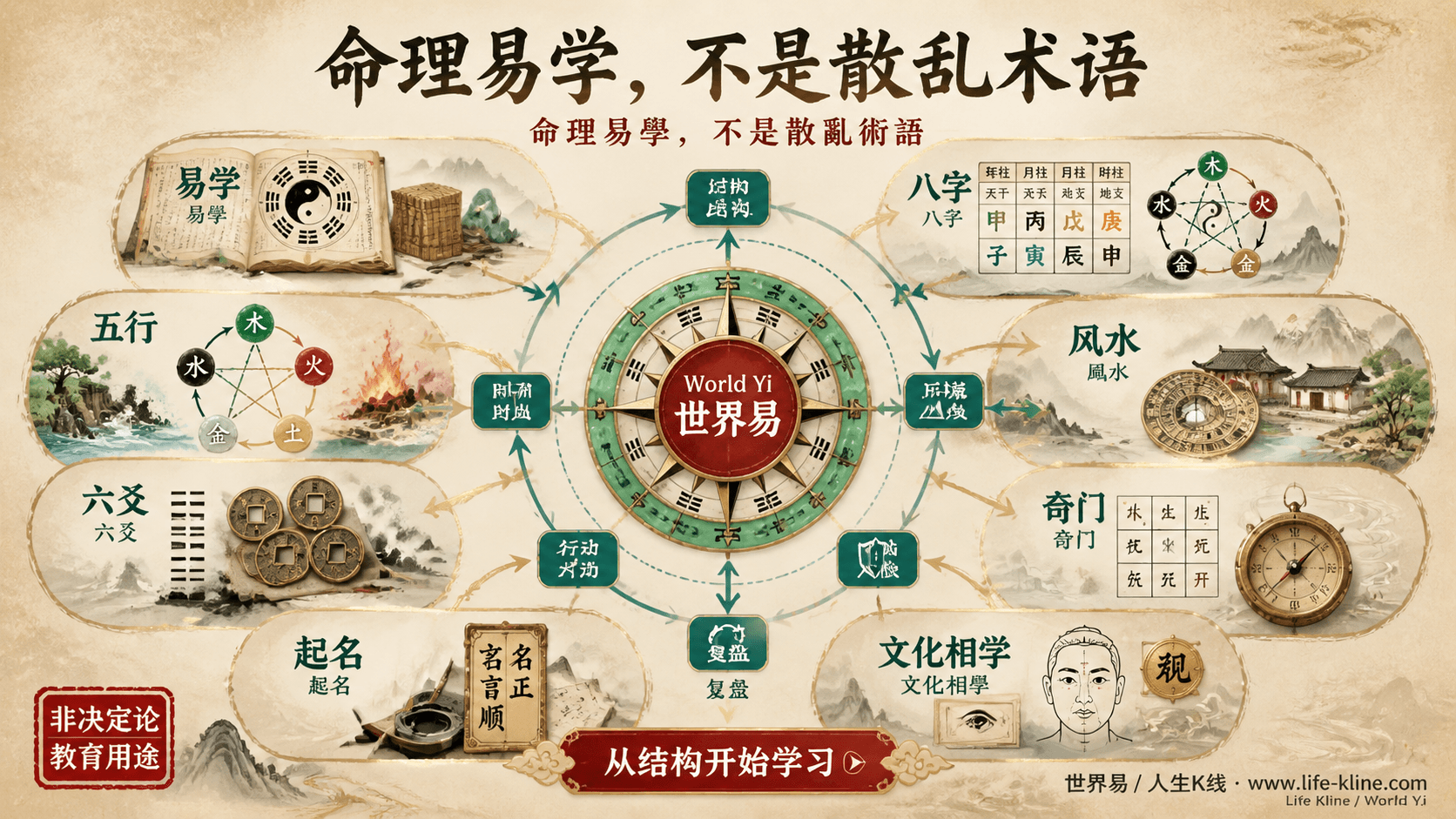
命理易学知识全景地图
这张图把《Complete Guide to Palmistry Fortune-Telling: Analyzing Day Master Patterns and Da Yun Liu Nian》里的命理概念转成关系、边界和应用场景,适合先看图建立结构,再回到知识文章正文理解细节。
用一张图说明易学、八字、风水、奇门、六爻、相学、起名与世界易的关系。
查看图片解读