A Complete Guide to the Interpretation and Application of Wanwu Leixiang in Plum Blossom Yi Shu
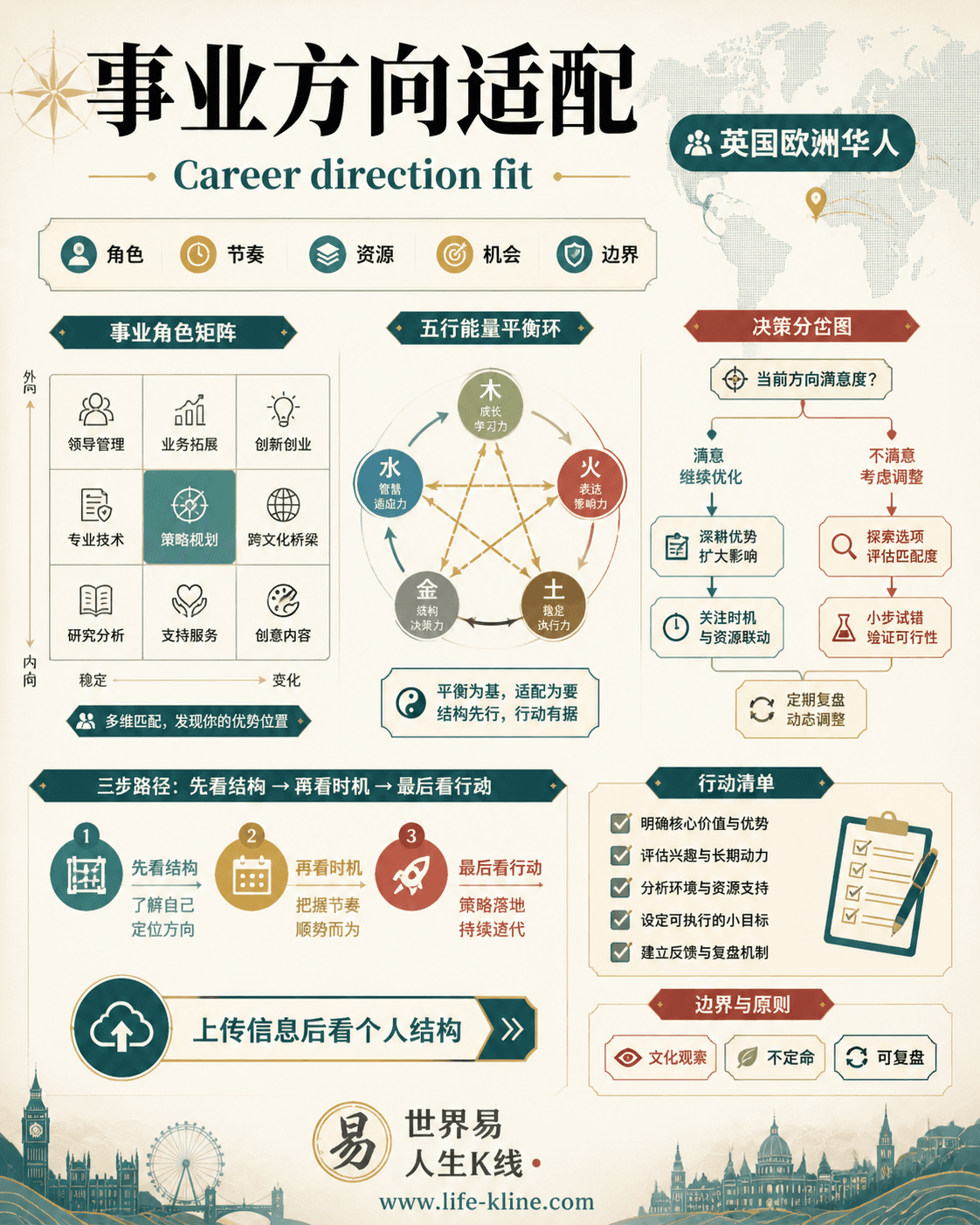
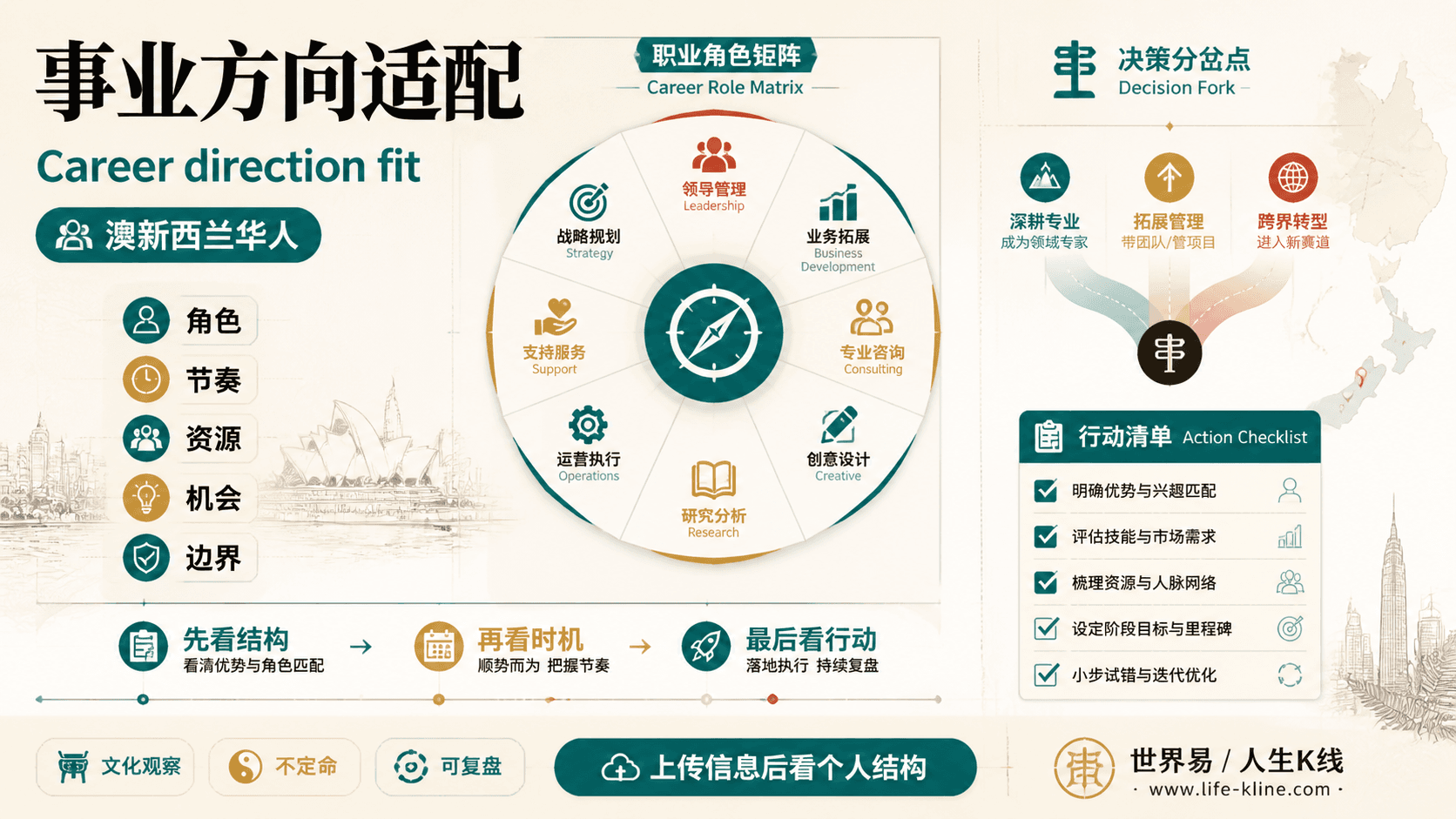
把这篇文章落到自己身上验证:先看结构,再进入个人分析,不做泛泛阅读。
What is Wanwu Leixiang
Wanwu Leixiang is one of the core concepts in Plum Blossom Yi Shu. It refers to using the symbolic forms and attributes of all things in heaven and earth to analogize and explain the laws of change in human life and the universe. This theory is rooted in ancient Chinese philosophy, emphasizing that everything has a symbol (Xiang), symbols arise from numbers (Shu), and numbers transform into symbols.
Originating from Shao Yong’s Plum Blossom Yi Shu, Wanwu Leixiang emphasizes the combination of “Xiang” (symbols) and “Shu” (numbers), utilizing natural phenomena and random numbers to deduce life’s fortunes and misfortunes. By observing the attributes of all things, it forms predictions of future trends.
Wanwu Leixiang is not only a tool for divination but also a reflection of philosophical thinking. It advocates understanding the world’s changes through intuition and symbolic meaning, focusing on following nature and adapting flexibly. This distinguishes Plum Blossom Yi Shu from other systems, making it more flexible and practical.
How to Read Wanwu Leixiang: Core Elements
To interpret Wanwu Leixiang, one must first clarify the origin of the “Xiang” (symbol), which is the natural attributes and Five Elements (Wu Xing) relationships represented by the Heavenly Stems (Tiangan) and Earthly Branches (Dizhi) in the Four Pillars (Si Zhu) or BaZi. By observing the strength of the Day Master (Ri Zhu), the type of pattern (Ge Ju), and the coordination between the Yong Shen (favorable element) and Ji Shen (unfavorable element), one can understand the nature of the person and environmental influences.
Secondly, combine the Da Yun (decade luck cycle) and Liu Nian (annual fortune) to analyze changes and trends at specific time points. Da Yun represents long-term trends, while Liu Nian reflects the specific qi changes of the year. Their interaction reflects the dynamic changes of Wanwu Leixiang.
Finally, apply a flexible and adaptive mindset to observe the changes in the symbolic meanings of Wanwu Leixiang, paying attention to the generating, overcoming, controlling, and transforming relationships among different attributes. The support of the Yong Shen and the restraint of the Ji Shen demonstrate the balance and conflict in the destiny chart, which is key to interpreting Wanwu Leixiang.
By systematically mastering the above elements, one can accurately grasp future trends in Plum Blossom Yi Shu divination and enhance insight into life’s overall situation, embodying the philosophical wisdom of Wanwu Leixiang.
Three Real BaZi Chart Cases
Case 1: This chart belongs to a male with Day Master Xin Metal (辛金), relatively strong, with a Yang Ren (Goat Blade) pattern. The Yong Shen are Fire and Wood, and the Ji Shen is Earth. Currently in the Wu Zi (戊子) Da Yun, with the Liu Nian of Bing Wu (丙午). The Yang Ren pattern indicates a strong Day Master needing Fire and Wood to harmonize and nurture it. The Wu Zi Da Yun is generally stable, suitable for maintaining achievements. The Bing Wu Liu Nian requires flexible adaptation, reflecting the active and changing symbolism of Fire and Wood in Wanwu Leixiang, showing the person’s flexible adjustments on a stable Da Yun foundation.
Case 2: Female chart with Day Master Jia Wood (甲木), relatively strong, belonging to the Bi Jian (Companion) pattern. The Yong Shen is Wood, and the Ji Shen is Water. Currently in the first year of Wu Xu (戊戌) Da Yun, with the Liu Nian of Bing Wu (丙午). The Bi Jian pattern emphasizes self and competition, with Wood as Yong Shen indicating reliance on self-strength, while Ji Shen Water warns against excessive flow. The Da Yun is stable, and the Liu Nian calls for flexible adaptation, reflecting the growth and flowing characteristics of Wood in Wanwu Leixiang, advising the person to respond flexibly within stability.
Case 3: Male chart with Day Master Ren Water (壬水), relatively strong, Yang Ren pattern. The Yong Shen are Earth and Fire, with Ji Shen Metal. Currently in the ninth year of Ding Si (丁巳) Da Yun, with the Liu Nian of Bing Wu (丙午). The Yang Ren pattern indicates a strong Day Master requiring Earth and Fire to harmonize and suppress excessive Water. The Ding Si Da Yun is auspicious with smooth affairs, and the Bing Wu Liu Nian follows the trend. This chart illustrates the generating and overcoming relationships among Water, Fire, and Earth in Wanwu Leixiang, showing how the reasonable allocation of Yong Shen achieves smooth and favorable luck.
Common Misunderstandings
Many learners mistakenly think Wanwu Leixiang is simply about matching the Five Elements, ignoring the deeper relationship between symbols (Xiang) and numbers (Shu) and their dynamic changes. In fact, Wanwu Leixiang emphasizes flexible application of symbolic meanings and adapting to changes, not mechanical application of Five Elements attributes.
Another common misunderstanding is treating Da Yun and Liu Nian as isolated time points, neglecting their interactive relationship. Wanwu Leixiang theory stresses the foundational role of Da Yun and the random changes of Liu Nian; only their combination can accurately reflect destiny.
Some also misunderstand the roles of Yong Shen and Ji Shen, thinking that simply avoiding Ji Shen is enough, ignoring the positive role Yong Shen plays in balancing the chart. Wanwu Leixiang emphasizes the coordination of Yin-Yang and Five Elements, requiring flexible application according to specific patterns.
Practical Suggestions
When studying Wanwu Leixiang, focus on the combination of symbols and numbers, master the basic relationships of the Day Master, pattern, Yong Shen and Ji Shen in the Four Pillars, understand the functions and interactions of Da Yun and Liu Nian, and enhance overall grasp of destiny changes.
In practice, maintain a flexible and adaptive mindset, avoid rigid patterns, observe the dynamic changes of symbolic meanings, and combine specific environmental and temporal factors to adjust judgments flexibly, truly embodying the wisdom of Wanwu Leixiang.
It is recommended to repeatedly practice with real BaZi charts, accumulate experience, understand the philosophical ideas behind Wanwu Leixiang, achieve unity of mind and Yi (change), and improve the accuracy and practicality of predictions.
FAQ
Question 1: What is the difference between Plum Blossom Yi Shu and Liu Yao (Six Lines)? Answer: Plum Blossom Yi Shu, founded by Shao Yong, emphasizes “Xin Yi” (mind Yi), meaning divination through any randomly appearing numbers, sounds, or phenomena, focusing on intuition and symbolic meaning, suitable for immediate minor matters. Liu Yao is a more systematic divination method with a complete system of Shi Ying (世应), dynamic changes, and generating-overcoming relationships, suitable for analyzing complex structured events. Both have their own focus and different usage scenarios.
Question 2: Why is attention paid to Yong Shen and Ji Shen? Answer: Yong Shen and Ji Shen play a balancing role in Wanwu Leixiang. Yong Shen represents the Five Elements that remedy and support, harmonizing contradictions between the Day Master and environment, while Ji Shen are the Five Elements that need to be controlled or avoided. Correct use of Yong Shen and Ji Shen helps understand the person’s fortunes and misfortunes and coping strategies.
Question 3: How do Da Yun and Liu Nian affect the interpretation of Wanwu Leixiang? Answer: Da Yun represents the person’s longer-term qi environment, while Liu Nian reflects specific qi changes of the year. Their interaction embodies the dynamic change laws in Wanwu Leixiang. When Da Yun is stable, Liu Nian changes offer opportunities for adjustment; when Da Yun is auspicious, following Liu Nian trends can bring better luck. Understanding their relationship aids precise prediction and rational decision-making.
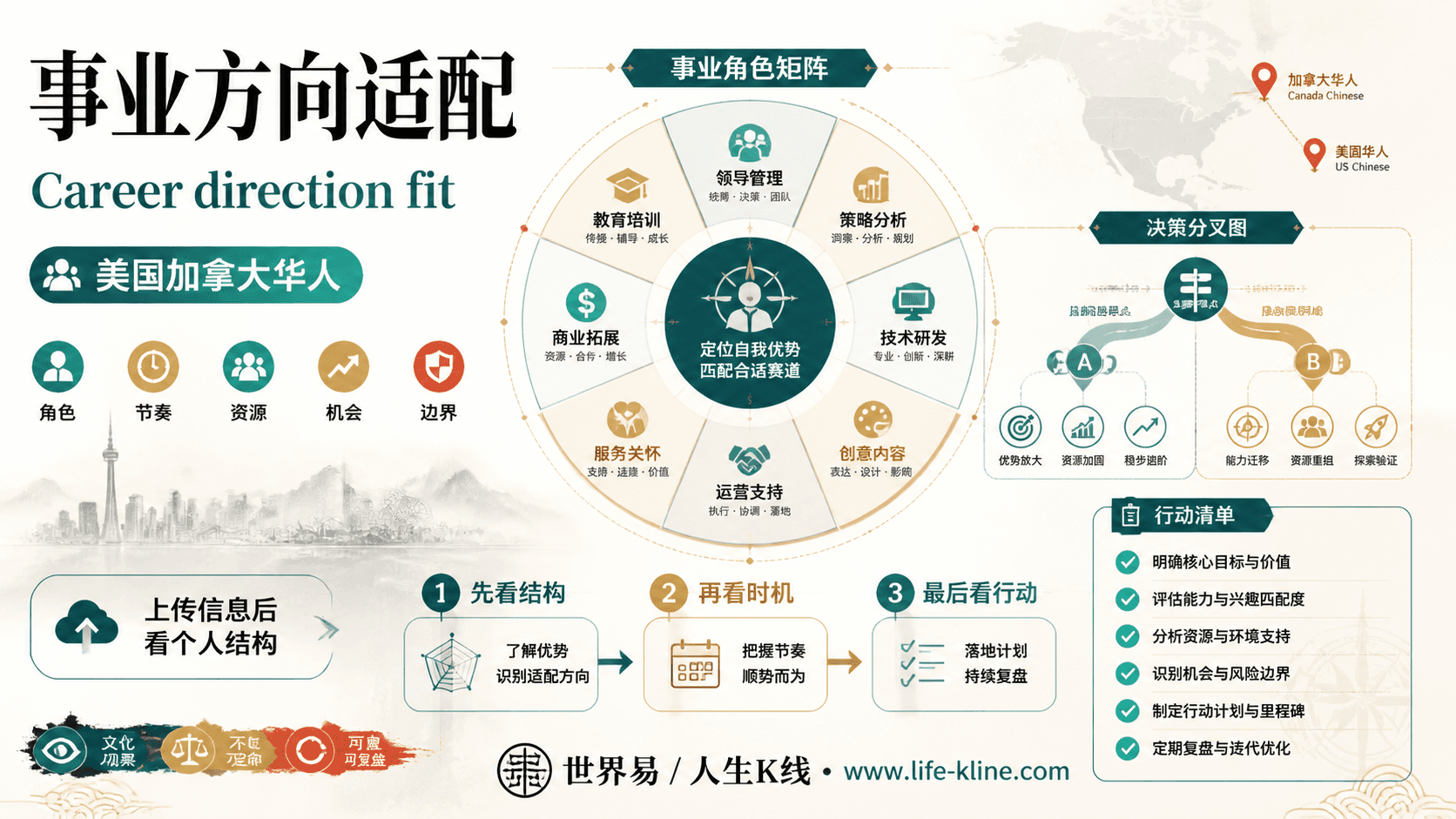
事业方向适配|美国加拿大华人
这张图把《A Complete Guide to the Interpretation and Application of Wanwu Leixiang in Plum Blossom Yi Shu》里的命理概念转成关系、边界和应用场景,适合先看图建立结构,再回到知识文章正文理解细节。
事业方向适配不应被写成固定结论。更适合美国加拿大华人的读法,是把传统术语翻译成结构、时机、环境、行动和复盘。
查看图片解读