Detailed Explanation and Practical Application of Xiaohan Solar Term in Metaphysics
As the fifth solar term of winter, Xiaohan establishes the Earthly Branch of the month as Chou, where Water enters the tomb. It serves as the true dividing point for arranging the month pillar and starting the Da Yun, with Gregorian dates fluctuating by 1-2 days. This article clarifies that the month pillar is determined by the solar term, not the first day of the lunar month.
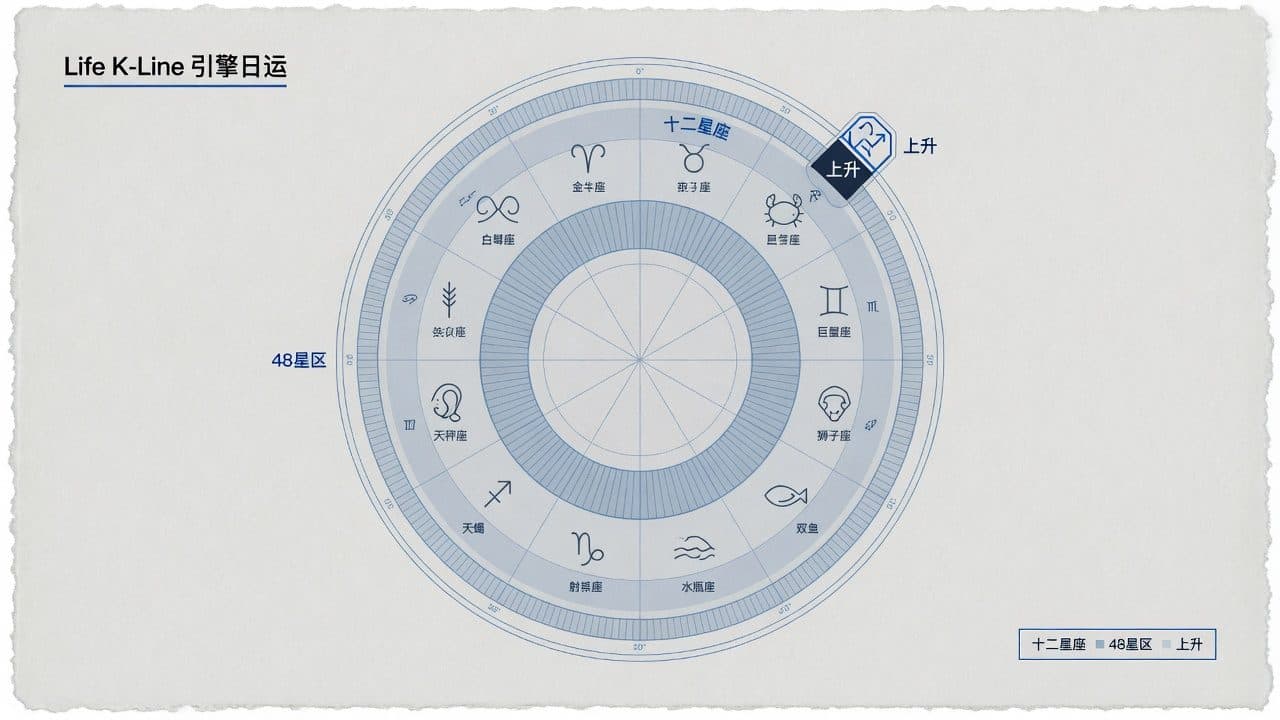
星座百科总览:把抽象判断拆成可看见的结构关系。
Concept Definition
Xiaohan is the fifth solar term of the 24 Solar Terms, marking the deepening of winter and the seclusion of all things. From the trajectory of the Sun, at Xiaohan the Sun reaches the ecliptic longitude of 285 degrees. At this time, the Northern Chou direction is in command, and the Earthly Branch of the month is established as Chou. In terms of time calendar, Xiaohan usually falls between January 5th and 7th of the Gregorian calendar, with the specific date fluctuating by 1 to 2 days each year due to minor adjustments in the Sun's position. This time point is not only a turning point in natural climate but also a critical node in the metaphysical system for dividing months and establishing the Da Yun.
In the BaZi metaphysical system, Xiaohan holds a unique legal status. It is defined as the true dividing point for arranging the month pillar and starting the Da Yun. This means that a person's month pillar Earthly Branch and the timing of starting the Da Yun must be strictly determined based on the moment Xiaohan arrives, rather than simply relying on the first day of the lunar month or the literal meaning of the solar term name. As a fixed coordinate, Xiaohan ensures the precision and consistency of metaphysical charting in the time dimension, serving as a bridge between astronomical calendars and metaphysical deduction.
Traditional Metaphysical Significance
The core metaphysical significance of Xiaohan lies in the state of the month pillar Chou and the Five Elements Water entering the tomb. As the fifth solar term of winter, the Yin energy between heaven and earth is extremely strong, and Water energy converges and enters the tomb. Chou Earth, as damp Earth, possesses powerful characteristics of absorption and extinguishing Fire. In the Five Elements generation and control, when Chou Earth is in command, it means Earth's power occupies the dominant position within a specific time period, while also reflecting the state of Water energy hiding and not manifesting. This Five Elements configuration determines that all things during the Xiaohan season are in a state of hibernation, with inner vitality and not external coldness.
From a deep analysis of the Twelve Generations and Five Elements attributes, the state of Water energy during the Xiaohan season is described as entering the tomb. Water entering the tomb means that mobility temporarily weakens, and energy turns inward to settle. Chou is damp Earth; while Earth can control Water, in this specific combination of Xiaohan, it more reflects a mechanism of inclusion and collection. This state in metaphysics corresponds to a period of settling in a life stage, often symbolizing a time of hidden talent and accumulating strength, rather than external prominence. Understanding the relationship between Water entering the tomb and the month pillar Chou is the foundation for interpreting the metaphysical characteristics of Xiaohan.

从生辰到可执行判断:把抽象判断拆成可看见的结构关系。
Practical Configuration and Interpretation
In practical BaZi charting, the determination of Xiaohan directly decides the accuracy of the month pillar. One must firmly remember that the month pillar is determined by the switch of the solar term; this is an iron rule and absolutely cannot use the first day of the lunar month as the dividing standard. For example, at the exact moment Xiaohan arrives in the twelfth lunar month, the month pillar immediately switches from the Zi month to the Chou month. If a chart arranger mistakenly uses the first day of the lunar month, it will lead to errors in the month pillar Earthly Branch, subsequently causing deviations in the judgment of the Day Master's strength, errors in calculating the start time of the Da Yun, and ultimately resulting in inaccurate overall chart analysis.
As the dividing point for starting the Da Yun, the characteristic of Xiaohan's Gregorian date fluctuating by 1 to 2 days requires professional handling. Metaphysicians must consult the precise solar term timetable for that year to determine the exact time point of Xiaohan's arrival. If the subject is born before Xiaohan, they still belong to the previous month; if born after Xiaohan, they belong to the current month. This level of precision requires chart arrangers to possess a rigorous awareness of time, avoiding errors in month pillar attribution due to date fluctuations. At this node of Xiaohan, the month pillar Chou is established as damp Earth, and analysis must combine the strength of Water, Wood, Fire, and Earth in the original chart to judge the impact of damp Earth on the Day Master.
Common Misconceptions
The most common misconception is equating the first day of the lunar month with the arrival of the solar term. Many people habitually use the first day of the lunar month as the marker for the start of a month, which might be universal in commercial accounting or traditional calendars, but in BaZi metaphysics, it is completely incorrect. BaZi focuses on the precise position of the Sun's ecliptic longitude, not the cycle of the Moon's waxing and waning. Xiaohan, as the moment the month pillar Chou is established, has higher legal validity than the first day of the lunar month; the month pillar must be determined solely by the solar term moment, otherwise the month pillar Earthly Branch will be entirely wrong.
Another misconception is ignoring the impact of the 1 to 2 day fluctuation in the Gregorian date. Since the exact moment of Xiaohan varies each year, this leads to a situation where the Gregorian date corresponding to a lunar date may differ from the Xiaohan solar term by several days. If a chart arranger relies solely on the 'Xiaohan' label on the calendar without checking the specific moment, they are easily prone to charting someone born the day before Xiaohan into the Chou month, or someone born the day after Xiaohan into the Zi month. Such a subtle time difference can produce massive structural differences in metaphysical deduction, and one must strictly follow the precise time point of the solar term.
FAQ
Question: Is the specific date of the Xiaohan solar term fixed? Answer: The Xiaohan solar term usually falls between January 5th and 7th of the Gregorian calendar, with the specific date fluctuating by 1 to 2 days each year, depending on the exact moment the Sun's ecliptic longitude reaches 285 degrees.
Question: Should BaZi charting be based on the first day of the lunar month or Xiaohan? Answer: BaZi charting must be based on the switch of the Xiaohan solar term; the month pillar is established from this point, and the Da Yun is also calculated from this point. It is absolutely not permissible to use the first day of the lunar month as the standard.
本文含 2 张图解(封面/结构/时位/行动或风险)。图解用于建立判断框架,不构成宿命结论; 个人决策请结合测算报告与工具验证。