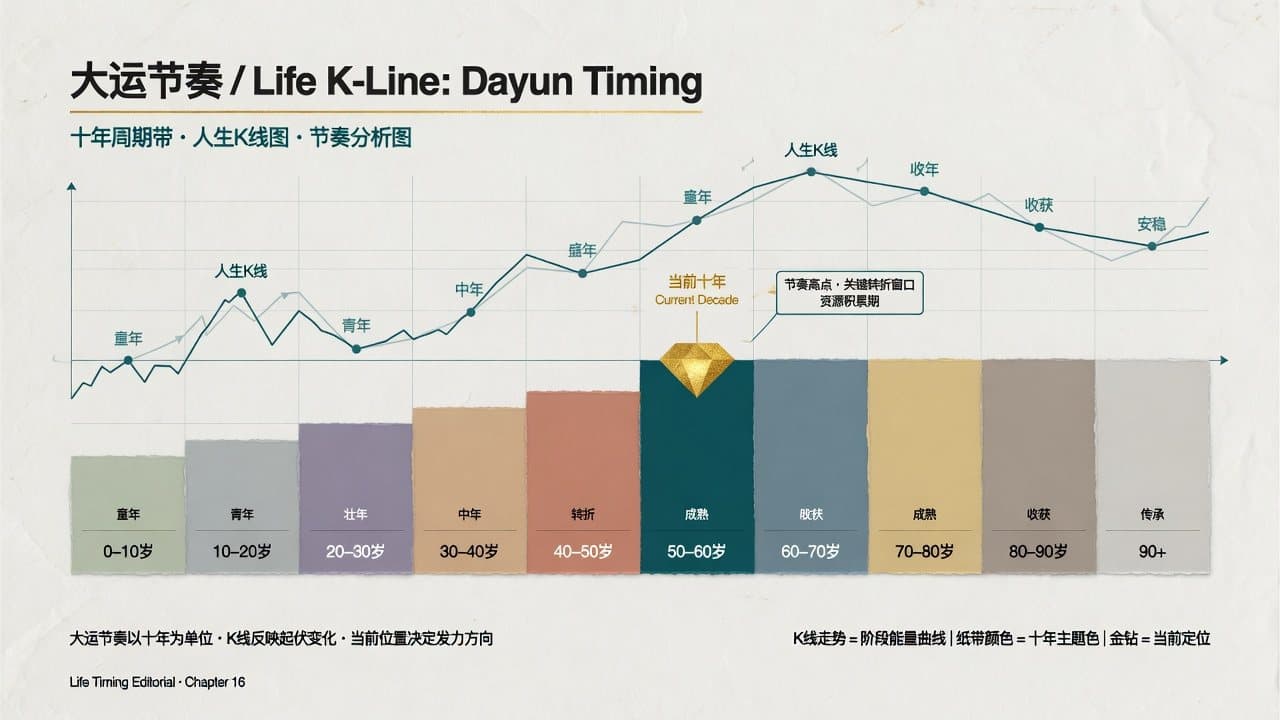
大运节奏带:把抽象判断拆成可看见的结构关系。
The visible question and the real question
On the surface, the user was asking whether they should leave a demanding role and switch into a different track. But beneath that question was a more important one: were they trying to make a high-cost move while their stage position was still unstable?
World Yi reframed the case away from a simple yes-or-no decision. The structure suggested capability was not the core problem. The real problem was that the user was already carrying too much pressure and was trying to solve a stage problem with a permanent identity move.
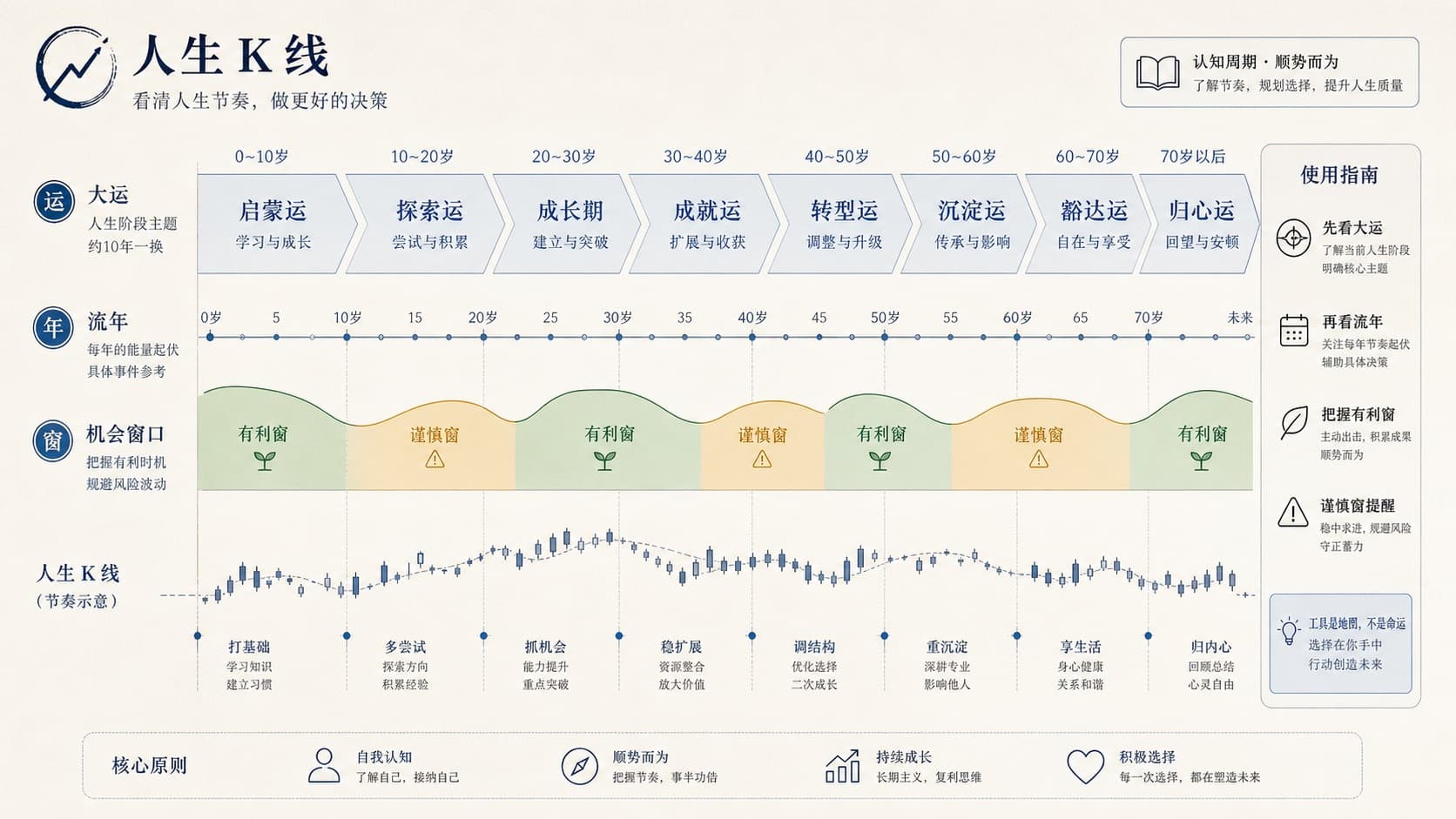
大运与流年窗口:把抽象判断拆成可看见的结构关系。
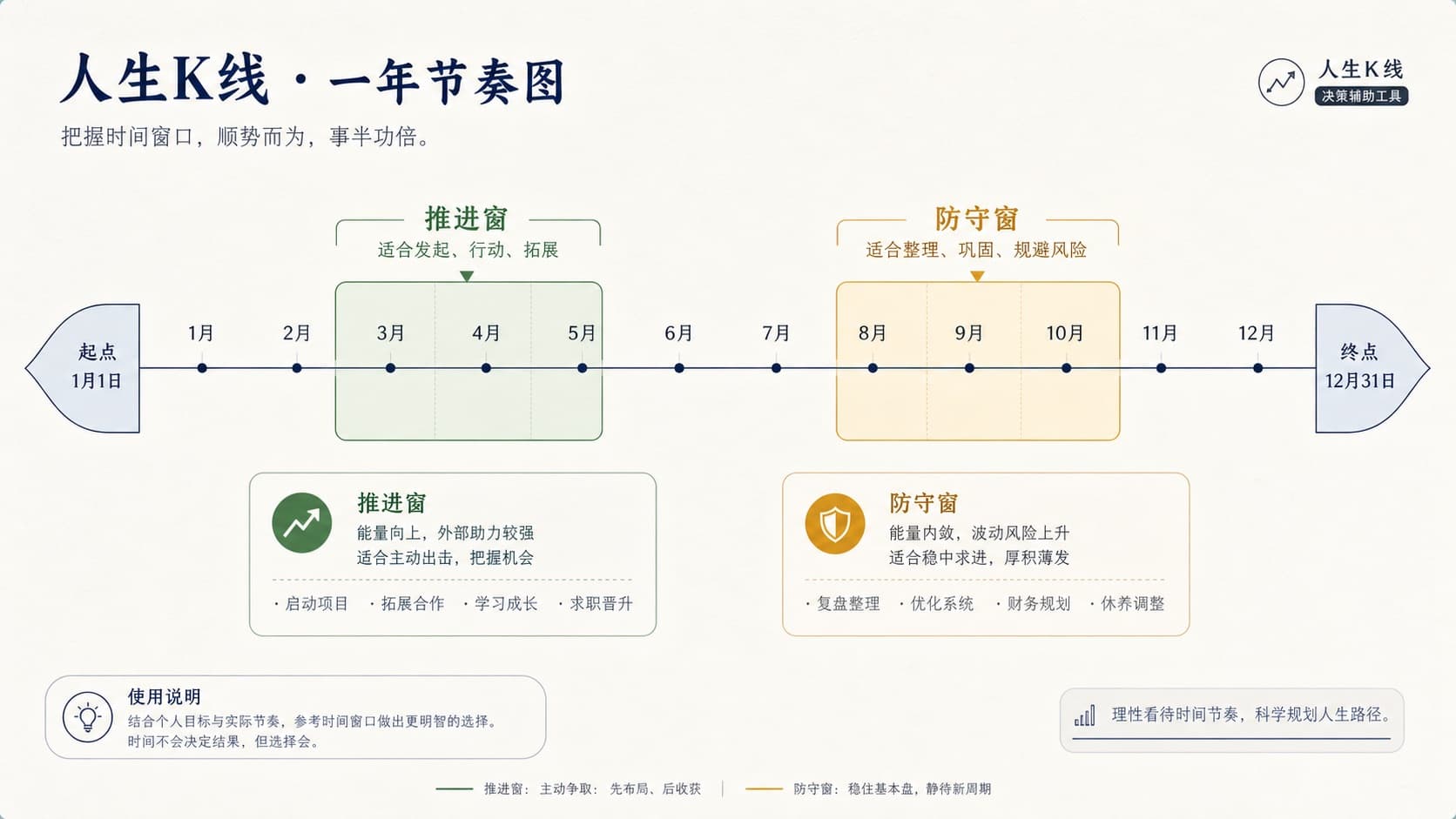
流年主窗口怎么用:把抽象判断拆成可看见的结构关系。
What the case teaches
The conclusion was not “never switch.” It was “do not force a major switch before restoring a usable stage position.” The first move was to reduce density, preserve optionality, and stop interpreting short-term overload as final destiny.
This is a typical World Yi case: the visible event is one thing, but the judgment turns stronger once structure, stage, environment, and action are put back into order.
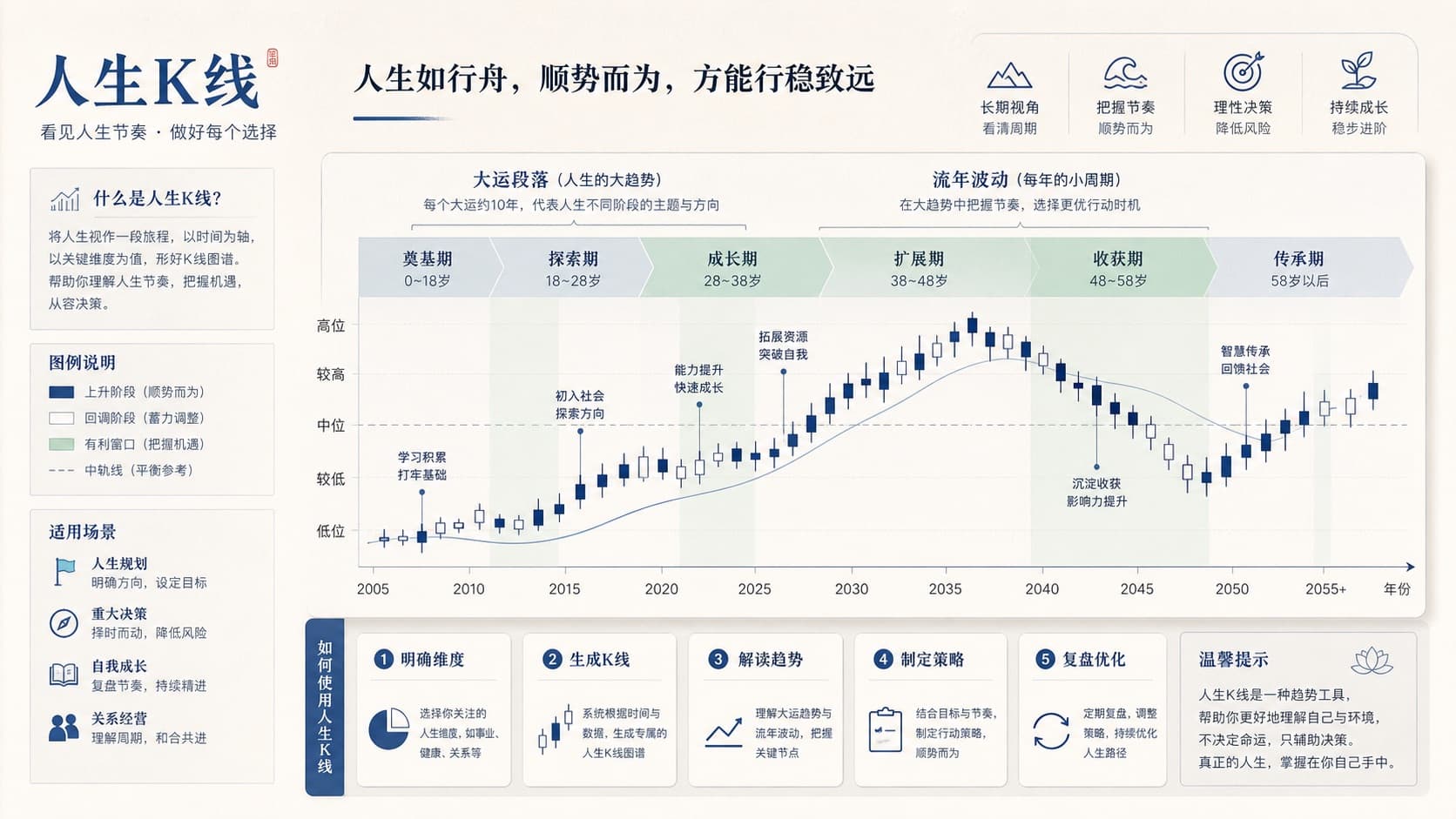
人生K线:节奏而不是宿命:把抽象判断拆成可看见的结构关系。
本文含 4 张图解(封面/结构/时位/行动或风险)。图解用于建立判断框架,不构成宿命结论; 个人决策请结合测算报告与工具验证。