Case Study on Boundary Management in Partnership for a 20-Year-Old: Decision-Making under the Wu Shen Da Yun
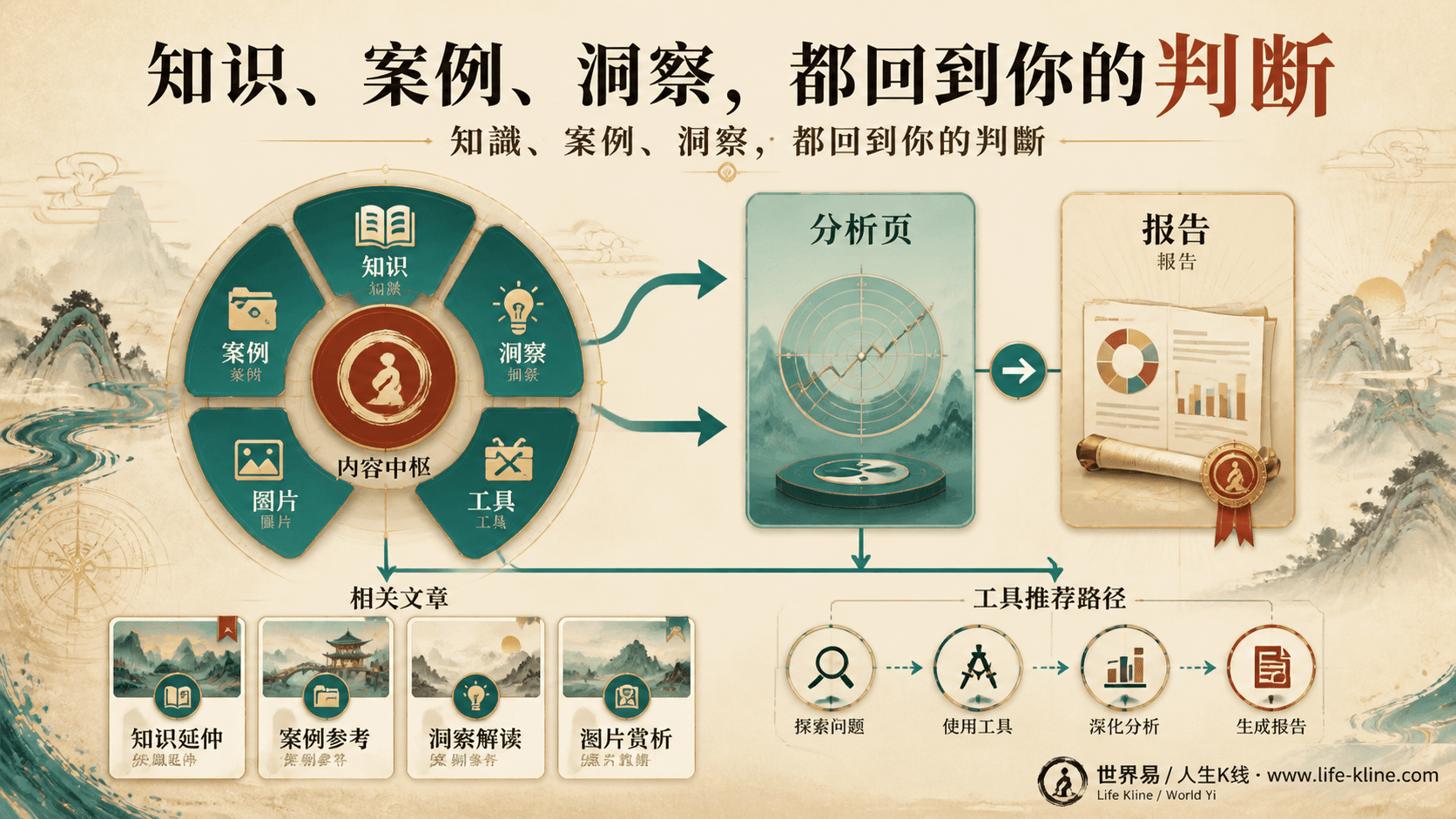
先看完案例关键信息,再进入分析页验证自己的结构与阶段。
Client Background
The client is a young male who has just entered the workforce, approximately 22 years old, currently in the early stage of entrepreneurship. A relative proposed investing as a partner, bringing financial support but also raising concerns about managing cooperation boundaries. Although there is an emotional foundation due to family ties, how to clearly delineate boundaries in business decisions to avoid future conflicts is his most pressing concern.
The client is currently independently running a small project, hoping to achieve stable growth in the coming years. Being young and relatively inexperienced, he wishes to understand from a BaZi perspective the advantages and disadvantages of cooperation under the current luck, especially how to leverage resource advantages without losing autonomy when relatives invest as partners.
BaZi Structure Interpretation
The client’s Day Master is Jia Wood (甲 Jia), which is relatively weak, and his structure is classified as a Jie Cai (劫财) pattern. In his BaZi chart, Fire and Earth are Ji Shen (unfavorable elements), and Water is the Yong Shen (favorable element), indicating that he is relatively fragile in the current environment and needs external support to nourish and strengthen his vitality. The weak Wood Day Master suggests the client is easily influenced by external factors in the early entrepreneurial phase, so decisions regarding partnerships must be carefully considered.
The current Da Yun is Wu Shen (戊申), where Wu Earth (戊 Wu) is Ji Shen. Although Shen Metal (申 Shen) has a restraining effect on Wood, it also brings pressure, making the overall Da Yun relatively weak. This advises the client to act cautiously and avoid expanding cooperation too quickly to prevent depletion of his foundational strength due to the Ji Shen Fire and Earth. The Liu Nian is Bing Wu (丙午), where both Bing Fire (丙 Bing) and Wu Fire (午 Wu) are Ji Shen, further intensifying the Fire and Earth energies. The heavy presence of Ji Shen in the overall luck indicates that mishandling the partnership could lead to conflicts and resource loss.
In summary, the client’s BaZi structure and the interaction of Da Yun and Liu Nian suggest that at this stage, protecting his own resources is crucial. Avoiding excessive depletion by Ji Shen is important, especially when relatives invest as partners. Attention should be paid to boundary setting to safeguard core interests.
Focused Issue Assessment
Regarding whether the current Da Yun favors cooperation or independence, BaZi analysis shows that due to the strong Ji Shen Fire and Earth in both the Da Yun and Liu Nian, and the client’s weak Day Master, there is a risk of energy depletion in cooperation. Although relative investment brings capital support, the influence of Ji Shen Fire and Earth implies potential conflicts of interest or imbalanced decision-making in the partnership. Especially when the cooperation boundaries are unclear, the client risks losing control.
On the other hand, Water as the Yong Shen represents nourishment and harmony. If Water elements can be introduced into the cooperation—such as maintaining smooth communication, rational analysis, and flexible adjustment of cooperation plans—it could mitigate the negative impact of Ji Shen and promote a win-win partnership. However, since the current Da Yun is weak, Water’s strength is insufficient to fully counterbalance the Ji Shen pressure, indicating cooperation still requires caution.
Therefore, at this stage, it is more suitable to maintain moderate independence and avoid fully opening the cooperation boundaries. A tentative or limited cooperation approach is safer. The client can utilize the relative’s capital as a supplement, but key decisions and core resources should remain under his control to prevent depletion and conflicts caused by the strong Ji Shen Fire and Earth.
Overall, independence should be prioritized with cooperation as a secondary approach. Cooperation must be based on safeguarding one’s own interests with clear boundaries and gradual advancement to prevent over-dependence and risk diffusion.
Recommended Actions and Timing
Given the heavy Ji Shen in the current Da Yun and Liu Nian, it is recommended that the client initially adopts a limited equity or project cooperation model, clearly defining shareholding ratios and decision-making authority to ensure core operational control remains with himself. Detailed cooperation agreements should be signed to clarify boundaries of capital, responsibilities, and profits to prevent disputes arising from ambiguous family relationships.
Meanwhile, the client should strengthen his Water Yong Shen power by enhancing learning and communication abilities, actively seeking rational analytical support, and using information and wisdom to alleviate the pressure from Ji Shen Fire and Earth. It is advised to observe the cooperation effect over the next 2-3 years; if cooperation proceeds smoothly with clear boundaries, the cooperation scope can be gradually expanded.
Regarding timing, this is the second year of the Wu Shen Da Yun, with the Bing Wu Liu Nian still heavy in Ji Shen. A cautious attitude should be maintained at least until the mid-point of the Da Yun (around age 28). When the Da Yun gradually shifts to stronger Metal and Water elements and Ji Shen weakens, the conditions for deeper partnership will be more mature.
Review and Reminders
A common pitfall is that cooperation among relatives is overly trusting, neglecting detailed terms, which easily leads to unclear rights and responsibilities and disputes over interests. The client must be wary of emotional factors influencing business judgment. Maintaining rationality and clear boundaries is key to avoiding cooperation risks.
Additionally, although BaZi indicates that independence is favored at present, it does not completely exclude cooperation. Strategies must be flexibly adjusted based on actual market conditions and mutual willingness. The client should regularly review the cooperation status and timely adjust Yong Shen strategies to balance the impact of Ji Shen, thereby progressing steadily.
木过旺与再平衡
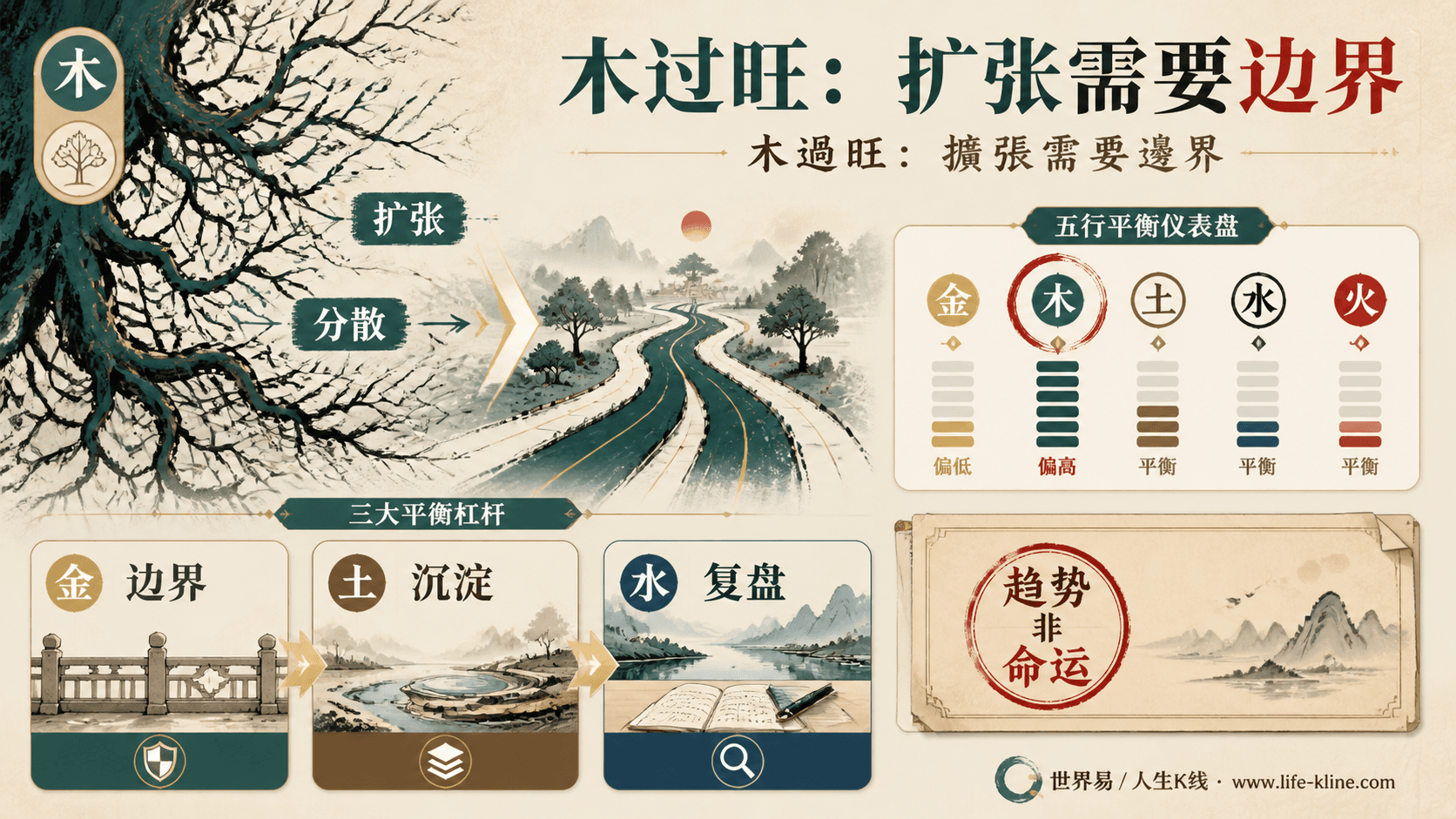
这张图把《Case Study on Boundary Management in Partnership for a 20-Year-Old: Decision-Making under the Wu Shen Da Yun》里的命理概念转成关系、边界和应用场景,适合先看图建立结构,再回到案例正文理解细节。
木过旺常表现为扩张过快、计划繁多、方向分散。在人生K线系统中,这是一种时位特征,而非固定标签。通过引入边界、沉淀与复盘,可实现自然再平衡,导向更可持续的结构。
查看图片解读