Decision Dilemma in Shareholder Conflicts: Partnership Analysis under Jia Zi Da Yun
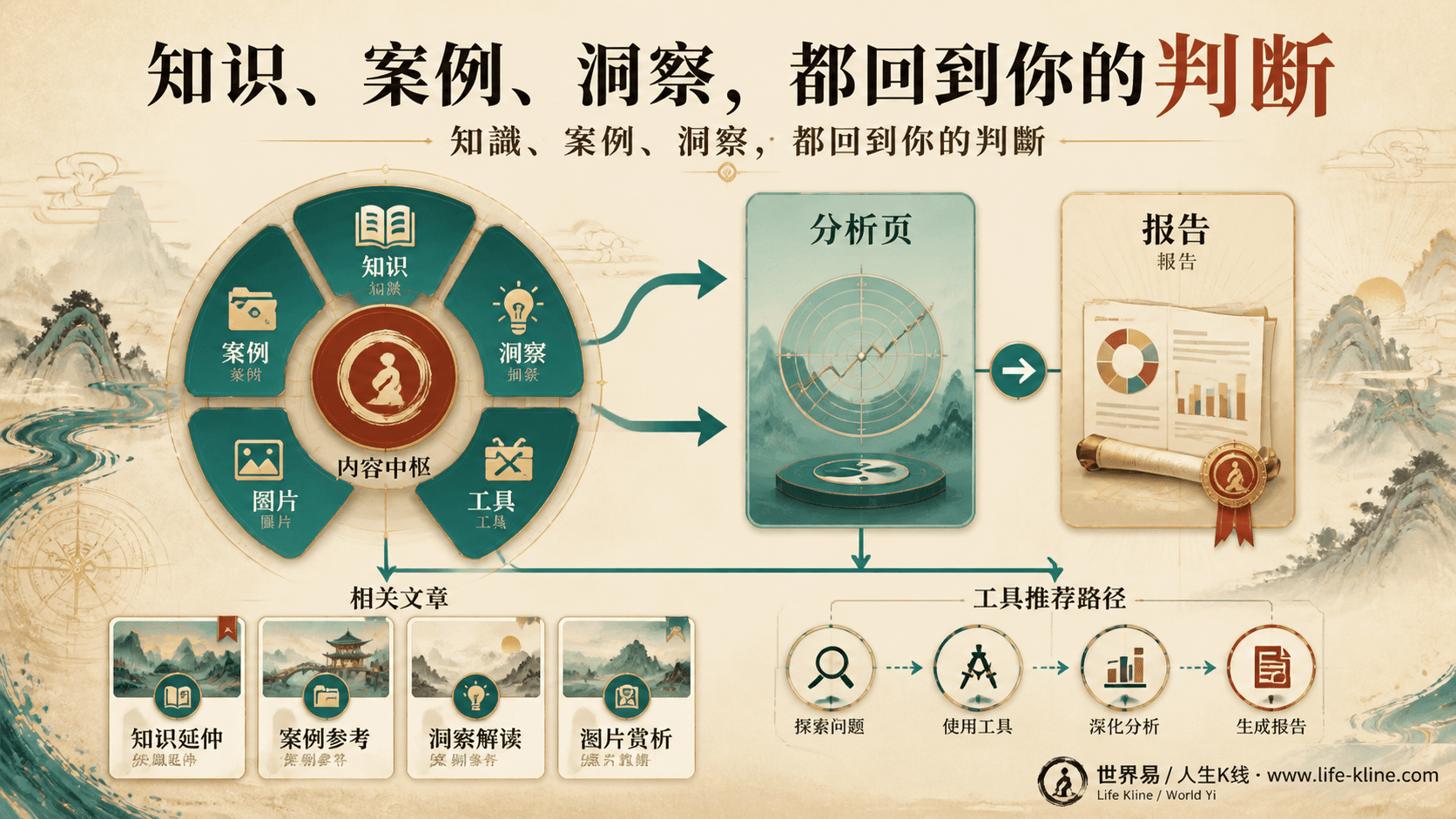
先看完案例关键信息,再进入分析页验证自己的结构与阶段。
Client Background
The client is a male entrepreneur around 45 years old with rich management experience, currently at a critical stage in his career. The company he is involved in is experiencing internal conflicts due to shareholder interest disputes, which have affected business operations. The client faces a major decision on whether to exit the partnership, concerned both about the risks of continuing cooperation and the challenges of going independent.
On the family front, the client bears significant responsibilities, needing to maintain financial stability and hoping for better career development. The ongoing partnership conflicts have caused considerable psychological and life pressure, making it urgent to clarify the next course of action, especially to judge whether the current Da Yun environment is suitable for continuing cooperation with shareholders.
BaZi Chart Structure Interpretation
The client’s Day Master is Ji Earth (己, Ji), in a偏旺 (excessively strong) state, symbolizing strong personal ability, strong willpower, and persistence. Ji Earth’s nature is stable and steady, reflecting a need for stability in cooperative relationships. The Four Pillars (Si Zhu) form a Bi Jian (比肩) pattern, indicating that peers or partners around him play dual roles of support and competition, making partnership relations significant in the chart structure.
The Yong Shen (用神, favorable elements) are Wood and Water, representing key resources that harmonize the Earth element and ease emotional tension. This suggests that introducing beneficial factors can alleviate internal friction and maintain team vitality and balance. The Ji Shen (忌神, unfavorable element) is Fire, which may intensify disputes and bring instability and conflict risks. The current Da Yun is Jia Zi (甲子), where Jia Wood (甲, Jia) generates and supports Ji Earth, and Zi Water (子, Zi) moistens Ji Earth, constituting a very auspicious Da Yun favorable for stabilizing and developing cooperation.
The Liu Nian (流年, annual fortune) is Bing Wu (丙午). Although Bing Fire (丙, Bing) is the Ji Shen, because it occurs within the favorable Da Yun environment, it instead helps promote transformation and breakthroughs, indicating that the client needs to face conflicts directly and actively adjust strategies in cooperation rather than simply quitting.
Focused Problem Judgment
Facing shareholder conflicts, the client’s main concern is whether the current Da Yun favors cooperation or is more suitable for independent action. The Jia Zi Da Yun is a Wood-Water nurturing cycle that nourishes Ji Earth, indicating that the client’s energy and resources are relatively abundant. Under this pattern, partnership relations are more likely to receive support and balance, and conflicts can be resolved through reasonable communication and adjustment.
The Bi Jian pattern features both competition and assistance. The client needs to leverage the steady and resilient nature of the偏旺 Ji Earth Day Master, using the Yong Shen Wood and Water to harmonize tense relations and avoid escalation caused by the Fire element. Although the Bing Wu Liu Nian introduces Fire, which is Ji Shen, it also signals necessary reforms and adjustments. If the client can proactively face disagreements in cooperation, there is an opportunity to rebuild the partnership foundation.
Therefore, from a metaphysical perspective, the current Da Yun overall favors cooperation. It is suitable to continue partnership but remain alert to the disruptive influence of the Liu Nian Fire, avoiding emotional decision-making. Independent action may seem to relieve conflicts in the short term but lacks Da Yun support, posing greater risks and not conducive to long-term career development.
Recommended Actions and Timing
First, the client should actively promote internal communication, leveraging the harmonizing effects of the Yong Shen Wood and Water to resolve misunderstandings and conflicts among shareholders. Introducing professional third-party mediation or optimizing management structures can achieve reasonable and balanced distribution of interests, potentially restoring partnership stability.
Second, the client should respond to the reform signals of the Bing Wu Liu Nian by timely adjusting cooperation strategies, such as clearly redefining responsibilities, enhancing information transparency, and avoiding intense disputes triggered by Fire’s impulsiveness. Maintaining calmness and rationality, and utilizing the favorable momentum of the Da Yun, can steadily advance cooperation improvements.
Finally, it is recommended that the client seize the remaining time window of the Jia Zi Da Yun, especially focusing resources and energy on consolidating the partnership foundation within the next 1-2 years. If the situation does not improve by the end of this Da Yun, considering independent action would be more prudent. At the current stage, exiting carries higher risks, so cooperation should be prioritized, with long-term planning deferred until the Da Yun changes.
Review and Reminders
In practical operation, the client must beware of emotional and impulsive decisions, especially under the strong Fire influence of the Bing Wu Liu Nian. Maintaining calmness is essential to prevent severe conflicts from causing complete partnership breakdown. Moreover, although the Da Yun favors cooperation, the partnership itself must be based on trust and mutual benefit; blindly maintaining unreasonable relationships is not sustainable.
In summary, the current Da Yun environment favors cooperation. The client should seize the opportunity to follow the trend, use rational adjustments and active communication to resolve shareholder conflicts, and stabilize the business foundation. Future strategies should flexibly adapt to changes in Da Yun and Liu Nian to avoid adverse effects caused by premature exit.
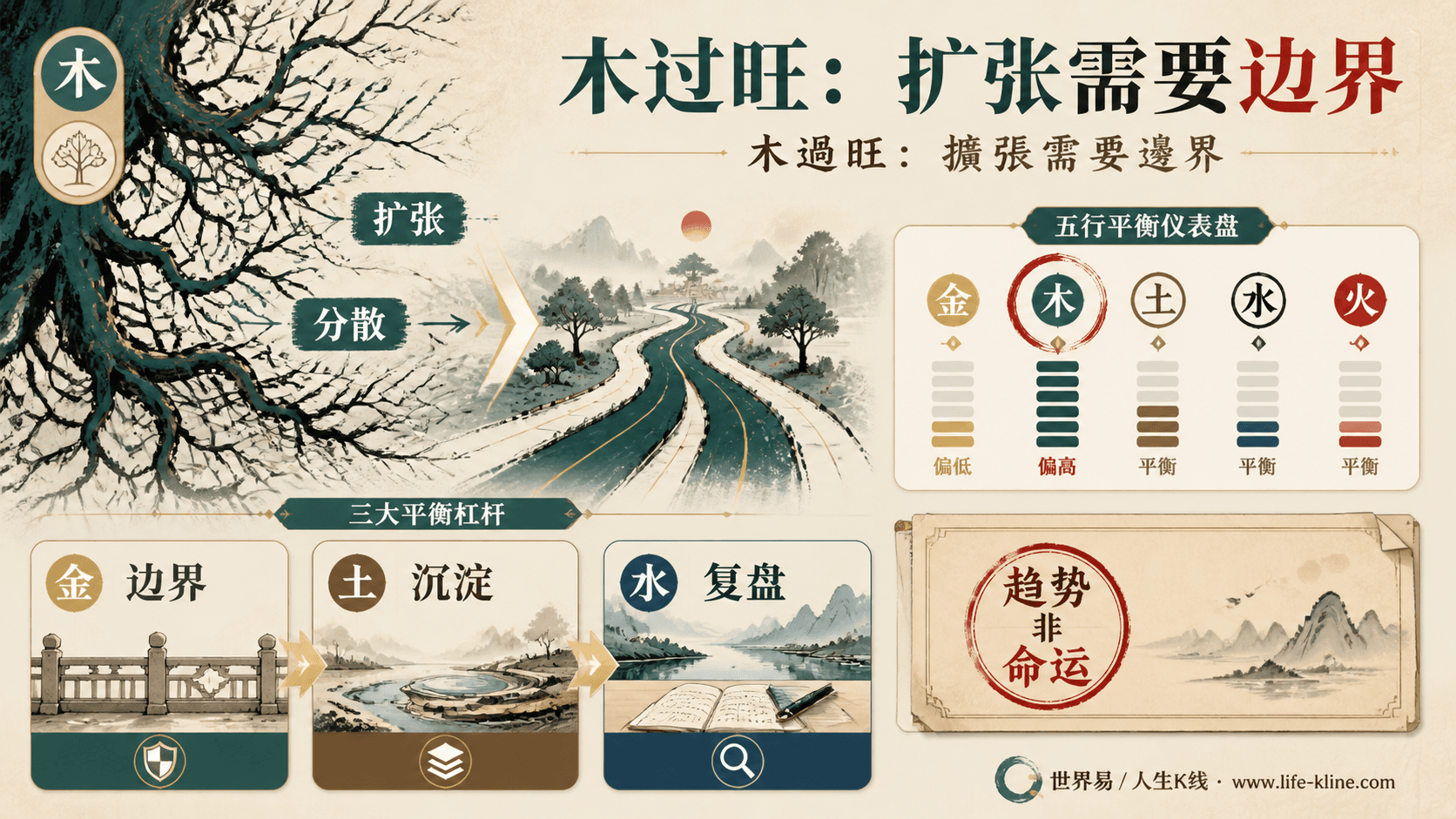
木过旺与再平衡
这张图把《Decision Dilemma in Shareholder Conflicts: Partnership Analysis under Jia Zi Da Yun》里的命理概念转成关系、边界和应用场景,适合先看图建立结构,再回到案例正文理解细节。
木过旺常表现为扩张过快、计划繁多、方向分散。在人生K线系统中,这是一种时位特征,而非固定标签。通过引入边界、沉淀与复盘,可实现自然再平衡,导向更可持续的结构。
查看图片解读